Mary Keane - Fever
Здесь есть возможность читать онлайн «Mary Keane - Fever» весь текст электронной книги совершенно бесплатно (целиком полную версию без сокращений). В некоторых случаях можно слушать аудио, скачать через торрент в формате fb2 и присутствует краткое содержание. Год выпуска: 2013, Издательство: Scribner, Жанр: Современная проза, на английском языке. Описание произведения, (предисловие) а так же отзывы посетителей доступны на портале библиотеки ЛибКат.
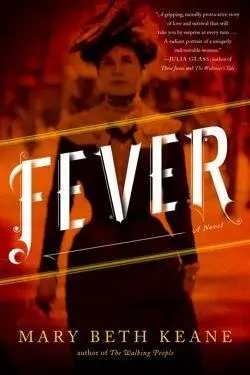
- Название:Fever
- Автор:
- Издательство:Scribner
- Жанр:
- Год:2013
- ISBN:нет данных
- Рейтинг книги:3 / 5. Голосов: 1
-
Избранное:Добавить в избранное
- Отзывы:
-
Ваша оценка:
Fever: краткое содержание, описание и аннотация
Предлагаем к чтению аннотацию, описание, краткое содержание или предисловие (зависит от того, что написал сам автор книги «Fever»). Если вы не нашли необходимую информацию о книге — напишите в комментариях, мы постараемся отыскать её.
In order to keep New York’s citizens safe from Mallon, the Department of Health sent her to North Brother Island where she was kept in isolation from 1907–1910. She was released under the condition that she never work as a cook again. Yet for Mary — spoiled by her status and income and genuinely passionate about cooking — most domestic and factory jobs were heinous. She defied the edict.
Bringing early twentieth-century New York alive — the neighborhoods, the bars, the park being carved out of upper Manhattan, the emerging skyscrapers, the boat traffic — Fever is as fiercely compelling as Typhoid Mary herself, an ambitious retelling of a forgotten life. In the hands of Mary Beth Keane, Mary Mallon becomes an extraordinarily dramatic, vexing, sympathetic, uncompromising, and unforgettable character.
Fever — читать онлайн бесплатно полную книгу (весь текст) целиком
Ниже представлен текст книги, разбитый по страницам. Система сохранения места последней прочитанной страницы, позволяет с удобством читать онлайн бесплатно книгу «Fever», без необходимости каждый раз заново искать на чём Вы остановились. Поставьте закладку, и сможете в любой момент перейти на страницу, на которой закончили чтение.
Интервал:
Закладка:
“What if someone refuses?”
Nathaniel studied her face. “Try it,” he suggested.
The Camerons had help that cooked, help that cleaned the house, did the laundry, watched the children, taught the children, tended to the grass and pots of flowers outside. When Mary had a free moment she was supposed to help Martha, who was forever running an oiled cloth over the furniture, up and down the stairs, beginning every day where she’d ended the last and doing everything over again so that no speck of dust ever had a chance to land. The expression she wore on her face was one of combat. She was engaged in a battle that offered no respite, and even while eating lunch at the small kitchen table with the rest of the staff, she was squinting over their heads, peering into corners, and tilting her chin to see in a different light what lurked there. It was the cleanest place Mary had ever been. The newspapers Mr. Cameron left open on the table in the sitting room talked of poor ventilation and crowding in the cities, toxic odors that came from standing water and horse manure, but the Cameron home was so protected from anything like that, so unlike Aunt Kate’s or the rooms of any of the families Mary had visited on Aunt Kate’s block where there was no place to keep the garbage except piled on the curb outside where it would stink until the Department of Street Cleaning came by with their carts, where every person who walked through the door of their building tracked the mud or ash or excrement from the street up the stairs, through the halls, into their own rooms, that Mary started to feel that she was also waging a war, they all were, and Mary’s particular front was at the collars of shirts and blouses, the hems of skirts and trousers. According to the papers, the source of every disease suffered by every New Yorker could be found in a garbage pile on the Lower East Side. Mary heard the word miasma and the next time she went home she asked Aunt Kate what it meant. Ever since then she imagined the city streets seeded with invisible landmines, and the landmines were these toxic clouds, miasmas, that floated up from every dirty thing left to fester at the city’s curbs. She tried not to inhale when she made her way to and from the streetcar, or on the many occasions when the sanitation wagon skipped Aunt Kate’s block. She felt safer at the Camerons, where all day long, six days a week, she and the others led a coordinated campaign against dirt and disorder, and where the sanitation drivers never clicked their tongues at their horses to speed them past the door.
Every member of the staff had one day’s leave per week to go home, and perhaps they weren’t as careful when they were back on their own territory. One Monday morning, the Camerons’ longtime cook returned to work with the telltale bull’s neck but pretended nothing was wrong. She just slammed pots and pans and began the ritual of the water with her chin tilted toward heaven, gasping for air. Mary and the others hid her as well as they could, but Mrs. Cameron liked to come down to the kitchen once in a while to discuss the evening meal and she chose that Monday to tell the cook, in person, that the family was bored of beef roasts, and chops, too, for that matter. Could the cook come up with a trout or a flounder on a Monday?
“Oh,” Mrs. Cameron said when she saw the cook’s neck, and retreated to the hall. She put a hand up to her own throat. “You’re ill.”
The cook couldn’t speak, so her assistant — the girl who rinsed and chopped vegetables like they were criminals and her knife a weapon — spoke for her. “She’s just after telling me they have standing water in the air shaft where she lives and on Saturday when we parted she expected the water to be stinking. This morning she told me, yes, it was fierce stinking and no one in her building can keep a window to the air shaft open with the smell of it. It’ll go on until a dry stretch. So she thinks she breathed up that odor in spite of the closed windows.”
Just that morning, on her way from Tenth Avenue, Mary had to hold her breath as the trolley rolled by a horse stable, where on Sunday nights the men who cleaned the stalls pushed out all the horse shit and old hay. Next to the stable was Weiss’s bakery, and before dawn on Monday mornings the Weisses splashed out all the old milk that hadn’t sold the week before. They threw it over the shit pushed out by the neighboring stable. As the sun rose, the milk soured and infected the air. Often, they tossed old eggs, too, and the carcasses of chickens, and crates, boxes, papers, packaging, overflowing ash cans. The eggs bothered Mary most of all, and every time she passed on a Monday, she wondered why they didn’t put them in a cake. Or give them to someone who needed them. The waste of it made her never want to buy anything there.
“Why can’t she speak for herself?”
“Oh, she can,” the assistant said meekly, but the cook sat down on a stool and put her head in her hands.
“You’re dismissed,” Mrs. Cameron said, taking another step backward. “Please go home and tend to yourself. Be in touch with the agency when you’re better.”
The cook showed no signs of moving as the assistant fetched her shawl and wrapped it around her shoulders. “You have money?” the girl asked, then looked around. “Could we pitch in for a fare?” Along with Mary, there were two others of the house staff present. Mary slid her hand into her apron pocket and closed her fist around the dime and five pennies resting there. Mr. Cameron always left a tip when she starched his shirts, and it was a game to find it. Sometimes he left it in one of his shoes, twisted into a hanky and tied off with a string. Sometimes in the pocket of one of the shirts. Sometimes he came upon Mary while she was working, sneaked up behind, and dropped it into her apron pocket. Mary would jump at the sudden tug of the money and he’d be there behind her, smiling. It was something, Mary understood, she wasn’t to tell the others.
Everyone put coins on the counter. Mary’s quick fingers separated out three pennies and she added hers to the lot.
“Well,” the assistant said when she came back. Mary could tell she’d already elevated herself to head cook. “I’ll need to go to the fish market. One of you will need to start—”
“Pardon me,” Nathaniel said, breathless from running down the stairs. “Missus says you’re to go, too. And that if any of the rest of you feel ill, you should do the right thing and excuse yourself.”
“Me?” the assistant asked. “But I feel fine!”
Nathaniel shrugged. “And the rest of us are to take fifteen minutes to scrub the kitchen again.”
After the scouring, Mr. Cameron appeared in the kitchen and asked who could cook a meal until the office sent over another woman.
“I can,” Mary said, taking a silent survey of the fruit and vegetables on the counter, the cheese and milk she’d seen in the icebox. Mr. Cameron ignored her.
Martha could not change positions and was off limits. “Jane?” he asked the children’s tutor, but she said she’d never cooked a thing in her life.
“I can cook,” Mary said again.
Mr. Cameron frowned. “Mary, then.”
And so Mary took off her laundering whites and put on the cook’s apron instead. After that first meal — baked whitefish with leeks and tomatoes, and a vanilla cake for dessert — Mr. Cameron teased that they would cancel their request to the agency for a replacement cook and instead ask for a replacement laundress. He took on the habit of having his morning coffee in the kitchen before heading out to work, and then, after one morning when Mrs. Cameron came looking for him and demanded to know what exactly he thought he was doing, he stopped. And Mary was left alone. A week later, the new cook arrived, and Mary was sent back to the pile of muslins and linens that had been waiting for her. I will leave this position, she decided. I will go to a new agency and tell them a history as cook, and they will believe me. And if they don’t believe me, I’ll go to another agency. She took out her small brush, her square of starch. She rubbed the dry patches on her hands.
Читать дальшеИнтервал:
Закладка:
Похожие книги на «Fever»
Представляем Вашему вниманию похожие книги на «Fever» списком для выбора. Мы отобрали схожую по названию и смыслу литературу в надежде предоставить читателям больше вариантов отыскать новые, интересные, ещё непрочитанные произведения.












Обсуждение, отзывы о книге «Fever» и просто собственные мнения читателей. Оставьте ваши комментарии, напишите, что Вы думаете о произведении, его смысле или главных героях. Укажите что конкретно понравилось, а что нет, и почему Вы так считаете.