Mary Keane - Fever
Здесь есть возможность читать онлайн «Mary Keane - Fever» весь текст электронной книги совершенно бесплатно (целиком полную версию без сокращений). В некоторых случаях можно слушать аудио, скачать через торрент в формате fb2 и присутствует краткое содержание. Год выпуска: 2013, Издательство: Scribner, Жанр: Современная проза, на английском языке. Описание произведения, (предисловие) а так же отзывы посетителей доступны на портале библиотеки ЛибКат.
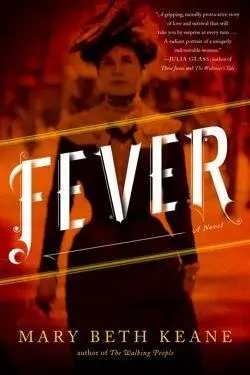
- Название:Fever
- Автор:
- Издательство:Scribner
- Жанр:
- Год:2013
- ISBN:нет данных
- Рейтинг книги:3 / 5. Голосов: 1
-
Избранное:Добавить в избранное
- Отзывы:
-
Ваша оценка:
Fever: краткое содержание, описание и аннотация
Предлагаем к чтению аннотацию, описание, краткое содержание или предисловие (зависит от того, что написал сам автор книги «Fever»). Если вы не нашли необходимую информацию о книге — напишите в комментариях, мы постараемся отыскать её.
In order to keep New York’s citizens safe from Mallon, the Department of Health sent her to North Brother Island where she was kept in isolation from 1907–1910. She was released under the condition that she never work as a cook again. Yet for Mary — spoiled by her status and income and genuinely passionate about cooking — most domestic and factory jobs were heinous. She defied the edict.
Bringing early twentieth-century New York alive — the neighborhoods, the bars, the park being carved out of upper Manhattan, the emerging skyscrapers, the boat traffic — Fever is as fiercely compelling as Typhoid Mary herself, an ambitious retelling of a forgotten life. In the hands of Mary Beth Keane, Mary Mallon becomes an extraordinarily dramatic, vexing, sympathetic, uncompromising, and unforgettable character.
Fever — читать онлайн бесплатно полную книгу (весь текст) целиком
Ниже представлен текст книги, разбитый по страницам. Система сохранения места последней прочитанной страницы, позволяет с удобством читать онлайн бесплатно книгу «Fever», без необходимости каждый раз заново искать на чём Вы остановились. Поставьте закладку, и сможете в любой момент перейти на страницу, на которой закончили чтение.
Интервал:
Закладка:
“Should she be let back into society or not?”
“I—” the doctor faltered, looked over at Mary. “It’s my opinion… that she should not.”
One Department of Health official asked the judges to consider what exactly motivated Mary to take the job uptown at the Bowen residence in the first place. Did she harbor a resentment of some sort against the upper classes? Did she resent the Bowens in particular? Perhaps because of the food cooperative Mrs. Bowen had attempted to organize? Without waiting for answers, the official then sat back as if he’d just put the final piece in the puzzle.
“I worked for the Bowens because of what they paid me,” Mary whispered urgently to Mr. O’Neill, who bellowed an objection. It was illogical, Mr. O’Neill pointed out. A woman can’t be accused of lacking the ability to comprehend her affliction at one moment, and then accused of wielding it like a weapon the next.
“And why did her employment with the Warrens end in Oyster Bay? Why did she not continue to work for them once they returned to the city?”
“Because it was a temporary job,” Mary whispered to Mr. O’Neill, but he shushed her. He’d asked her the same question during their preparation meeting and already knew the answer. The Warren job was never meant to be permanent. Their regular cook was to resume her position in Manhattan once they returned from Oyster Bay.
Mary studied the judges’ faces and saw doubt.
• • •
She got home from Oyster Bay on a Friday in September 1906. It was a beautiful day, and better still because she had a pocket full of money that had been pushed into her hand from a grateful Mr. Warren. Little Margaret Warren would play again, would beg ice cream off another cook, would grow up and marry and do all the things a girl should do. Her sister, her mother, the two maids, and the gardener would also live. All the family except for Mr. Warren had already returned to Manhattan, and Mary had left two of the maids drinking cold watermelon soup on the back patio. They’d hugged her good-bye together, squeezing her between them and saying again what a shock each of them got when she pushed them into an icy bath, clothes and all. They blessed her, thanked her, said they knew they wouldn’t have their lives if it hadn’t been for her.
She’d gotten to the station in plenty of time to catch an earlier train, but she’d written her plans to Alfred the previous week, and wanted to stay with the schedule she’d sent in case he planned on meeting her. So she sat on a bench in breezy Oyster Bay and watched a train pull in and then pull away. When she got to Grand Central Station she waited on a bench again with her bag on her lap to give Alfred a chance to find her.
After thirty minutes she pushed through the grand doors onto Forty-Second Street and began walking home. Something had come up, she decided. He didn’t have time to send word. He probably had a perfectly good reason for not showing up. Because it was a Friday, every rusted fire escape in their neighborhood would be weighted down with damp cottons and thin wools in every muted shade of white, gray, brown, from Patricia Wright’s careful calico to the yellowed squares of muslin Mr. Hallenan used to strain his coffee. Where twenty years earlier this had shamed her, now she took comfort in the sight and knew she was closer to home. A few tenants had gotten hold of the new roundabout lines that could be extended out a window into the sky without needing to be anchored on another building or another fire escape.
The rooms Mary shared with Alfred were on the sixth floor, at the very top of the stairs. Unlike the narrow tenements of the Lower East Side, 302 East Thirty-Third was a broad building that held within the yellow brick of its exterior walls thirty-six flats. There was a central staircase wide enough for three bodies to climb the stairs side by side, and from this central stair branched two halls that reached north and south, three flats per hall, six per floor. The sixth floor saw the highest turnover, and some of the rooms stayed empty for weeks at a time. Anyone with rooms on the top floor aimed to get lower as soon as possible, but Mary liked the sixth floor. Their rooms always seemed to get better light than those on lower floors and Mary liked standing at the sink and looking out over lower rooftops. When lying in their bed she could turn her head toward the window and see nothing but blue sky.
When Mary arrived home that Friday in September, she opened the door to their rooms and was hit by the odor of linen that needed washing, rotting banana peels on the counter, the single window shut tight. The letter she’d sent to tell Alfred what time her train was due was open on the table, and she could see that he’d made an effort to flatten the folds. He might have gotten work. It happened that way sometimes: no prospects on the horizon and next thing someone comes looking for him with a tip about a company looking for a driver, or need for a man who could shovel coal.
Mary set about stripping their bed and washing the linens, but when she had everything soaking in the tub, she couldn’t find any soap. She decided to run down to the grocer. Not wanting to break one of the new paper bills Mr. Warren had given her, she went to the jam jar of coins they kept by the stove for the gas meter. But there was no jam jar, no coins, and after seven weeks of missing him, of hoping he was getting on, Mary was as furious as she’d been the day she left. Sometimes — and staring at the empty space where the jam jar used to live was one of these times — Mary felt she’d tripped into a space beyond fury, a place where all of this was so astonishing that perhaps she was the one who was wrong. She took a deep breath and went over the facts: I told him to not dare touch the gas money. Do not dare, I said to him. And he looked at me like he wouldn’t dream of it. His look said: the nerve of you to say that to me. I told him I’d send word when I was due home and if he could have the rooms straightened a bit. After a seven-week job I don’t want to walk into a pigsty. He was insulted. And now Mary stood in the middle of the kitchen and contemplated the naked bed in the next room, the dirty plates and mugs on the sideboard. She could walk out the door with the same bag she’d just hauled from Oyster Bay, and leave him to manage the sopping bedsheets. She smiled. That would be a surprise to him.
But if he’s working, Mary reminded herself, he might have needed those coins to make himself presentable. Unpeeling one bill from the thick fold in her pocket and leaving the rest hidden in the closet, she went down to the street to buy a cake of soap. She hoped that by the time she came back, washed the sheets, and hung them on the fire escape, Alfred would be home.
But the dinner hour came and went, and still, Alfred did not return. She went down to visit with Fran.
“And how’s Alfred?” Fran asked. “Glad to have you back?”
“Oh sure,” Mary had said, avoiding her friend’s eye. “Of course he is.” Mary knew for a fact that Fran’s Robert came home for lunch on any day when he could take the full hour.
When five o’clock arrived, Mary wrapped her shawl around her shoulders and went out to look for him.
For several blocks around their building, quitting time found the streets thick with men: men rushing for streetcars, men leaning against buildings and in door frames. As Mary crossed over Thirty-Third Street she observed that even the horses were wild at quitting time. Several water wagons were heading in a line toward the stables on First, and each horse that passed bent its long muscular neck and turned a vein-threaded eye toward Mary.
Once she crossed Thirty-Fourth Street, she could see the blue door of Nation’s Pub on the next block, the flag above, the pair of potted plants that welcomed patrons inside. She walked by the wide door without slowing her pace, granting herself only a small sideward glance as if the place meant nothing to her, no more than any other business that lined the avenue. The late-summer afternoon brought a cool breeze, and Mary pulled the sleeves of her sweater over her hands. Her knuckles felt like two rows of rough stones.
Читать дальшеИнтервал:
Закладка:
Похожие книги на «Fever»
Представляем Вашему вниманию похожие книги на «Fever» списком для выбора. Мы отобрали схожую по названию и смыслу литературу в надежде предоставить читателям больше вариантов отыскать новые, интересные, ещё непрочитанные произведения.












Обсуждение, отзывы о книге «Fever» и просто собственные мнения читателей. Оставьте ваши комментарии, напишите, что Вы думаете о произведении, его смысле или главных героях. Укажите что конкретно понравилось, а что нет, и почему Вы так считаете.