Evan Hunter - Streets of Gold
Здесь есть возможность читать онлайн «Evan Hunter - Streets of Gold» весь текст электронной книги совершенно бесплатно (целиком полную версию без сокращений). В некоторых случаях можно слушать аудио, скачать через торрент в формате fb2 и присутствует краткое содержание. Город: New York, Год выпуска: 1975, ISBN: 1975, Издательство: Ballantine Books, Жанр: Современная проза, на английском языке. Описание произведения, (предисловие) а так же отзывы посетителей доступны на портале библиотеки ЛибКат.
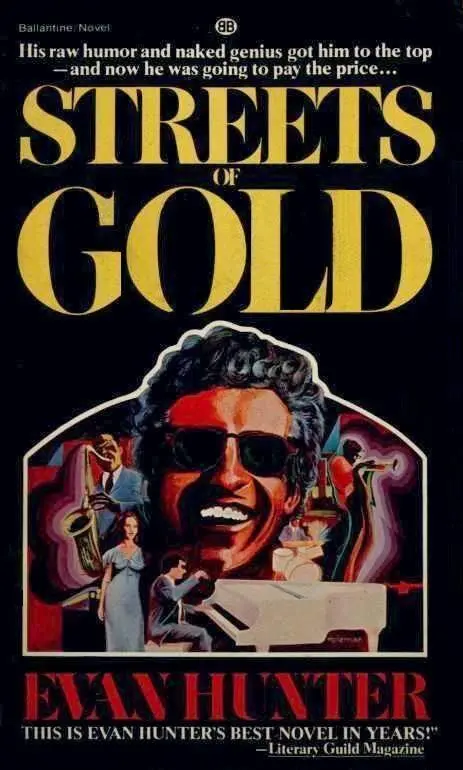
- Название:Streets of Gold
- Автор:
- Издательство:Ballantine Books
- Жанр:
- Год:1975
- Город:New York
- ISBN:978-0-345-24631-8
- Рейтинг книги:4 / 5. Голосов: 1
-
Избранное:Добавить в избранное
- Отзывы:
-
Ваша оценка:
Streets of Gold: краткое содержание, описание и аннотация
Предлагаем к чтению аннотацию, описание, краткое содержание или предисловие (зависит от того, что написал сам автор книги «Streets of Gold»). Если вы не нашли необходимую информацию о книге — напишите в комментариях, мы постараемся отыскать её.
Streets of Gold — читать онлайн бесплатно полную книгу (весь текст) целиком
Ниже представлен текст книги, разбитый по страницам. Система сохранения места последней прочитанной страницы, позволяет с удобством читать онлайн бесплатно книгу «Streets of Gold», без необходимости каждый раз заново искать на чём Вы остановились. Поставьте закладку, и сможете в любой момент перейти на страницу, на которой закончили чтение.
Интервал:
Закладка:
“Go find them,” Rudy said to the chauffeur from San Diego, and the chauffeur said “Groovy” and went out of the studio. We were ten minutes into the third and final hour already, and we still hadn’t cut a take, nor had we yet rehearsed the tune that was to be the flip side of the record.
Mark came back into the studio and said, “The lady’s gone home.”
“What?” Rudy said. “What do you mean, she’s gone home? Home? Where is she?”
“I told you. She went home.”
“Why?”
“Female complaint.”
“What?”
“She’s menstruating,” Mark said. “She has cramps.”
“What?”
“Rudy,” Mark said, “I can’t believe you’re as hard of hearing as you pretend to be.”
“What?” Rudy said. He was about to have a fit. I have heard many men on the edge of throwing a tantrum, and Rudy was right there, an inch away. “Are you telling me that dumb cunt walked out of here because she...”
“Have you ever tried singing when you’re menstruating?” Mark said.
“I have never,” Rudy said, “in my entire experience in the music business had some dumb cunt walk out of a recording session because she got her period. I have had a dumb cunt blow every member of the band, including the drummer, and I have had a dumb cunt threaten to slit her wrists if we didn’t fire the trombonist, but never, and this goes back thirty years in this fucking business, never have I had a cunt tell me she couldn’t sing because she got her period. What the fuck has anybody’s period got to do with the music business?”
“We’ll try it again tomorrow,” Mark said.
“The fuck we will!” Rudy exploded. “You think I’m going back to Harry and tell him we spent all this money for nothing? He’ll throw me out the window.”
“ I’ll talk to Harry,” Mark said.
“I want the five bills back,” Rudy said abruptly. “I want that money back. And you tell that cunt singe of yours if I ever lay eyes on her again, I’ll give her such a period she’ll never forget it in her life. I’ll give her such cramps...”
“Rudy, please relax,” Mark said calmly. “We’ll try again tomorrow.”
“We’ll try again never !” Rudy shouted. “I paid for today, not tomorrow. We got forty-five minutes left I already paid for, who’s going to absorb that? You? You’ll be lucky if Harry doesn’t sue you! You wouldn’t pull this if we were Columbia, I can tell you that. You think because we’re small...”
“Rudy, please, you’ll have a heart attack.”
“That’s better than getting thrown out the window,” Rudy shouted, and then he must have pressed the button connecting him to the control booth because he suddenly asked in a much calmer voice, “How much time do we have exactly, Ned?”
“Forty-one seven,” a voice said over the loudspeaker.
“I’m getting two sides out of this session,” Rudy said. “I paid for two sides, and I’m going back with two sides. What can these shlocks play?”
I realized he was referring to the Dwight Jamison Quintet.
“How about ‘Stardust’?” I said.
“Very funny,” Rudy said. “Ned,” he said, “take your level, and get ready to roll.”
“Right,” Ned said over the loudspeaker.
“I want a jump and a ballad,” Rudy said to me. “How’s the time, Ned?”
“Thirty-nine twenty,” Ned answered.
Rudy was standing close to the piano now; his voice was almost confidential. “Start playing,” he said. “Ned’ll let us know when he’s got his level, and then it’s for real. If we’re lucky, we’ll get two takes on each side.”
“Just a second here,” Mark said.
“What now? If we run into overtime...”
“These men were hired to back a vocalist,” Mark said. “I accepted scale because...”
“And you’re taking scale, too,” Rudy said, “or I’ll go to AFTRA and your cunt singer’ll never open her mouth again in New York. Ned, you ready?”
“Ready.”
“How about you, maestro?”
“Give us a minute to run down the tunes, will you?”
“We ain’t got a minute,” Rudy said. “Ned, where are we?”
“Thirty-seven twelve.”
“Play,” Rudy said. “Play good.”
The jump tune was chose was “A Night in Tunisia,” which by 1955 had already become a bop standard. We had no opportunity to rehearse it or time it. We did six bars, and then Ned cut in to say he had his level, and I counted off the beat again, and we took it from the top. Rudy stopped us before we got to the bridge, telling us we were playing too fast. Peter Dodds, my drummer, muttered something under his breath. He had cut his chops playing almost everything at breakneck speed, and here was a halfassed A&R man telling us we were playing too fast when maybe we were ambling along at 250 on the metronome. I counted off again, slower this time, and we got through the second take without any interruptions from Rudy. He listened to the playback, checked the time with Ned again, and said he wanted another take, this time with an added unison chorus of flute and piano. (Rudy was later to take credit for the “distinctive sound” of the Dwight Jamison Quintet.) We did the third take, and Rudy said it was “satisfactory.” (You was adequate, man.) I hadn’t much liked the sound of it at all. Orry and I had not rehearsed any of the riffs we played together, and it seemed to me they were extraordinarily sloppy. For the flip side, we had decided on “The Man I Love.” Rudy checked the time again, and Ned informed him we had five minutes and twenty-two seconds left before our studio time ended. By union edict, each side of a single could run no longer than three and a half minutes. This meant we had to get the ballad right on the first take. Either that, or Rudy would have to go back to his boss with only one side of a record, and Harry would throw him out of the window.
“All right, let’s go, let’s go,” he said. “You. You got a mute?”
“Me?” Hank said.
“No, the flute player, who the fuck you think I mean?”
“Sure, I’ve got a mute,” Hank said.
“Put it in your horn. And you , I want brushes on the ride cymbal, and no klook-a-mop shit. I want everybody cooling it but the piano and the flute, that’s what I want to hear mostly. Open it with piano and flute in unison, then give me two choruses on piano, one on flute, back to the head again and out You got me? The rest of you guys play anything louder than a whisper, I’ll cut off your balls. Ned, what’ve we got?”
“Four and twenty,” Ned said, and he was not referring to blackbirds baked in a pie.
“Let’s go, here’s your beat,” Rudy said. “One... two...”
“I’ll set the tempo,” I said.
“You played too fast on...”
“It’s my band. I’ll set the tempo,” I said.
Rudy might have argued the point further, but time was running out, time was tick-tocking along, and success was waiting in the wings to gather us into his powerful arms, and press us to his barrel chest, and belch into our faces. The contretemps lasted no more than ten seconds.
“Just, for Christ’s sake, start playing! ” Rudy said.
I have listened to that unrehearsed, totally improvised version of “The Man I Love” countless times since 1955, in an attempt to understand why disk jockeys all over the country, including those on the rock stations, suddenly began playing the record incessantly. Payola did not account for it. Rudy’s company was small and virtually without funds; we might, in fact, have sold many more copies than we actually did if distribution and promotion had been even slightly better. I am firmly convinced, and Rudy swears to it, that nobody got anything under the table. The record simply took off, and I’ll be damned if I know why. In my estimation, it is simply not a very good record. All it did was define a sound, and even the sound was an accident.
Читать дальшеИнтервал:
Закладка:
Похожие книги на «Streets of Gold»
Представляем Вашему вниманию похожие книги на «Streets of Gold» списком для выбора. Мы отобрали схожую по названию и смыслу литературу в надежде предоставить читателям больше вариантов отыскать новые, интересные, ещё непрочитанные произведения.




Обсуждение, отзывы о книге «Streets of Gold» и просто собственные мнения читателей. Оставьте ваши комментарии, напишите, что Вы думаете о произведении, его смысле или главных героях. Укажите что конкретно понравилось, а что нет, и почему Вы так считаете.