Alasdair Gray - Old Men in Love
Здесь есть возможность читать онлайн «Alasdair Gray - Old Men in Love» весь текст электронной книги совершенно бесплатно (целиком полную версию без сокращений). В некоторых случаях можно слушать аудио, скачать через торрент в формате fb2 и присутствует краткое содержание. Год выпуска: 2009, Издательство: Bloomsbury UK, Жанр: Современная проза, на английском языке. Описание произведения, (предисловие) а так же отзывы посетителей доступны на портале библиотеки ЛибКат.
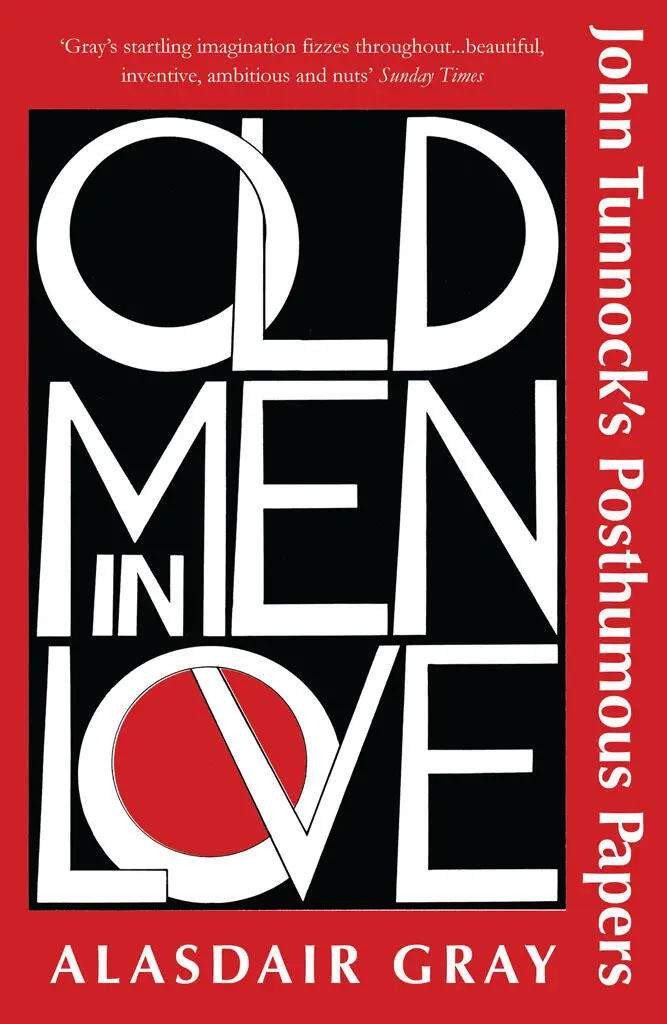
- Название:Old Men in Love
- Автор:
- Издательство:Bloomsbury UK
- Жанр:
- Год:2009
- ISBN:нет данных
- Рейтинг книги:3 / 5. Голосов: 1
-
Избранное:Добавить в избранное
- Отзывы:
-
Ваша оценка:
Old Men in Love: краткое содержание, описание и аннотация
Предлагаем к чтению аннотацию, описание, краткое содержание или предисловие (зависит от того, что написал сам автор книги «Old Men in Love»). Если вы не нашли необходимую информацию о книге — напишите в комментариях, мы постараемся отыскать её.
"Our nearest contemporary equivalent to Blake, our sweetest-natured screwed-up visionary."-"London Evening Standard"
Alasdair Gray's unique melding of humor and metafiction at once hearken back to Laurence Sterne and sit beside today's literary mash-ups with equal comfort. "Old Men in Love" is smart, down-to-earth, funny, bawdy, politically inspired, dark, multi-layered, and filled with the kind of intertextual play that Gray delights in.
As with Gray's previous novel "Poor Things," several partial narratives are presented together. Here the conceit is that they were all discovered in the papers of the late John Tunnock, a retired Glasgow teacher who started a number of novels in settings as varied as Periclean Athens, Renaissance Florence, Victorian Somerset, and Britain under New Labour.
This is the first US edition (updated with the author's corrections from the UK edition) of a novel that British critics lauded as one of the best of Gray's long career. Beautifully printed in two colors throughout and featuring Gray's trademark strong design, "Old Men in Love" will stand out from everything else on the shelf. Fifty percent is fact and the rest is possible, but it must be read to be believed.
Alasdair Gray is one of Scotland's most well-known and acclaimed artists. He is the author of nine novels, including "Lanark," "1982 Janine," and the Whitbread and Guardian Prize-winning "Poor Things," as well as four collections of stories, two collections of poetry, and three books of nonfiction, including "The Book of Prefaces." He lives in Glasgow, Scotland.
Old Men in Love — читать онлайн бесплатно полную книгу (весь текст) целиком
Ниже представлен текст книги, разбитый по страницам. Система сохранения места последней прочитанной страницы, позволяет с удобством читать онлайн бесплатно книгу «Old Men in Love», без необходимости каждый раз заново искать на чём Вы остановились. Поставьте закладку, и сможете в любой момент перейти на страницу, на которой закончили чтение.
Интервал:
Закладка:
“Charlinch, near Bridgwater.”
“Rural and secluded. I thought you would have preferred a busy parish in an infernal manufacturin’ town where you would have had scope to evangelize. Agricultural congregations are brutish and dull rather than vicious and lost — Charlinch doesn’t even have a public house. But the rectory is quite large, I believe. I hope Mrs Prince did not come to you empty-handed, I know you are not a rich man.”
“Her fortune is sufficient for us,” said Henry quietly.
“Good. Good. The Church of England is like the British Army: you can’t go far in it without money or connections. Sam Starky, your rector, is well connected. Nephew of Lady Alicia Coventry, related through her to half the nobility of England. If not exactly a foot-hold it is a good toe-hold, if you know how to climb. I was impressed by how adroitly you set up your own little establishment here — The Lampeter Brethren, no less! Enthusiasm was thought a disease of the labourin’ classes when I was young. Our aristocracy were nearly all atheists, though it was bad form to say so — they knew the Church of England was needed to hold the rabble down. French aristos were open atheists and look what happened to them! But times have changed, Prince. Yes, nerve and imagination can work wonders. However, Starky is a sickly fellow, a valetudinarian if not exactly a hypochondriac, always takin’ the cure at waterin’ places and south coast resorts. I doubt if you’ll ever actually see him.”
There was a brief silence in which Henry was about to take his leave when Ollivant said abruptly, “You are a good soul and mean well, Prince, so I am moved to offer advice. I hear that — apart from readin’ a few heady mystics — you despize erudition.”
“The disciples Jesus called were not erudite, Dr Ollivant.”
“Quite so, but then Jesus instructed them, and He taught those ignorant fishermen so well that by their eloquence the whole Roman Empire was at last converted.”
“And by the miracle of Pentecost, sir.”
“O yes. Tongues of fire from Heaven givin’ everyone the gift of tongues. Well, we must not look for that miracle nowadays, for if we do it will turn us into lunatics, charlatans, or dupes like poor Edward Irving. He prayed for the gift of tongues and got it with a vengeance! Hysterical women where he preached started babblin’ nonsense until they and their supporters took Irving over and made a new religion of him — The Catholic Apostolic Pentecostal Church, no less! A church that rejects the doctrine of Original Sin. The Church of Scotland must be glad they excommunicated him before that happened. The Churches of England, Rome and every decent non-conformist sect would have done the same. Irving saw the error of his ways before he died but fools rich enough to know better still keep Catholic Apostolic churches goin’ strong, not just in London and Edinburgh but France, Germany, Switzerland and the United States. They must think they’re buyin’ places in the Kingdom of Heaven. Any danger of you goin’ Pentecostal, Prince?”
Henry slightly smiled and slightly shook his head.
“Good. Now, I have no wish to hurt your feelin’s but I hear that compared with your impromptu prayers, your sermons are, shall I say — less adequate?”
“I have had little pulpit experience, sir.”
“Most of us are shaky at the start. I certainly was. On preachin’ my first sermon before a Bishop I tried to impress him by sayin’ it all without notes. Result: young Ollivant dries up halfway through and stumbles as fast as he can into the blessin’. A disgustin’ performance. I see you pull a wry face at the word performance. Is that because it suggests play actin’?”
Henry nodded.
“No matter. An honest intelligent clergyman can learn to do better from the theatre. Well, the Bishop was a good old soul and a relative of mine. Over dinner afterward he said what I have never forgotten and will now pass on to you. Every old rectory and vicarage in England , said he, has a shelf of sermons, the best of them written by great clerics who founded the Anglican church when English prose was at its best, as is proved by our prayer book and the King James authorized Bible. Read those sermons. Memorize passages whose truth and beauty strikes you. Of course, you have six days a week to write sermons of your own, but few vicars of Christ preached as mightily as Latimer, for example. When your pulpit eloquence falters you should find support in the words of men who were (dare I say this to you Prince? Yes. .) men who were wiser and wittier than you will ever be . I put that to you, Prince, and leave it with you.”
“Thank you sir. Good day,” said Prince. He stood, bowed slightly and turned to the door. Before reaching it he heard Ollivant chuckle and turned enquiringly.
“Forgive me Prince, but I’ve remembered somethin’ funny. Know anythin’ about Carlyle? Thomas Carlyle?”
“No sir.”
“I’m glad. He’s a Scotch Radical pamphleteer who’s all for the French Revolution. London society tolerates him because his wife is both pretty and witty. In their younger days the Carlyles and Edward Irving were so close that the present Mrs Carlyle nearly became Mrs Irving. A pity she did not. She has since been heard to say, If Irving had married me there would have been no gift of tongues . Good, isn’t it haha? If Irving had married me there would have been no gift of tongues . I am sure Mrs Prince is also a sensible woman.”
Charlinch lay in a valley between dark green wooded hills, the fields on lower ground divided by thick hedges and narrow winding roads. The village, never large, had shrunk smaller around 1800 when the chief landowner enclosed the common, evicted smallholders and let their fields to richer farmers. It was now a crossroads with cottages housing families of ploughmen, a shop that was also the Post Office, a dame’s school and a small, dilapidated church on a hill. The dilapidation had happened because local gentry who owned carriages now attended larger churches further away. The churchyard had become a wilderness of overgrown plots with broken and sinking stones. There was a path through it to the adjacent rectory which was large and well-built, in a garden with high walls sheltered by trees. Here Brother Prince began his new life as a country priest under the guidance of the Holy Spirit, and here his forty-five year old wife spent the unhappiest months of her life.
The rectory was rent free, well furnished, well carpeted, with cupboards of fine linen and bedclothes. This was fortunate as the curate’s stipend was small. Income from Martha’s investments let them hire local women as cook, house-maid and laundry-maid, but they could not afford a housekeeper and Martha had no experience of household management. She saw rooms were not being thoroughly cleaned, that Henry’s shirts were badly starched and clumsily folded, that under-cooked cutlets and over-boiled vegetables were served on stone-cold plates, but could not tell her servants how to do better — they seemed to understand her instructions as little as she understood their dialect. She might have resigned herself to these misfortunes had they not hurt Henry. The Spirit guiding him accepted badly-served food and badly-laundered linen as minor forms of crucifixion, but his wife knew how much better his mother managed a household so his almost inaudible sighs, sometimes with eyes closed in prayer, struck Martha like rebukes. Pains she had patiently suffered in Widdicombe Crescent worsened. One night after a dinner where both had eaten only a few mouthfuls she openly wept. He sat by her, patted her hand, said in the soft, remote voice habitual with him, “Perhaps you should send for mother.”
Читать дальшеИнтервал:
Закладка:
Похожие книги на «Old Men in Love»
Представляем Вашему вниманию похожие книги на «Old Men in Love» списком для выбора. Мы отобрали схожую по названию и смыслу литературу в надежде предоставить читателям больше вариантов отыскать новые, интересные, ещё непрочитанные произведения.







Обсуждение, отзывы о книге «Old Men in Love» и просто собственные мнения читателей. Оставьте ваши комментарии, напишите, что Вы думаете о произведении, его смысле или главных героях. Укажите что конкретно понравилось, а что нет, и почему Вы так считаете.