Alasdair Gray - Old Men in Love
Здесь есть возможность читать онлайн «Alasdair Gray - Old Men in Love» весь текст электронной книги совершенно бесплатно (целиком полную версию без сокращений). В некоторых случаях можно слушать аудио, скачать через торрент в формате fb2 и присутствует краткое содержание. Год выпуска: 2009, Издательство: Bloomsbury UK, Жанр: Современная проза, на английском языке. Описание произведения, (предисловие) а так же отзывы посетителей доступны на портале библиотеки ЛибКат.
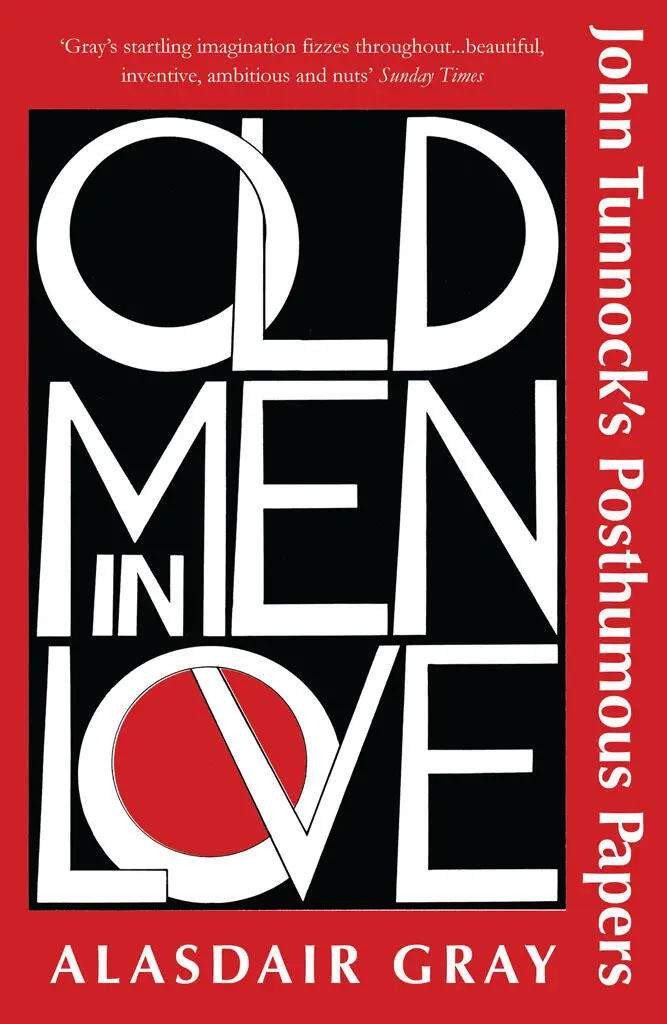
- Название:Old Men in Love
- Автор:
- Издательство:Bloomsbury UK
- Жанр:
- Год:2009
- ISBN:нет данных
- Рейтинг книги:3 / 5. Голосов: 1
-
Избранное:Добавить в избранное
- Отзывы:
-
Ваша оценка:
Old Men in Love: краткое содержание, описание и аннотация
Предлагаем к чтению аннотацию, описание, краткое содержание или предисловие (зависит от того, что написал сам автор книги «Old Men in Love»). Если вы не нашли необходимую информацию о книге — напишите в комментариях, мы постараемся отыскать её.
"Our nearest contemporary equivalent to Blake, our sweetest-natured screwed-up visionary."-"London Evening Standard"
Alasdair Gray's unique melding of humor and metafiction at once hearken back to Laurence Sterne and sit beside today's literary mash-ups with equal comfort. "Old Men in Love" is smart, down-to-earth, funny, bawdy, politically inspired, dark, multi-layered, and filled with the kind of intertextual play that Gray delights in.
As with Gray's previous novel "Poor Things," several partial narratives are presented together. Here the conceit is that they were all discovered in the papers of the late John Tunnock, a retired Glasgow teacher who started a number of novels in settings as varied as Periclean Athens, Renaissance Florence, Victorian Somerset, and Britain under New Labour.
This is the first US edition (updated with the author's corrections from the UK edition) of a novel that British critics lauded as one of the best of Gray's long career. Beautifully printed in two colors throughout and featuring Gray's trademark strong design, "Old Men in Love" will stand out from everything else on the shelf. Fifty percent is fact and the rest is possible, but it must be read to be believed.
Alasdair Gray is one of Scotland's most well-known and acclaimed artists. He is the author of nine novels, including "Lanark," "1982 Janine," and the Whitbread and Guardian Prize-winning "Poor Things," as well as four collections of stories, two collections of poetry, and three books of nonfiction, including "The Book of Prefaces." He lives in Glasgow, Scotland.
Old Men in Love — читать онлайн бесплатно полную книгу (весь текст) целиком
Ниже представлен текст книги, разбитый по страницам. Система сохранения места последней прочитанной страницы, позволяет с удобством читать онлайн бесплатно книгу «Old Men in Love», без необходимости каждый раз заново искать на чём Вы остановились. Поставьте закладку, и сможете в любой момент перейти на страницу, на которой закончили чтение.
Интервал:
Закладка:
Any map shows Scotland’s difference from England what it originally was — several different islands jammed together. They are so narrowly joined that the Romans found it convenient to wall Caledonia off. Scotland’s grotesquely irregular coastline shows the tip of the most southerly peninsula is only twelve miles from the Irish coast; the nearest neighbour on the European mainland is Norway, with the Orkney and Shetland islands like stepping stones between. Inside Scotland’s ragged coastline the glens and plains are so separated by highland sea-lochs and mountain ranges, by lowland moors and firths, that cultivation produced very little surplus wealth before the mid 18 thcentury. The natural barriers made conquest of the whole impossible for invaders, and a united Scotland almost impossible for the natives. It was four kingdoms, each an unstable union of fiercely independent clans, each with a capital city on the rock of an extinct volcano. Dumbarton (meaning Fort of the Britons ) was capital of Strathclyde, a mainly Welsh-speaking kingdom that included Galloway and the west coast down to Barrow in Furness. Edinburgh was capital of a nation in east Scotland, south of the Firth of Forth and partly English-speaking, for it had been part of Northumbria before Duke William conquered all England up to the Tyne. Fife and the north west, with much of the Highlands, belonged to a people called Picts whose language is unknown and whose capital was on Craig Phadraig, Inverness. The Scottish king’s nation, Dalriada, had its capital on Dunadd in Argyllshire, where the Scots tribes, Gaelic-speaking incomers, had arrived from Ireland. It is also pertinent that Shetland, Orkney, and Sutherland for centuries belonged to Norway and there were Scandinavian settlements all round the place, though that was also frequent in England.
In days when kings were hardly anything but warlords, King Kenneth mac Alpin of Dalriada gave the Caledonian clanjamfrie the name of Scotland by conquest of some neighbours and alliances with others. That Scotland continued as a nation, however, is an English achievement, because ever since then the government of the bigger, richer nation tried and usually failed to make Scotland one of its counties — a kind of Cornwall or Yorkshire. Scotland’s people have never been more than a tenth of England’s, so why did England’s far greater military power fail to incorporate us before Oliver Cromwell’s brief success under the Commonwealth? Why did Scotland’s three centuries of being Scotlandshire never quite destroy her independent culture? Why is she at last bound to win the same freedom as Portugal from Spain, Austria from Germany, Iceland from Denmark? 41
Robert Louis Stevenson gave the simplest answer when he noted that Gaelic-speaking Highlanders regard English-speaking Lowlanders with a suspicion the Lowlander is inclined to return unless both meet in English company where they at once feel like blood brothers. Why? There are many partial answers. One is the comparative poverty ensuring that for centuries the Scots gentry, whether Lowland lairds or Highland chiefs, did not speak wholly differently from their lowly employees, unlike England whose chief officials still speak a mandarin dialect learned in expensive private schools like Rugby, Marlborough etcetera. Around 1370 a French traveller visiting Scotland thought it remarkable that if a knight rode his horse over a Scot’s grain field an angry peasant ran up and cursed him. No peasant dared do that in rich lands where the nobility had hundreds of workers so could have one flogged or hung without loss of income. Scots aristocrats were mostly too poor to damage crops on which they and their peasants depended. In the late 19 thcentury Robert Louis Stevenson was dismayed by how completely his English friends behaved as if their servants and other low-class folk did not exist. Such national differences may be thought obsolete relics, and should be forgotten. This book will explain otherwise, not by inflaming anti-English sentiment, but by showing how local conditions have created a unique culture, so a separate government has always been required by those who share this land, these conditions.
The following chapters explain how Scottish people’s land, rocks, soil distribution, mineral resources, waters and those great potential dynamos the sea lochs, ensure that all who live and work here come to feel part of it like the Irish who came to found Dalriada and later fled here from the potato famine — the Anglo-Saxons who escaped across the border from Duke William and Margaret Thatcher into the Lothians — Jews driven here by Czarist and Nazi pogroms — Italians by the phylloxera epidemic that destroyed their vineyards — Indians, Pakistanis, Chinese and other former subjects of the British empire, together with refugees from wars Britain has fought since then and who are now wickedly labelled asylum seekers . I believe that all who stay to live, work and vote here will invigorate this nation that has always been a colloquium of different people, as every sane nation must be.
NINETEEN TUNNOCK'S DIARY 2004
Highly perplexed. Around Saturday lunchtime yesterday life changed in a way that almost makes my entire past irrelevant, uninteresting. Shortly before noon I brought Niki her usual brunch in bed. She complained about amount of butter on toast. Told her she had a tenth part of what I put on my slice. She said that was why I was fat, then doorbell rang. Went down, opened it. Bustled in past me a person of my own height but sturdier, wearing a kind of battle dress with camouflage pattern designed for jungle warfare. She turned and facing me, hands on hips, said belligerently, “Where’s that Is?”
“Who are you?” I said, astonished.
“Where is that Is?” she demanded, fiercer still. Beginning to recognize her I said, “I don’t know! You led Isabel in here with two other girls three years ago. I had never seen them before and have never seen them since.”
“Hm!” she said, frowning, and, “Are you telling me the truth?” “Why should I tell lies?” I cried, exasperated. “Who are you? What do you want here?”
“Are you telling me there’s no woman in this house?”
“Why should I tell you anything?” I demanded.
“I’m the woman in this house,” said a voice and there was Niki on the stair landing, her coat slipped on over her nightgown and Moloch in her arms.
“Then clear out!” said this total stranger. Niki, obviously as astonished as I was, said faintly “Who are you?”
“Don’t you know?”
Niki stood staring and shaking her head. She had been redder than usual but was now paler than usual. The invader said, “If you don’t know me, ask around. I know you Mrs Kate MacNulty! Your man knows me even better so go back hame and ask him who I am! You’ll find him a lot nicer after his wee spell in jail, so put on your claes and get out of here because your arnae needed. John’s had enough of you and that wean you carted here instead of chucking in the Clyde. Amn’t I right John?”
That question was flung at me like a stone, and because I was indeed tired of Niki and Moloch I could not say no. Niki yelled, “Don’t worry! I’m sick of you John Tunnock and you’re welcome to that bitch whoever she is! I was going to clear out soon anyway ye fat, stupid, mean, TV-less wee bastard!”
Moloch started wailing.
When life grows too complicated for intelligent management, sit down till it simplifies. I did so in the dining-room, elbows on knees, head in hands. The invader stayed in the lobby until I heard Niki leave, muttering what were either ugly remarks to the stranger or soothing sounds to Mo. The front door slammed. The new presence entered the room and sat opposite me. Relief at departure of lodgers was blocked by dread of new burden. Without looking up I asked what she wanted. She said sullenly, “I wouldnae mind a whisky. A big one. No water. And I wouldnae mind chocolate biscuits or stuff like that, if you’ve got any.”
Читать дальшеИнтервал:
Закладка:
Похожие книги на «Old Men in Love»
Представляем Вашему вниманию похожие книги на «Old Men in Love» списком для выбора. Мы отобрали схожую по названию и смыслу литературу в надежде предоставить читателям больше вариантов отыскать новые, интересные, ещё непрочитанные произведения.

Обсуждение, отзывы о книге «Old Men in Love» и просто собственные мнения читателей. Оставьте ваши комментарии, напишите, что Вы думаете о произведении, его смысле или главных героях. Укажите что конкретно понравилось, а что нет, и почему Вы так считаете.