Alasdair Gray - Old Men in Love
Здесь есть возможность читать онлайн «Alasdair Gray - Old Men in Love» весь текст электронной книги совершенно бесплатно (целиком полную версию без сокращений). В некоторых случаях можно слушать аудио, скачать через торрент в формате fb2 и присутствует краткое содержание. Год выпуска: 2009, Издательство: Bloomsbury UK, Жанр: Современная проза, на английском языке. Описание произведения, (предисловие) а так же отзывы посетителей доступны на портале библиотеки ЛибКат.
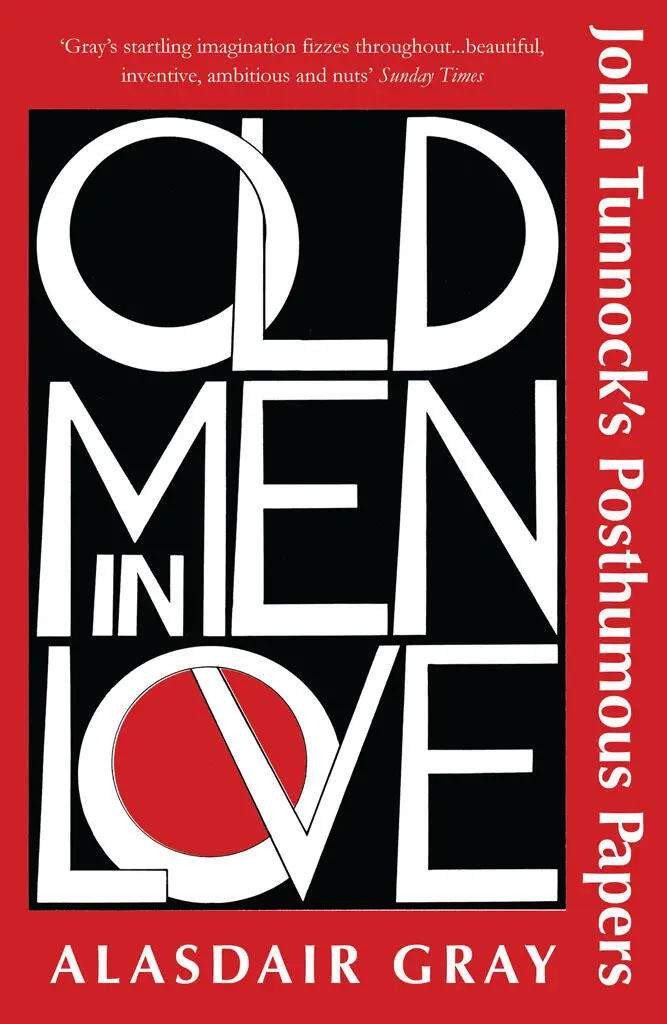
- Название:Old Men in Love
- Автор:
- Издательство:Bloomsbury UK
- Жанр:
- Год:2009
- ISBN:нет данных
- Рейтинг книги:3 / 5. Голосов: 1
-
Избранное:Добавить в избранное
- Отзывы:
-
Ваша оценка:
Old Men in Love: краткое содержание, описание и аннотация
Предлагаем к чтению аннотацию, описание, краткое содержание или предисловие (зависит от того, что написал сам автор книги «Old Men in Love»). Если вы не нашли необходимую информацию о книге — напишите в комментариях, мы постараемся отыскать её.
"Our nearest contemporary equivalent to Blake, our sweetest-natured screwed-up visionary."-"London Evening Standard"
Alasdair Gray's unique melding of humor and metafiction at once hearken back to Laurence Sterne and sit beside today's literary mash-ups with equal comfort. "Old Men in Love" is smart, down-to-earth, funny, bawdy, politically inspired, dark, multi-layered, and filled with the kind of intertextual play that Gray delights in.
As with Gray's previous novel "Poor Things," several partial narratives are presented together. Here the conceit is that they were all discovered in the papers of the late John Tunnock, a retired Glasgow teacher who started a number of novels in settings as varied as Periclean Athens, Renaissance Florence, Victorian Somerset, and Britain under New Labour.
This is the first US edition (updated with the author's corrections from the UK edition) of a novel that British critics lauded as one of the best of Gray's long career. Beautifully printed in two colors throughout and featuring Gray's trademark strong design, "Old Men in Love" will stand out from everything else on the shelf. Fifty percent is fact and the rest is possible, but it must be read to be believed.
Alasdair Gray is one of Scotland's most well-known and acclaimed artists. He is the author of nine novels, including "Lanark," "1982 Janine," and the Whitbread and Guardian Prize-winning "Poor Things," as well as four collections of stories, two collections of poetry, and three books of nonfiction, including "The Book of Prefaces." He lives in Glasgow, Scotland.
Old Men in Love — читать онлайн бесплатно полную книгу (весь текст) целиком
Ниже представлен текст книги, разбитый по страницам. Система сохранения места последней прочитанной страницы, позволяет с удобством читать онлайн бесплатно книгу «Old Men in Love», без необходимости каждый раз заново искать на чём Вы остановились. Поставьте закладку, и сможете в любой момент перейти на страницу, на которой закончили чтение.
Интервал:
Закладка:
The molten minerals under the Earth’s crust had currents slowly cracking it apart, making long submarine canyons on the ocean floor with bottoms constantly restored by lava welling up through volcanic vents. Boiling water above the vents was stopped evaporating by the weight of colder water over a mile-deep above it. In the hottest depths, in a broth of dissolved chemicals, droplets started circulating. They grew larger when they touched and merged with similar droplets, but when this made them too big for their skins they split in two and went on separately. Such droplets evolved into single-celled creatures we call living because they sense things outside their bodies that can nourish them and help them reproduce , having motive power to reach for them. The evolution from these chemical drops to living cells has never (yet?) been achieved in a human laboratory. It has to happen first in deep water because in those days lethal ultra-violet sunlight penetrated water to a depth of over thirty feet. In submarine depths the sun’s rays and Earth’s heat were reduced, yet still strong enough to generate and support single-celled microbes that were the only living things for at least three quarters of life on Earth before today.
Tiny primitive creatures fed on dissolved chemicals in the earliest sea, then bigger ones started also feeding on the smaller, breathing out carbon dioxide that rose above the sea, mixed with the atmosphere above and began screening out the lethal ultra-violet rays. This let larger living things evolve near the surface. More complex bacteria converted carbon dioxide into oxygen until the air above was two per cent oxygen, which let a kindlier sunlight shine on sea and land. Life now crossed the beaches, entering rivers, lakes, swamps, plains in the first great continent. Lichens, mosses, fungi were followed by primitive insects and those segmented worms that are ancestors of every lizard, fish, bird and mammal with a backbone. The whole upper Earth, fluid and solid, came to hold living things of every size — plankton, seaweeds, sponges, fish, squid, sharks in the oceans, — crawling things in submarine volcanic vents, rock pools and soil, — herbs, trees, amphibians, lizards on land, — spores, seeds, insects, bats, birds in the air. This living layer around our planet has been called the zoo-sphere. It is thinnest at the poles, thickest in tropical rainforests. There were many such forests on the swampy first continent.
The Earth’s interior moves more slowly than the zoo-sphere but is never still, currents in the molten rock under the solid crust always moving huge plates of crust apart on one side, and ramming them together on the other. Mountain ranges are raised when one plate is forced over another, then rain, wind, frost and lichen starts wearing the mountains down. Rocks and gravel fall into glens and valleys, rivers wash grit onto plains, spreading it and mixing it with dead plants and creatures, creating new soil. Meteor bombardments killed great sections of zoo-sphere through sudden global winters and ice ages, spreading seas have drowned them, the world’s shifting crust has covered them with new rock making underground layers of coal and metal, reservoirs of oil and gas. The world’s subterranean currents broke the earliest continent into smaller ones and drove them so far apart that they joined again on the other side of the world near the south pole. This again cracked into continents that drifted north and started roughly corresponding to those we know, though not in the order we know them at first. Some of the oceans between them widened, some narrowed or disappeared. The great plate of crust carrying India collided with Eurasia, elevating the Himalayas, our highest and youngest mountain range. The Alps are hardly middle-aged. The Wicklow Hills are all that remain of more ancient mountains.
When the Atlantic was a much narrower sea, the North American and Baltic landmasses had offshore islands with the same geology: granite, the world’s oldest rock, and granite volcanically mixed with newer stuff, which is called metamorphic . The Eurasian landmass edged up from the south west, with offshore islands made of mainly sedimentary rock: chalk, clay and limestone. Slow convulsions jammed the north eastern islands together and rammed them onto a larger, more level coalition of the southern islands, creating an archipelago visited in the 4 thcentury BC by Pytheas, a Greek explorer who gave it a Greek name. Nearly sixty years before Christ’s birth it was invaded by Romans who learned most of their science from the Greeks and Latinised the name into Britannia. This happened because an unusual beast had appeared half a million years earlier.
Different thinkers have called Homo Sapiens a featherless biped, a tool-using animal, and “the glory, jest and riddle of the world”. We are the only creature who drink when not thirsty, eat when not hungry, and take twelve years or more to become adult. One year old humans totter on unsteady legs when horses of that age walk, gallop and feed themselves in open fields. One year old birds have hatched, learned to fly, mated, built nests and begun feeding their own children because birds, bees, ponies etcetera mostly act instinctively; human instincts are so weakened that our actions have to be learned through imitation of adults (starting with mum and dad) who act differently from each other. This forces self-conscious choice called learning upon us, hence our prolonged immaturity. Adults are usually compensated for this by being ready for sexual intercourse all year round. Conscious choice has made us capable of new inventions — lighting fires, shaping sharp-edged tools, and sewing needles — so since homo sapiens learned to stand upright and use our hands in Africa we have kept a common body pattern by changing our minds, habits and societies. The Arctic ice cap once expanded south until most of Britain and adjacent lands were under a mile-thick layer of it. This thawed, retreated and returned, altering climates and sea levels. Other species were killed off or survived by evolving different bodies and instincts. Our kind survived by killing other creatures, roasting their flesh, turning their bones and skin into tools and clothing. As we spread around the globe some details of our physique changed a little. Hunters in the frozen north grew paler and plumper, those in the south leaner and darker. Where food was abundant the average human height grew to six feet or more. Poor food supplies made us dwarfish, led to immigration, warfare and murder, for we lacked the instinct that stops other beasts killing helpless members of their own species. Settled farmers on Chinese plains grew extra inches of gut to draw more nourishment from their rice, yet they too are of the same species as Inuits in Alaska, Pigmies in the Congo, Cleopatra, Robert Burns, Mahatma Ghandi and Condoleezza Rice. The big differences between races, nations and tribes come from folk learning to live in very different landscapes. A vast plain watered by three rivers explains why China is the largest, most peopled and most ancient nation. A smaller, equally self-centred nation was made by layers of limestone, chalk and clay forming a saucer of land with Paris in the middle. The Baltic sea explains why such close neighbours as Norway, Sweden and Denmark have different governments though a similar language.
Like all efficient imperialists Romans divided lands they invaded along natural borders. They called the south mainland Albion, the north mainland Caledonia, the western island Hibernia. Albion was very woody and marshy but had few natural barriers impeding the march of Roman legions. The tribes of Albion that joined to fight those were defeated, then the level parts of the south British mainland (all Albion except Wales) were planted over by Roman camps. These were connected by well-built roads to each and to Londinium , Britain’s first big city. The camps were sited in fertile places and grew to be centres of still-thriving towns: Bath, York, Lincoln, Carlisle and other cities with names ending in chester or caster. The broad, fertile, generally level nature of Albion with its road network explains why it fell quickly to later invaders after Rome pulled out — first fell to Saxons and Angles who renamed it Angle-land or England, then to King Canute’s Danish empire, then in 1066 to the Norman French. It explains why London-on-Thames became the capital of the English state, and why the the Bishop of Canterbury has been the High Priest of England since 598, and why England had only two universities in market towns near London until 1828.
Читать дальшеИнтервал:
Закладка:
Похожие книги на «Old Men in Love»
Представляем Вашему вниманию похожие книги на «Old Men in Love» списком для выбора. Мы отобрали схожую по названию и смыслу литературу в надежде предоставить читателям больше вариантов отыскать новые, интересные, ещё непрочитанные произведения.

Обсуждение, отзывы о книге «Old Men in Love» и просто собственные мнения читателей. Оставьте ваши комментарии, напишите, что Вы думаете о произведении, его смысле или главных героях. Укажите что конкретно понравилось, а что нет, и почему Вы так считаете.