Rabih Alameddine - The Hakawati
Здесь есть возможность читать онлайн «Rabih Alameddine - The Hakawati» весь текст электронной книги совершенно бесплатно (целиком полную версию без сокращений). В некоторых случаях можно слушать аудио, скачать через торрент в формате fb2 и присутствует краткое содержание. Год выпуска: 2009, Издательство: Anchor, Жанр: Современная проза, на английском языке. Описание произведения, (предисловие) а так же отзывы посетителей доступны на портале библиотеки ЛибКат.
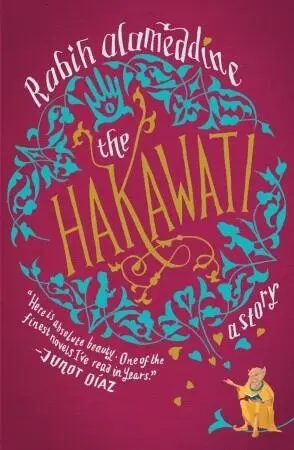
- Название:The Hakawati
- Автор:
- Издательство:Anchor
- Жанр:
- Год:2009
- ISBN:нет данных
- Рейтинг книги:4 / 5. Голосов: 1
-
Избранное:Добавить в избранное
- Отзывы:
-
Ваша оценка:
The Hakawati: краткое содержание, описание и аннотация
Предлагаем к чтению аннотацию, описание, краткое содержание или предисловие (зависит от того, что написал сам автор книги «The Hakawati»). Если вы не нашли необходимую информацию о книге — напишите в комментариях, мы постараемся отыскать её.
, or storyteller, and his bewitching tales are interwoven with classic stories of the Middle East. Here are Abraham and Isaac; Ishmael, father of the Arab tribes; the beautiful Fatima; Baybars, the slave prince who vanquished the Crusaders; and a host of mischievous imps. Through Osama, we also enter the world of the contemporary Lebanese men and women whose stories tell a larger, heartbreaking tale of seemingly endless war, conflicted identity, and survival. With
, Rabih Alameddine has given us an
for this century.
The Hakawati — читать онлайн бесплатно полную книгу (весь текст) целиком
Ниже представлен текст книги, разбитый по страницам. Система сохранения места последней прочитанной страницы, позволяет с удобством читать онлайн бесплатно книгу «The Hakawati», без необходимости каждый раз заново искать на чём Вы остановились. Поставьте закладку, и сможете в любой момент перейти на страницу, на которой закончили чтение.
Интервал:
Закладка:
I negotiated the fare with the taxi driver, a man as old as my father. He asked for an exorbitant sum. His Mercedes was restored and revamped. Look. See? Not a scratch, not one bullet hole. “Look at me,” I said. “Do I look like a guy who cares what kind of car I get in?” He came down twenty. I went up two. He said our village was far, at least forty minutes. I said I could find another taxi.
Banks of ominous slate clouds hovered as we drove along the mountain road. Trees seemed sparser. “Kindling,” the driver explained. The car spasmed with every pothole. “At least this area is safe for now,” the driver said. “For your people at least. You’re Druze, right?”
“Half,” I said.
He turned to me questioningly, as if the concept was utterly foreign. He waited for me to elaborate, and I didn’t. “Why did you come back? People don’t return anymore.”
“Wedding.”
“And you’re arriving empty-handed?”
“My bag will be here tomorrow.”
“It used to be that emigrants returned with sacks and sacks of beautiful things, money and jewelry. They struck gold abroad and returned home to be men. Everyone leaves now, but no one returns. If I were you, I wouldn’t have come back, not even for a wedding.”
“I’ve only been gone a few months.”
He shook his head in disbelief. “It sure looks like you’ve been away longer.”
I wanted to look in a mirror, examine my face. Did I look like a foreigner?

King Saleh breathed the ill winds of infirmity. The doctors advised a month’s rest in a moderate climate. The king and his courtiers moved to al-Mansoura, where the fresh breezes had healed many a disorder. He regained his health and returned to Cairo, only to relapse. He heard the knells.
“Bring me my son,” the king said. Baybars rushed to his king’s bedside. “You built a neighborhood for me once, my son,” the king whispered. “Give me a mosque that will bear my name for eternity.”
Baybars called on the architects, builders, and artisans. “I will not know sleep and neither will you until this stately mosque stands in honor of our sultan. Begin.” A mosque of unequaled grandeur was erected in one month. On the Friday after it was finished, the king visited the mosque, helped by his attendants. “I am a happy man,” he said. He returned to the diwan and tried to sit, but was unable. He was carried to his bed. “Turn me toward the Qibla,” the king said. “We belong to God, and to Him we return.” He lay facing east. “I witness that there is no god but God and that Muhammad is the Prophet of God.” The king died.
Our village sparkled at sunset. A guard in a dark suit and frayed white shirt, with a machine gun hanging on his shoulder, stopped the taxi at the gate to my father’s house. He bent his head to peer through the driver’s window. “Who’re you?” he asked.
“Who’re you?” I replied.
He cracked up. “Who’re you? You’re not dressed for a wedding.” Another machine-gun-toting, cheap-suited man joined him and bent to check me out. He grinned, obviously having begun his libations early.
“If the groom was worthy,” I said, “I’d have dressed better, but since he’s no more than a silly communist betraying the great cause, I can’t be bothered.”
Both men broke into tipsy laughing fits. The second man exclaimed, “I know you.”
I tried to sound grave. “Go tell your leader that such frivolities are beneath him. I’m here to give him a tongue-lashing.”
“Spare the poor man,” joked the first. “He doesn’t know the trouble he’s getting into.”
More men gathered around. The floodlit house was about twenty yards from the gate, and the entire front garden was overfilled with fighters desperately trying to pass for wedding guests. The bey’s guards alone numbered more than thirty. Ever since the civil war started, he’d begun to pick up protection the way a stray bitch in heat picked up studs.
“I know you,” the second guard repeated. “We met a year ago. You’re not here.”
“I certainly am not. I’m a figment of everyone’s imagination. Now, make way. Don’t make me get out of the car.”
The men guffawed. One shouted, “The brother of the bride is here.” Another corrected, “The brother of the new boss has arrived.” A machine gun was fired into the air, momentarily shocking any merriment out of my system. It was followed by another and another. A few yards away, the bey’s guards followed suit, joining Elie’s militia in an ecstatic firing orgasm.
After the machine guns stilled, the diesel generator took over, an old one that sounded like the chugalug of a steam train. The electricity in the village was off. My father had built this house as a summer home, but the fighting had forced the family to move into it temporarily. Though it was comfortable enough as a vacation house, it was neither spacious nor adequate for full-time family living. It was definitely not grand enough for a wedding.
My father came out of the house when he heard the machine-gun welcome. Guests hadn’t begun to arrive yet. When he saw me emerge from the taxi, he looked as if someone were speaking to him in a language he couldn’t grasp. The expression on his face was worth all the trouble I had gone to. I could see him wanting to move toward me. I imagined the muscles beneath his suit tensing, waiting for a release that had been long in coming. I climbed the five steps toward him. His eyes wore a moist film of my face. As soon as my lips kissed his cheeks, his arms engulfed me. I allowed myself to melt in his arms.
Another round of machine-gun fire shocked us apart. The men, touched by the unfolding scene before them, father and son brought together again, expressed their appreciation by firing at the sky.
My father led me into the house. A cursory glance showed the family and close friends getting set for the arrival of guests, a raucous flurry of activity. My cousin Hafez was the first to notice me, from across the hall. He was sipping a scotch as he pushed a table to one side with his thigh. Shock bloomed on his face, then a smile. He mouthed, “What, my brother?” I smiled back.
My mother emerged from the corridor that led to the bedrooms. Whenever she felt pressured, whenever she felt she was fighting alone against the world, the first thing she did was make sure she looked her best. Even had I not known much about the reasons for this wedding, I would have guessed she didn’t approve, because she looked striking. Farah Diba would have killed the shah to look like her. My mother wore a high chignon, pinned randomly with a number of single cream pearls. The front of her black hair was pulled tight, with a part in the middle. Her ears wore four pearls each, a black surrounded by two creams and a large teardrop cream dropping below the others. Her strapless dress was cream-colored as well, fitted and tight, studded randomly with the same pearls. “Tell the idiots to stop shooting,” she snapped at my father. “It’s a wedding, not a bacchanal.” She stopped, stared at me, aghast. I smiled. Her hand covered her mouth. She shivered, swayed, and dropped to one knee. I heard the faint rip of material. My father rushed to her. Soon practically everyone in the house surrounded her.
“Make room,” yelled Aunt Wasila, rudely pushing people aside. “Don’t crowd her. She needs to breathe.” The bey, who was bending to help my mother, was unceremoniously shoved aside with the others. “Clear out. Guests will be arriving soon.”
“I thought he was a ghost,” my mother told my father.
“He’s not, my dear. He’s all real.” His concern made his smile seem wistful. “Are you all right?” He helped her stand.
Читать дальшеИнтервал:
Закладка:
Похожие книги на «The Hakawati»
Представляем Вашему вниманию похожие книги на «The Hakawati» списком для выбора. Мы отобрали схожую по названию и смыслу литературу в надежде предоставить читателям больше вариантов отыскать новые, интересные, ещё непрочитанные произведения.








Обсуждение, отзывы о книге «The Hakawati» и просто собственные мнения читателей. Оставьте ваши комментарии, напишите, что Вы думаете о произведении, его смысле или главных героях. Укажите что конкретно понравилось, а что нет, и почему Вы так считаете.