Rabih Alameddine - The Hakawati
Здесь есть возможность читать онлайн «Rabih Alameddine - The Hakawati» весь текст электронной книги совершенно бесплатно (целиком полную версию без сокращений). В некоторых случаях можно слушать аудио, скачать через торрент в формате fb2 и присутствует краткое содержание. Год выпуска: 2009, Издательство: Anchor, Жанр: Современная проза, на английском языке. Описание произведения, (предисловие) а так же отзывы посетителей доступны на портале библиотеки ЛибКат.
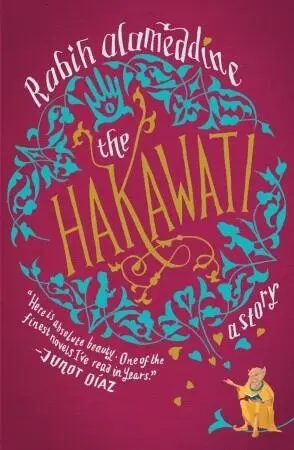
- Название:The Hakawati
- Автор:
- Издательство:Anchor
- Жанр:
- Год:2009
- ISBN:нет данных
- Рейтинг книги:4 / 5. Голосов: 1
-
Избранное:Добавить в избранное
- Отзывы:
-
Ваша оценка:
The Hakawati: краткое содержание, описание и аннотация
Предлагаем к чтению аннотацию, описание, краткое содержание или предисловие (зависит от того, что написал сам автор книги «The Hakawati»). Если вы не нашли необходимую информацию о книге — напишите в комментариях, мы постараемся отыскать её.
, or storyteller, and his bewitching tales are interwoven with classic stories of the Middle East. Here are Abraham and Isaac; Ishmael, father of the Arab tribes; the beautiful Fatima; Baybars, the slave prince who vanquished the Crusaders; and a host of mischievous imps. Through Osama, we also enter the world of the contemporary Lebanese men and women whose stories tell a larger, heartbreaking tale of seemingly endless war, conflicted identity, and survival. With
, Rabih Alameddine has given us an
for this century.
The Hakawati — читать онлайн бесплатно полную книгу (весь текст) целиком
Ниже представлен текст книги, разбитый по страницам. Система сохранения места последней прочитанной страницы, позволяет с удобством читать онлайн бесплатно книгу «The Hakawati», без необходимости каждый раз заново искать на чём Вы остановились. Поставьте закладку, и сможете в любой момент перейти на страницу, на которой закончили чтение.
Интервал:
Закладка:
The hairs on my arms rose for an instant. I began another maqâm, trying to lose myself in the essence of the music, in its passion. Played for about ten minutes before I paused and noticed that my discriminating audience had passed out. I resumed the maqâm, but I couldn’t make the guitar produce the sounds I was hearing in my head. Finally, it came to me. I knew what was wrong. I walked out of the room and into the common kitchen. I unstrung my guitar and put it on the Formica counter. I searched the drawers for the right tool, but could come up with nothing better than a steak knife to defret my J200. The steak knife was too flimsy, so I tried a bread knife. Without its frets, my guitar would sound better, more me. The bread knife didn’t work, either. I plugged in the carving knife, and the current jerked it into life. I went to work. The sound of the knife’s tiny motor grew deafening, but I persisted. I went too deep with the first fret, not so much with the second. I’d figured out how to operate by the third and fourth, but I stopped at the fifth. I stared at the dying instrument before me and left it. I returned to my dorm room and lay down, my head buzzing.

“I was with Ali for years, through school, through college,” Uncle Jihad went on. “And you should know, those wonderful pigeoneers had a lot to do with our family being where it is today. There was another one as well. Let me explain. Ali abhorred this one pigeoneer, Mohammad Be  aini. They were mortal enemies, and not simply because the Be ainis were Sunni and the Itanis were Shiite. It seemed that Ali’s father had once insulted Mohammad’s, and the bad blood festered. Ali and Mohammad had never actually spoken to each other. They grew up with the feud, and each assumed the other was evil. One day, two or three years after I started with Ali — maybe it was 1948—one of Mohammad’s pigeons landed on our roof. Ali recognized it immediately and held his tongue. The bird seemed lost, so I approached it from behind, netted it, and carried it to the small cage, but Ali said, ‘No. Wring its neck. Mohammad won’t ask for it, and I won’t return it.’ I was flabbergasted. I refused to do it. ‘It’s for the bird’s own good,’ Ali said. ‘It’ll suffer away from home. We can’t keep it. It’s the humane thing to do.’ I held it out to him. If he wanted it dead, then he’d have to kill it. Kamal came to my rescue. ‘You can’t make the young man do your work. Either kill it yourself or return it.’
“ ‘I won’t return it,’ insisted Ali. I told him I would, and he replied, ‘He knows you work for me. I won’t have it.’ Well, I knew about saving face. ‘I’ll take it back and tell him you weren’t here when it landed.’ And relief blushed Ali’s face. Even Kamal smiled. I walked the bird to Mohammad Be aini’s. The look on his face was priceless when he recognized me. I told him that Ali hadn’t been there, but he didn’t believe me. He took the bird back and thanked me.
“Now, in a great story, Ali and Mohammad would become great friends, and their grandchildren would marry each other, and they would have offspring that were family, but that wasn’t the case. Mohammad simply stopped talking badly about Ali and refused to be anywhere near anyone who would. And whenever someone complimented Ali on his magnificent coop, he said, ‘I wish my pigeons were as lovely as Be aini’s.’ They both passed away without having spoken a word to each other. So, you ask, why am I telling you a story without a great ending? Because, as in all great stories, the end is never where you expect it to be.
“Mohammad Be aini didn’t become a close friend of mine, either. But when I graduated from college and Uncle Ma an put your father and me up in our first apartment, I started a small coop on our balcony. Ali offered me three pairs, a Rashidi, a Turkish, and a Zahr al-Fool. Two days after my coop was up, a young boy knocked on my door with a priceless gift from Mohammad, a pair of gorgeous Yehudis. We hadn’t seen each other since that first day, so I paid him a visit and thanked him.
“I was able to repay him quickly. Pigeons loved me, you see. They bred for me. At one time, I was probably the best pigeon breeder in all of Beirut. My Yehudis were all prize pigeons. I gifted Mohammad with a wonderful pair. I also gave him a stunning pair of speckled Zahr al-Fool. Of course, I gave Ali similar mates. So, you see, Mohammad and Ali did end up having offspring that were family after all. I had become a well-known pigeoneer. By then my father knew, and he wanted me to stop, because he hated pigeons. He considered the profession demeaning. Did you know that a pigeoneer’s testimony isn’t accepted in a court of law? You know why? By law, a pigeoneer’s word can’t be trusted, because he spends his time on roofs and is therefore a Peeping Tom. People are naïve. Of course, that’s why most muezzins are blind. They may be high up, but they can’t see.
“Your father wanted me to quit, too. Fairly or unfairly, society considered pigeoneers contemptible, and he wanted reputable men to respect him. More important, what decent woman would marry him if his brother was a pigeoneer? Your mother certainly wouldn’t have. I had to quit and start a company with him. When it came time for me to give everything up, I sold my pigeons for a tidy sum, the seed for our corporation, but we still needed a lot more money. Both Ali Itani and Kamal Hourani gave me everything they could spare. Neither was rich, but they held nothing back. They were in their eighties by then. They both passed away before I could repay them. Kamal died first, and of course Ali couldn’t bear it and followed him not ten days later. I can tell you, I spent those ten days with Ali. His grief was unbearable, and death surely rescued him. I repaid my debt to their families.
“But since I was desperate, I had also asked Mohammad Be aini, and he didn’t hesitate, either. It turned out he was wealthier than anyone I knew. He ended up being the biggest contributor of the army of angels.”
I was lucky that I was sober when my mother called. She asked about school. How was I doing with finals? Was everything going as well as it should? Yet I could hear the anxiety in her voice. “Listen,” she said, “I wanted to tell you this before you heard it from someone else. Your sister’s getting married next week. It’s not going to be a big wedding, just the family and close friends. We’re not making a big deal out of it.”
I watched my hand clench the phone. My mouth felt dry and cottony. My head hurt. “What do you mean?” I asked.
“What do you mean what do I mean? Wedding, marriage, your sister.”
“Who’s she marrying?”
“Elie, of course. The wedding’s next week. They’re in love. They’re happy. They’re getting married.”
“I don’t understand. Why does she want to marry him? Why so quickly?”
I heard her sigh on the other end. “Listen, darling,” she said, “you have to be an adult now. You don’t need to have everything explained. Think about it.” She paused for an instant. “Why would there be a wedding so soon after Jihad passed away? It’s not a shotgun wedding, but an AK-47 one.” She paused again. “Why would I allow her to marry that fucking bastard with half a brain?” Another pause, a long breath, quieter. “Now, darling, don’t ask me any more questions. I’m just telling you that Lina is getting married and then I’m going to kill her.”
Читать дальшеИнтервал:
Закладка:
Похожие книги на «The Hakawati»
Представляем Вашему вниманию похожие книги на «The Hakawati» списком для выбора. Мы отобрали схожую по названию и смыслу литературу в надежде предоставить читателям больше вариантов отыскать новые, интересные, ещё непрочитанные произведения.









Обсуждение, отзывы о книге «The Hakawati» и просто собственные мнения читателей. Оставьте ваши комментарии, напишите, что Вы думаете о произведении, его смысле или главных героях. Укажите что конкретно понравилось, а что нет, и почему Вы так считаете.