Rabih Alameddine - The Hakawati
Здесь есть возможность читать онлайн «Rabih Alameddine - The Hakawati» весь текст электронной книги совершенно бесплатно (целиком полную версию без сокращений). В некоторых случаях можно слушать аудио, скачать через торрент в формате fb2 и присутствует краткое содержание. Год выпуска: 2009, Издательство: Anchor, Жанр: Современная проза, на английском языке. Описание произведения, (предисловие) а так же отзывы посетителей доступны на портале библиотеки ЛибКат.
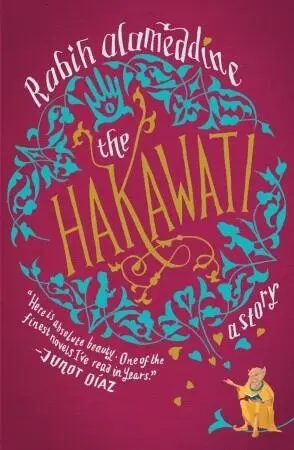
- Название:The Hakawati
- Автор:
- Издательство:Anchor
- Жанр:
- Год:2009
- ISBN:нет данных
- Рейтинг книги:4 / 5. Голосов: 1
-
Избранное:Добавить в избранное
- Отзывы:
-
Ваша оценка:
The Hakawati: краткое содержание, описание и аннотация
Предлагаем к чтению аннотацию, описание, краткое содержание или предисловие (зависит от того, что написал сам автор книги «The Hakawati»). Если вы не нашли необходимую информацию о книге — напишите в комментариях, мы постараемся отыскать её.
, or storyteller, and his bewitching tales are interwoven with classic stories of the Middle East. Here are Abraham and Isaac; Ishmael, father of the Arab tribes; the beautiful Fatima; Baybars, the slave prince who vanquished the Crusaders; and a host of mischievous imps. Through Osama, we also enter the world of the contemporary Lebanese men and women whose stories tell a larger, heartbreaking tale of seemingly endless war, conflicted identity, and survival. With
, Rabih Alameddine has given us an
for this century.
The Hakawati — читать онлайн бесплатно полную книгу (весь текст) целиком
Ниже представлен текст книги, разбитый по страницам. Система сохранения места последней прочитанной страницы, позволяет с удобством читать онлайн бесплатно книгу «The Hakawati», без необходимости каждый раз заново искать на чём Вы остановились. Поставьте закладку, и сможете в любой момент перейти на страницу, на которой закончили чтение.
Интервал:
Закладка:
The townsfolk rose and beat him and went back to sleep.
“You know,” my grandmother said, “it’s not as if I brought up whether any of his grandchildren attended the local school.” She was slicing white cheese for sandwiches.
Uncle Jihad held a book in front of his face and pretended not to listen. My great-grandmother clucked her tongue. She waited for the kettle to boil.
“Why did you approach him?” my great-grandmother asked. “What did you expect the simpleton to say? ‘Take my money, because I care about your problems’?”
“He helps other people. Why not our family?” My grandmother stopped slicing, sighed. “I had no choice.”
“Of course you did. We’ll ask Ma  an.”
an.”
“He has enough to worry about.”
“Everyone has enough to worry about. This is family.”
One more story from the lore of the beys. This one was about a woman.
In the late eighteenth century, the bey married a woman of great prominence. As usual, she was much smarter than he was. Her name was Amira, which means “princess,” and it was a most appropriate name, not in the sense of a pretty girl waiting to be rescued, but in that of a woman destined to rule directly and not by proxy. Her husband was a fair bey, as fair as a feudal lord could be in those days, but there was never any doubt as to who governed. Internecine fights were all but eliminated during his years in power, taxes were paid on time, bandits disappeared from the mountain, all because he had begun executing people who didn’t follow his commands. His wife was merciless. The bey died suspiciously early, leaving behind three sons. Sitt Amira informed the elders and sheikhs that she would rule until her sons were of age. The elders and sheikhs judiciously agreed, even though records showed that her eldest son was nineteen. Sitt Amira was the bey for twenty years. She sat with the sheikhs and village officials and commanded them, though when supplicants paid her a visit she followed tradition, more or less: she sat behind a gossamer curtain and settled disputes with her voice alone.
She was not well liked. It is said that half the people dislike their ruler, and that’s when the ruler is just. She was not just. She played the various factions in Lebanon off against each other. She lured the Ottomans into a war with the pasha of Egypt. She allied herself with the winner of every battle, but only after the battle was won. She disposed of anyone who displeased her. By 1820, she had become so powerful that the Ottoman Empire had to take action, sending an army to depose her. Sitt Amira was a superb politician and as wily as a jackal, but she couldn’t fight a whole army. She fled into the mountains and disguised herself as a shepherdess to await the army’s departure. Unfortunately for her, shepherdesses of the mountains walked around barefoot. On the first day, a shepherd boy saw her creamy white feet, returned to his village, and boasted of having seen the most beautiful feet in the whole world, not one callus. The Ottomans arrested her on the spot, and she was never heard from again.
My grandmother and great-grandmother rode a jitney to Beirut and arrived at Ma an’s house unannounced, as usual. For my grandmother, the choice of which brother to approach wasn’t complicated. Neither of the two was terribly well off, so that wasn’t an issue. Jalal was the more respected, the better educated, but he was also more aloof. My grandmother also felt that his household was less stable, because his writings were creating a stir. Since the French were losing control over events in Europe, they were exerting it on their colonies, and Jalal was paying the price. She was closer to Ma an. She trusted him.
My grandmother laid out her tale. Briefly, sticking to the essential points, she informed her brother that her youngest sons needed to attend a better school. If they remained in the village, they would have no future. It wasn’t because they were her sons that they deserved better. It was because they had potential. My great-uncle agreed without equivocation, allowing her to keep the rest of her practiced arguments in her breast. “Do not come seeking aid, my sister,” he said. “Assume it. I should have suggested it myself. That scamp of yours, the youngest, should be sent to the best schools. He’s much too smart for his own good.”
And my grandmother broke into fountains of tears.
Within two weeks, my father and uncle were separated from their parents and siblings. Ma an had the boys move in with his family and attend a boarding school in Beirut. The agreement at first was that the boys would go up to the village on Saturday afternoons, after school, and return on Sundays, but it was honored less and less as the boys found more and more excuses to stay in the city. My father and Uncle Jihad would never again consider the village their home. They spent a week or a month there from time to time. During the civil war, when Beirut flayed itself, my father even stayed in his summer home in the village for a while. And Uncle Jihad — Uncle Jihad considered the village “quaint and authentic, without any of the usual tourist traps. Or even tourists, for that matter.”

The bedroom was dark and quiet, except for the desultory sounds of cars passing below and the momentary reflection of their headlights on the window curtain. I lay in bed staring at the ceiling. I had smoked a joint and was delightfully numb.
There was a whispery knock on my door, so quiet I wasn’t sure I heard correctly.
“Are you asleep?” A voice asked softly from behind the door.
“Everybody is asleep,” I replied, “but Jardown is awake.”
“Say what?”
I jumped off the bed. I recognized the inquisitor when I opened the door, acne-faced Jake or Jack or John or Jim from three rooms to my right. He said he had noticed the ephemeral yet distinctive smell seeping from under my door. He and his roommate had run out of dope, and they wondered whether I was willing to share. I was invited to their room, to hang, as he called it, and they would return the favor somehow.
Their cramped and cluttered room was lit by a desk lamp only, and they must have run out of dope recently, because the room reeked. The stoned roommates, in identical jeans and T-shirts, sat on one bed, their backs leaning on the wall, against a poster of the three Charlie’s Angels and one of a tall basketball player. Jake or Jack or John or Jim lit the joint I gave him. They were both smiling stupidly, and I probably was as well. We couldn’t start a conversation successfully. Jake’s roommate asked if I wanted to listen to any music. I shook my head and picked up the guitar lying on the second bed. I played “Stairway to Heaven.”
“He’s good,” Jake told his roommate, who took another drag. In the dark, the joint seemed ablaze.
“He plays so well, but it’s cold and distant,” his roommate said, in a voice that seemed to emanate from a haze. “It’s as if the playing is there, but he’s not.”
I sat up. “What was that?” I asked, but I couldn’t get either one of them to repeat what was said. Their eyes were glazed, far away lost. They did not seem to recognize I was there at all.
“I was born in a time when lands had fewer borders,” Uncle Jihad said. “There were many nationalities in Beirut, and boys came to our school from all over the world. The change was almost too much for me, but your father, he took to the school like a gourmet to foie gras. He befriended three other boys, and they became inseparable. They’re still friends to this day. Me? I was lost for a long time. I didn’t make any friends for a few years. You can say I made friends with two trees, two big trees in the middle of the school, a carob and a Kermes oak that couldn’t have been any less than four hundred years old. I spent all my free time up in those trees. Everyone called me Tree Boy for the longest time. I called the carob tree Chacha and the oak Charlemagne. I preferred trees to people. After that I preferred pigeons, but it was trees first.
Читать дальшеИнтервал:
Закладка:
Похожие книги на «The Hakawati»
Представляем Вашему вниманию похожие книги на «The Hakawati» списком для выбора. Мы отобрали схожую по названию и смыслу литературу в надежде предоставить читателям больше вариантов отыскать новые, интересные, ещё непрочитанные произведения.










Обсуждение, отзывы о книге «The Hakawati» и просто собственные мнения читателей. Оставьте ваши комментарии, напишите, что Вы думаете о произведении, его смысле или главных героях. Укажите что конкретно понравилось, а что нет, и почему Вы так считаете.