Rabih Alameddine - The Hakawati
Здесь есть возможность читать онлайн «Rabih Alameddine - The Hakawati» весь текст электронной книги совершенно бесплатно (целиком полную версию без сокращений). В некоторых случаях можно слушать аудио, скачать через торрент в формате fb2 и присутствует краткое содержание. Год выпуска: 2009, Издательство: Anchor, Жанр: Современная проза, на английском языке. Описание произведения, (предисловие) а так же отзывы посетителей доступны на портале библиотеки ЛибКат.
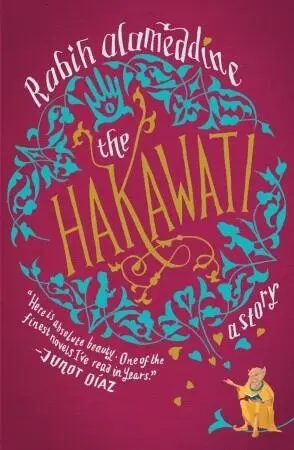
- Название:The Hakawati
- Автор:
- Издательство:Anchor
- Жанр:
- Год:2009
- ISBN:нет данных
- Рейтинг книги:4 / 5. Голосов: 1
-
Избранное:Добавить в избранное
- Отзывы:
-
Ваша оценка:
The Hakawati: краткое содержание, описание и аннотация
Предлагаем к чтению аннотацию, описание, краткое содержание или предисловие (зависит от того, что написал сам автор книги «The Hakawati»). Если вы не нашли необходимую информацию о книге — напишите в комментариях, мы постараемся отыскать её.
, or storyteller, and his bewitching tales are interwoven with classic stories of the Middle East. Here are Abraham and Isaac; Ishmael, father of the Arab tribes; the beautiful Fatima; Baybars, the slave prince who vanquished the Crusaders; and a host of mischievous imps. Through Osama, we also enter the world of the contemporary Lebanese men and women whose stories tell a larger, heartbreaking tale of seemingly endless war, conflicted identity, and survival. With
, Rabih Alameddine has given us an
for this century.
The Hakawati — читать онлайн бесплатно полную книгу (весь текст) целиком
Ниже представлен текст книги, разбитый по страницам. Система сохранения места последней прочитанной страницы, позволяет с удобством читать онлайн бесплатно книгу «The Hakawati», без необходимости каждый раз заново искать на чём Вы остановились. Поставьте закладку, и сможете в любой момент перейти на страницу, на которой закончили чтение.
Интервал:
Закладка:
“I should be,” I said, “but”—I couldn’t think fast enough; was there a good reason for missing classes? — “I’m tired, so I took the morning off.” I stared at the small bouquet of silk ocher lilies strewn haphazardly under the couch, waiting to be thrown out. They belonged to the old roommate, who forgot to take them with him when he returned to Fresno. I should also throw out the chair, itchy brown plaid upholstery atop fake wood.
She asked if I was still unhappy. I rattled off my grievances. I told her how I didn’t understand anyone who lived on my floor, and there were so many of them, how hard I tried to get to know these Americans, and how amicably impenetrable they were. The Lebanese students weren’t any better. I didn’t belong with them, either. I told her how much I hated my room. “But you know,” I went on, “I’ve seen the places of some of the other Lebanese boys here, and they’re much worse.” I imagined her in her splendidly lit apartment in Rome, probably lying on her stomach, as she usually did, legs bent at the knees, her ankles crossed in the air. Her phone would be nothing like the cheap Princess I was using.
“You’ll get used to being alone,” she said. “We all do.” She told me how much she missed the neighborhood; she even admitted to missing her vain, self-centered, irresponsible, and uncaring sister, who had refused to leave Beirut. “With Mariella not being here, I have no one to hate on a daily basis,” she added. “She’s having sex with every militia leader in Beirut, but I can no longer call her a whore. I miss that. I’m worried about her.” I heard her pause and hesitate. “Your sister is fooling around with a militia leader as well.”
“What are you talking about?”
“Lina is enjoying Elie’s company,” Fatima said. “She had always fancied him. I don’t know why. I mean, he was a lowlife before the war, and now he’s a killer.”
We all knew Elie would grow to be a military man; he moved up quickly in the militia when he was a boy. Since none of us had considered there would be a civil war, no one ever thought he would someday actually matter. “She didn’t mention it to me,” I said.
The joint in the ashtray had extinguished itself. I had a deep-boned urge to relight it and inhale for a long time. I reached for the pack of Gauloises.
“Of course she wouldn’t,” Fatima said. “You’re her family. I’m her friend.”

The story goes like this.
A day of great beauty; snow covered the entire village, and a sky of unequivocal blue towered above. It was January 1938, and Uncle Jihad, all of five years old, vied for his mother’s attention. He poked her thigh with his finger, until she finally slapped his hand.
“Put your coat on and go play with the other boys,” my grandmother said. “Don’t interrupt adult conversation.”
“I’m not interrupting your conversation,” Uncle Jihad said. “I’m interrupting your work.” My great-grandmother Mona, my grandmother Najla, and my seventeen-year-old aunt Samia were knitting around the iron stove. “I don’t think my sister should be working on my sweater,” he added. “She doesn’t know how.”
“Stop meddling in what doesn’t concern you,” my grandmother said. She was the only one among the three without a mandeel. My great-grandmother wore hers around her hair; Aunt Samia’s was on the coffee table in front of them.
“It does concern me.” Uncle Jihad poked his mother again. “I’m going to be wearing it.”
“Shhhh, my boy.” My great-grandmother covered my uncle’s mouth. “So much energy. Settle down. First, you’re not going to be wearing it. This one is for Farid. And your sister may not be as good as your mother and me, but we weren’t as good as she is when we were her age. That’s the point. She’s learning. She’s only doing one sleeve. So be quiet and let us work.”
“Why do you always explain things to him?” Aunt Samia asked. “Why is he treated differently from other children? Tell him to sit still and be quiet.”
“Sit still and be quiet,” my grandmother said.
The women resumed their task and their conversation. My great-grandmother expressed her concern for her son Jalal. “He’s causing trouble. I can’t understand why he’s doing it. He writes these awful things in the newspaper, and the French warn him to stop or face the consequences. Everyone is giving him bad advice. The bey goads him on, but he’s not the one who’s being threatened. He’s always kissing European hands, yet he wants Jalal to stir the pot. The French want to put Jalal in you-know-what.”
“What’s you-know-what?” asked Aunt Samia.
“Prison,” Uncle Jihad replied. “The French think Uncle Jalal is a bad man because his writings are provocative.”
“Provocative?” asked Aunt Samia. “What does that mean?”
My great-grandmother and grandmother looked at each other. My great-grandmother smiled. My grandmother shook her head and bundled Uncle Jihad in wool: coat, hat, scarf, and gloves. She walked him out the door. “Play.” She pointed toward the sloping hill at the edge of the pines. “Farid is there. You can’t stay indoors all the time. Go.”
“It’s cold,” Uncle Jihad replied.
“It’s not that cold.” She gestured to her long black skirt and black sweater. “Look. I’m not even wearing a coat.”
“You’re going to talk about a husband for Samia.”
“That’s none of your concern,” my grandmother said. “Go play, and don’t come back until it’s time for lunch.”
Ah, so many stories begin with three women knitting and talking. My favorite …
One evening, a king explored his city, walked the alleys, and listened to his subjects through the open arched windows. He passed by a house where three sisters knitted around a fire.
The eldest said, “I wish I would marry a baker. I would be able to eat fresh bread every day. And cakes — I would be able to eat wonderful cakes.” The middle sister said, “I wish I would marry a butcher. I would be able to eat meat any time I wanted.” The youngest said, “I wish I could marry our king. I would love and cherish him, take care of him, ease his worries so he can govern even more fairly.”
The king appreciated what he heard. He sent for the three girls, and when he saw the youngest girl, he decided to make her wish come true. He married the eldest to his baker and the middle sister to his butcher. He commanded the two bridegrooms, “Treat your wives with utmost respect, and feed them whatever they desire.” And, in a grand ceremony that lasted many a day and night, he married the youngest sister. The king lavished his wife with gifts and luxuries, which planted the seeds of envy in her sisters’ hearts. The new queen grew with child, and the king was ecstatic. The eldest sister said to the second, “If our sister provides her husband with an heir, the king will love her forever. We cannot allow that to happen.” They offered the midwife gold if she would get rid of the queen’s child. The young queen delivered a healthy baby boy, but before anyone could see him, the midwife sprinkled magic water and spoke an incantation. The baby turned into a puppy. The king asked to see his child.
“This is what your wife gave birth to.” The midwife held the puppy up. The apoplectic king said, “I refuse to be the father of this,” and with his own sword he cut off his son’s head.
The queen became pregnant once more, and when she delivered, the midwife changed the boy into a piglet. “This is what your wife gave birth to,” the midwife said. The livid king said, “I refuse to be the father of this,” and killed his son.
Читать дальшеИнтервал:
Закладка:
Похожие книги на «The Hakawati»
Представляем Вашему вниманию похожие книги на «The Hakawati» списком для выбора. Мы отобрали схожую по названию и смыслу литературу в надежде предоставить читателям больше вариантов отыскать новые, интересные, ещё непрочитанные произведения.










Обсуждение, отзывы о книге «The Hakawati» и просто собственные мнения читателей. Оставьте ваши комментарии, напишите, что Вы думаете о произведении, его смысле или главных героях. Укажите что конкретно понравилось, а что нет, и почему Вы так считаете.