Rabih Alameddine - The Hakawati
Здесь есть возможность читать онлайн «Rabih Alameddine - The Hakawati» весь текст электронной книги совершенно бесплатно (целиком полную версию без сокращений). В некоторых случаях можно слушать аудио, скачать через торрент в формате fb2 и присутствует краткое содержание. Год выпуска: 2009, Издательство: Anchor, Жанр: Современная проза, на английском языке. Описание произведения, (предисловие) а так же отзывы посетителей доступны на портале библиотеки ЛибКат.
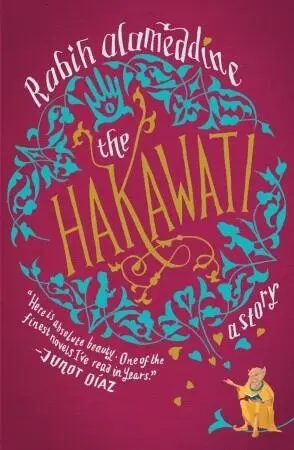
- Название:The Hakawati
- Автор:
- Издательство:Anchor
- Жанр:
- Год:2009
- ISBN:нет данных
- Рейтинг книги:4 / 5. Голосов: 1
-
Избранное:Добавить в избранное
- Отзывы:
-
Ваша оценка:
The Hakawati: краткое содержание, описание и аннотация
Предлагаем к чтению аннотацию, описание, краткое содержание или предисловие (зависит от того, что написал сам автор книги «The Hakawati»). Если вы не нашли необходимую информацию о книге — напишите в комментариях, мы постараемся отыскать её.
, or storyteller, and his bewitching tales are interwoven with classic stories of the Middle East. Here are Abraham and Isaac; Ishmael, father of the Arab tribes; the beautiful Fatima; Baybars, the slave prince who vanquished the Crusaders; and a host of mischievous imps. Through Osama, we also enter the world of the contemporary Lebanese men and women whose stories tell a larger, heartbreaking tale of seemingly endless war, conflicted identity, and survival. With
, Rabih Alameddine has given us an
for this century.
The Hakawati — читать онлайн бесплатно полную книгу (весь текст) целиком
Ниже представлен текст книги, разбитый по страницам. Система сохранения места последней прочитанной страницы, позволяет с удобством читать онлайн бесплатно книгу «The Hakawati», без необходимости каждый раз заново искать на чём Вы остановились. Поставьте закладку, и сможете в любой момент перейти на страницу, на которой закончили чтение.
Интервал:
Закладка:
By his fourth birthday, Shams was able to cure the common cold and sexual impotence. The last increased his devout following a hundredfold, from thousands to uncountable.
“My son the body-enhancement specialist,” Afreet-Jehanam snorted to his lover as she watched the two boys happily playing with slick, slithering snakes. “His devotees are imbeciles, and the ecru woman is insane.” He squeezed Fatima’s shoulder, his arm around her. “And it is not good for him to be called a prophet.” Layl stood up, covered in asps, and reached for the crows flying playfully above him. “I have always had trouble with prophets. They never understand nuance or subtlety. They cannot grasp irony if it slaps them in the face.”
Shams grabbed a black scorpion with both hands and tried to bite its glistening tail off.
“No, darling,” said Afreet-Jehanam. “You must not do that.” He kissed Fatima’s hair. “I would like to see more of them. I miss the boys, and I miss you even more. Promise me you will bring them below more often.”
At the age of five, Shams cured two of the major illnesses, insanity and leprosy. The names Shams and Guruji — the epithet bestowed upon Shams by a small group that had traveled all the way from Calcutta — blossomed on praying lips throughout the known world, from the backwaters of Ireland to the steppes of Siberia to the swamps of China.
And rivers of ecru rushed toward the prophet.

Al-Awwar surveyed the scene before him, gauging the best point of attack. He raised his head, shook it, and snorted. He neighed loudly, announced his intentions to his surprised enemies, and charged. The infidels rushed to take up defensive positions. A giant melee erupted. And before al-Awwar reached the first disorganized line, a thousand arrows soared above him and landed in the hearts of a thousand infidels. And when al-Awwar trampled the first soldier, another thousand arrows felled another thousand. Steel arrow-tips projected from the throats of Halawoon’s soldiers, and the feathered shafts stood quivering in the soldiers’ napes. And the slave army entered the fray, and a great wedge was formed.
“Leave some for us,” cried Lou’ai as he led the second wave through. Othman rode close to his wife in order to protect her, but she shoved him away. From her belt she whisked out a leather whip with multiple strands, each with a sharp metal hook at its end, and unleashed her fury against the enemy. Skin and blood burst forth along her path.
“You frighten me,” exclaimed Othman.
“I would never wish to don your robes,” Harhash bellowed.
When al-Awwar reached the walls, the gates opened to welcome him, but he did not enter. He turned in mid-stride and returned to battle. Like rushing water hitting a wall, the wedge separated at the gate in two directions and rejoined the fray. And in less time than it takes a master archer to shoot an arrow into the sky above him and wait for its return, the slave army had massacred one division of Halawoon’s army and entered Aleppo’s gates as glorious heroes. The city’s populace poured out of their homes, garlanded the warriors with jasmine and roses, and bowed before their rescuer, Prince Baybars.
From the city’s eastern parapet, the mayor of Aleppo showed Baybars and his companions the enemy’s lines and positions.
“See Halawoon there,” Othman said. “He doesn’t seem too happy.”
“The sight of his flag of fire burns my heart,” said Baybars.
One of the archers cocked an arrow and unleashed it; the flag was torn in two. The stunned mayor applauded the archer and asked how he could shoot so much farther than any of the city’s archers. “We have Sitt Latifah’s bows,” the archer said, “and none are better.”
Othman’s wife climbed the stairs to the parapet, carrying a swaddled bundle. “If your arrow can hit the flag,” she said, “should you not aim for a few of the fire-worshippers before they figure it out?”
“Get the archers up here,” Baybars ordered. “Hit them before they retreat.” The archers hurried forth, and the first hail of arrows descended upon Halawoon’s troops. A hasty retreat was called, and disarray ensued. Halawoon could be seen cowering behind one of his officers. Slaves picked up the royal red tent, and he ran beneath it out of the line of fire. The archer shot his arrow and snapped the main pole. The tent collapsed upon its occupant, and Halawoon scuttled like a scarlet ghost. Aleppo’s people cheered. “That hit the mark,” exclaimed Prince Baybars.
Saadi, the great Persian poet, once told a story that went like this: Not long ago, a king in the divine city of Shiraz held an archery competition for the amusement of his friends. He had a jeweler forge a ring of pure loveliness, upon which was set an emerald of inestimable value. The king caused the ring to be fixed high on the dome of Asad. A barker announced that whoever sent an arrow through the ring could claim it as a reward for his impeccable skills. One thousand of the best archers in the land shot at the ring with no success. It so happened that a young boy on a roof was amusing himself with a small bow. One of his arrows, shot at random, penetrated the jeweled ring. A great cheer erupted from the rapt audience. The ecstatic king offered the ring to the young boy, who took his great prize and wisely hurried home to burn his bow, so that the reputation of his immaculate feat should never be impaired.
Layla uncovered her bundle, a small gilded cage within which a red dove cooed at the sight of her owner. She opened the door, and the pigeon perched on her finger. Her husband said, “You carried a pigeon all the way from Cairo?” and she replied, “Two.”
“Where is the other?” Othman asked.
“We are calling him now. He will join us soon.”
Baybars told his companions, “We have to decide when to attack our enemy. It is true they outnumber us, but we have courage in our hearts. With the city’s troops, we now number five thousand men.” And Aydmur added, “Our enemy has twenty-five thousand men left. Determination and the right plan of attack will compensate for the unevenness in numbers.”
Layla raised her hands in the air, and the dove fluttered its wings in joy. “He comes,” Layla said. A splendid red cock appeared in the sky, circled, and landed upon Layla’s outstretched arm.
“Where did he come from?” asked Othman.
“Not from too far, I hope.” She set both doves upon the cage and removed a message from the cock’s foot. “Forsake your planning,” Layla told Baybars and the warriors. “The army of the sons of Ishmael arrives and seeks to redeem the kingdom’s honor. They number five thousand men as well, and they lust after infidel flesh. If you desire a taste of your enemy’s blood, tarry not, for Halawoon’s army will not last much longer.” On the far horizon, a large swirl of sand bloomed.
“Get the horses,” commanded Prince Baybars.
The emir’s wife paced her chambers, irate. “There are too many of them. They are coming from all over, and the line gets longer every day. I cannot get to our garden anymore without passing through the reeking rabble. Not only that, but some of our friends no longer wish to be healed, because they do not wish to mingle.”
“If you do not want the people to see our son,” the emir said, “we can deny access. We will make an announcement, and the seekers will return home soon enough. Frankly, I am not happy with the situation, either. It was grand and entertaining to help the needy, but years and years of incessant lines is enough. So much pleading, so much begging, does a soul no good. I thought it made you happy, but now that I know, we will stop the insanity.”
Читать дальшеИнтервал:
Закладка:
Похожие книги на «The Hakawati»
Представляем Вашему вниманию похожие книги на «The Hakawati» списком для выбора. Мы отобрали схожую по названию и смыслу литературу в надежде предоставить читателям больше вариантов отыскать новые, интересные, ещё непрочитанные произведения.












Обсуждение, отзывы о книге «The Hakawati» и просто собственные мнения читателей. Оставьте ваши комментарии, напишите, что Вы думаете о произведении, его смысле или главных героях. Укажите что конкретно понравилось, а что нет, и почему Вы так считаете.