Rabih Alameddine - The Hakawati
Здесь есть возможность читать онлайн «Rabih Alameddine - The Hakawati» весь текст электронной книги совершенно бесплатно (целиком полную версию без сокращений). В некоторых случаях можно слушать аудио, скачать через торрент в формате fb2 и присутствует краткое содержание. Год выпуска: 2009, Издательство: Anchor, Жанр: Современная проза, на английском языке. Описание произведения, (предисловие) а так же отзывы посетителей доступны на портале библиотеки ЛибКат.
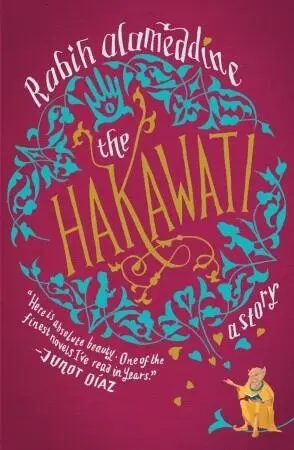
- Название:The Hakawati
- Автор:
- Издательство:Anchor
- Жанр:
- Год:2009
- ISBN:нет данных
- Рейтинг книги:4 / 5. Голосов: 1
-
Избранное:Добавить в избранное
- Отзывы:
-
Ваша оценка:
The Hakawati: краткое содержание, описание и аннотация
Предлагаем к чтению аннотацию, описание, краткое содержание или предисловие (зависит от того, что написал сам автор книги «The Hakawati»). Если вы не нашли необходимую информацию о книге — напишите в комментариях, мы постараемся отыскать её.
, or storyteller, and his bewitching tales are interwoven with classic stories of the Middle East. Here are Abraham and Isaac; Ishmael, father of the Arab tribes; the beautiful Fatima; Baybars, the slave prince who vanquished the Crusaders; and a host of mischievous imps. Through Osama, we also enter the world of the contemporary Lebanese men and women whose stories tell a larger, heartbreaking tale of seemingly endless war, conflicted identity, and survival. With
, Rabih Alameddine has given us an
for this century.
The Hakawati — читать онлайн бесплатно полную книгу (весь текст) целиком
Ниже представлен текст книги, разбитый по страницам. Система сохранения места последней прочитанной страницы, позволяет с удобством читать онлайн бесплатно книгу «The Hakawati», без необходимости каждый раз заново искать на чём Вы остановились. Поставьте закладку, и сможете в любой момент перейти на страницу, на которой закончили чтение.
Интервал:
Закладка:
Al-Awwar whinnied, pranced, and quickened his trot. “Yes,” Baybars told his horse. “We approach home.”
When Commander Issa, the ruler of Damascus, heard the news of the approaching slave army, he was forced to march his troops out of the city to greet the new leader of the king’s army, his nemesis, Prince Baybars. Issa paid his respects, but his heart was engulfed by flames of hatred and envy. “And when will the rest of the troops arrive?” the commander asked, and Baybars replied that none were forthcoming. Joy cleared a place for itself in the commander’s heart. “I am much impressed. The king must consider you a great hero, Prince Baybars, to assign you so few warriors to battle Halawoon’s thousands of men.”
Prince Baybars said, “Perchance, my commander, you will be so generous as to lend us troops to help us defeat the fire-worshippers.” Commander Issa said he would be more than happy to oblige the prince, but his men were needed to police his city.
Sitt Latifah waited at the gates of the city for her much-loved son to arrive. As her eyes alit on the prince astride his warhorse, she ran to him. Baybars jumped off his horse, knelt before his mother, and kissed her hand, which had two tiny age spots that had not been there when he last kissed it. She kissed his hair. “Look,” she announced to the city’s denizens. “See my glorious son, the great warrior Baybars. My child returns home leading an army, just as my dream foretold. Bask in his brilliance.” Sitt Latifah held a banquet that night for Baybars’s army. “My son,” she said, “in my dream you led a powerful army and vanquished God’s enemy, Halawoon. It is bound to happen. I do not doubt the courage and valor of your fighters, but I expected a larger number of men to be under your command.” Prince Baybars explained that the king felt more troops were unnecessary. “I do not wish to disagree with kings,” Sitt Latifah said, “but I refuse to send my son into battle lacking. I will call the archers. From far and wide they will come to pay their debts to our family. A thousand of the finest bowmen you will have.”
Othman and Harhash excused themselves from the feast. They kissed Sitt Latifah’s hand and said, “Pardon our rudeness, but the moon is high. It is our time.”
The following day, Othman and Harhash returned accompanied by one hundred disreputable-looking men. Othman told Baybars, “These men will fight for you, my lord.” Baybars asked if they had repented. “Surely, one and all,” Othman replied. “They agreed to repent if I performed a miracle. Yesterday I showed them the way into Issa’s secret coffers. They were duly impressed, and all have repented this morning.”
All one hundred said, “God be praised,” and patted the bags of gold on their belts.
“And so our army grows,” said Baybars.
One thousand archers on horseback arrived to join the slave army. Sitt Latifah greeted them. “You are men of honor. This is my son. Follow him and I will continue to provide your sons with the finest bows for generations to come. We are grateful.”
Baybars bade Sitt Latifah farewell, and the slave army marched out of the city. They were scarcely a league away when they noticed dust rising behind them. A Damascene troop of a thousand men was trying to catch up. Their leader rode a glorious roan. “I will follow you, my prince,” said Sergeant Lou’ai. “My men and I will fight the infidels.”
Baybars said, “Your honor knows no limits, my sergeant. By saving my life once before, you paid your debt to me a thousand times.”
“We are almost twenty-five hundred men,” Othman said to Harhash. “I am now an honest man, but the blood of greed still runs through my veins. The more we have, the more I want.”
Harhash replied, “Greed for a just cause is justified. I ride with you.”
“Greed?” exclaimed Layla. “Wanting more men is a sign of sanity. The women in Damascus are knitting mourning shawls. Halawoon’s army is thought to be at least thirty thousand strong.”
The slave army stopped in Hamah for a rest. Layla told Othman, “I do not wish to spend the night here. It is much too hot and the accommodations are lacking. Take me to the shore. We can spend the night in the Fort of Marqab near Latakia.”
“Fort of Marqab?” cried Othman. “That is out of our way. We are heading to war.”
“Accommodations?” scoffed Harhash.
“I am glad you approve, dear Harhash,” Layla said. “Tell our master we will rejoin you in two days, before you reach Aleppo, after I have had a good rest and breathed gentle sea breezes.”
Aleppo rose before the slave army. Baybars saw Halawoon’s troops laying siege to the great city, one division on each side, east, west, north, and south.
“That is a large army,” said Baybars.
“Too large,” added Othman.
“It behooves us not to fight them in the plains,” said Aydmur. “We must enter the city. Attack the southern division ahead of us, break their ranks, and clear a path to the gates. The other divisions will not have time to come to their rescue. Once inside, we choose when and whom to fight, and our archers will have more luck from the towers.”
“We do not need luck, sire,” one of the archers said. “God guides the flight of our arrows.”
“Pardon me for interrupting,” said a refreshed Layla, “but this one division is approximately eight thousand men. By what means do you plan to defeat them?”
“The slaves will create a wedge,” said Aydmur.
“And this slave will be the wedge’s foremost point,” said Baybars.
“And these slaves will be with you,” said the Africans.
“I will ride the second wave,” said Layla. “I prefer my death less certain.”
“And I must protect my wife,” said Othman.
And when the historians sat down to write the story of the great reign of the Mamlukes, the slave kings, before they could elaborate on the rule of two hundred and fifty years, before they could talk about the first defeat of the Mongol hordes, before they could tell how the slave kings crushed the Crusaders, they had to record the first battle, what became known in the books as the Battle of al-Awwar, the greatest warhorse that ever was.

The tales of Shams’s healing powers spread across the land, from east to west, from deserts to mountains, and hopeful believers trekked for leagues and leagues to witness and partake of the miracles. After his second birthday, he began to heal many complaints of his supplicants, but his specialty remained primarily hair-related. His ability to seduce bald heads into growing hair became legendary. There were some logistical restrictions to his powers, though. His constant companion, Layl, and at least one of the parrots had to be present. Best results — soft, smooth, and untangled — were achieved when the two red ones were around. Timing was essential as well; Shams could only cure for an hour before naptime.
The emir’s wife wished her baby were more pliant. If only she could make him comprehend the magnitude and importance of his talents. If only she could separate him from his dark attendant. The time limitations were hard on the attendees as well. The waiting line to be touched by the One was interminable — and constantly changing as titled devotees went ahead of commoners. After an hour of touching, Shams would close his eyes to nap, and the parrots would instantly fly him out of the hall.
When he reached the age of three, Shams’s powers were still chiefly cosmetic. The emir’s wife preferred to call his new specialty “breast perfection” instead of “breast enhancement,” because “When he touches a pair of unnaturally small breasts, they inflate to an ideal size. The Chosen One does nothing haphazardly, but is guided by the Infallible Wisdom of the Divine.” Later that year, he developed the ability to adjust people’s weight: his touch increased a thin man’s heft and reduced that of a fat man. Tailors were ecstatic, their work made much easier by the miracles, for almost all the residents of the emir’s land soon had the same measurements, and all began to wear no color but ecru following the trend set by Shams’s mother. “My son inspires me to seek simplicity,” the emir’s wife said. “I have no more need for the spices of life.”
Читать дальшеИнтервал:
Закладка:
Похожие книги на «The Hakawati»
Представляем Вашему вниманию похожие книги на «The Hakawati» списком для выбора. Мы отобрали схожую по названию и смыслу литературу в надежде предоставить читателям больше вариантов отыскать новые, интересные, ещё непрочитанные произведения.











Обсуждение, отзывы о книге «The Hakawati» и просто собственные мнения читателей. Оставьте ваши комментарии, напишите, что Вы думаете о произведении, его смысле или главных героях. Укажите что конкретно понравилось, а что нет, и почему Вы так считаете.