Rabih Alameddine - The Hakawati
Здесь есть возможность читать онлайн «Rabih Alameddine - The Hakawati» весь текст электронной книги совершенно бесплатно (целиком полную версию без сокращений). В некоторых случаях можно слушать аудио, скачать через торрент в формате fb2 и присутствует краткое содержание. Год выпуска: 2009, Издательство: Anchor, Жанр: Современная проза, на английском языке. Описание произведения, (предисловие) а так же отзывы посетителей доступны на портале библиотеки ЛибКат.
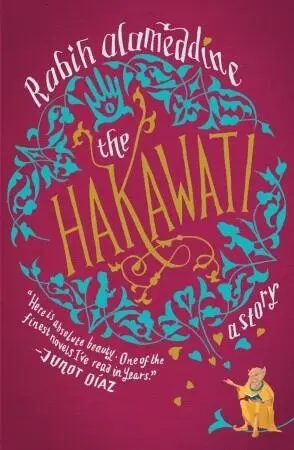
- Название:The Hakawati
- Автор:
- Издательство:Anchor
- Жанр:
- Год:2009
- ISBN:нет данных
- Рейтинг книги:4 / 5. Голосов: 1
-
Избранное:Добавить в избранное
- Отзывы:
-
Ваша оценка:
The Hakawati: краткое содержание, описание и аннотация
Предлагаем к чтению аннотацию, описание, краткое содержание или предисловие (зависит от того, что написал сам автор книги «The Hakawati»). Если вы не нашли необходимую информацию о книге — напишите в комментариях, мы постараемся отыскать её.
, or storyteller, and his bewitching tales are interwoven with classic stories of the Middle East. Here are Abraham and Isaac; Ishmael, father of the Arab tribes; the beautiful Fatima; Baybars, the slave prince who vanquished the Crusaders; and a host of mischievous imps. Through Osama, we also enter the world of the contemporary Lebanese men and women whose stories tell a larger, heartbreaking tale of seemingly endless war, conflicted identity, and survival. With
, Rabih Alameddine has given us an
for this century.
The Hakawati — читать онлайн бесплатно полную книгу (весь текст) целиком
Ниже представлен текст книги, разбитый по страницам. Система сохранения места последней прочитанной страницы, позволяет с удобством читать онлайн бесплатно книгу «The Hakawati», без необходимости каждый раз заново искать на чём Вы остановились. Поставьте закладку, и сможете в любой момент перейти на страницу, на которой закончили чтение.
Интервал:
Закладка:
A voice shouted, “Hey, champ.” I walked over to a table occupied by my fellow Lebanese. Four of the six were playing cards, and one was eating a hamburger even though it was still morning. No matter what time of day you arrived at the Bombshelter, the burger bar in the Court of Sciences, you were almost guaranteed to find at least one of the Lebanese students there. A card game was sure to sprout as soon as there were two. I was probably the only Lebanese at UCLA who didn’t care for cards.
“Where’ve you been?” cried Sharbel. He was by far the oldest and biggest guy in the group, towering over everyone. He was in three of my classes.
“Where is it?” he asked. He was trying to sound jovial, but his voice betrayed his anxiety.
I handed him my folder, and he immediately began copying the math assignment into his own notebook. He was so large he took up almost half the table by himself, and the other boys had to adjust their card game to accommodate.
“How can you live in the dorms?” Iyad asked. “Isn’t it too crowded?”
“You have to live with strangers,” Joseph said. He was in two of my classes. All the Lebanese students at UCLA were in engineering school, no exceptions. The only variation was which discipline within engineering; mine was computers.
“I’m not living with strangers,” I objected. “I have my own room.”
“Well,” Sharbel said, “it’s not like you’re living with a friend. That makes a difference.”
Iyad banged his hand on the table and yelled triumphantly. All the Americans stared at our table with disapproving eyes. I turned my back, moved my chair slightly, hoping that anyone who looked our way would think I wasn’t part of the group.
Two Americans, engineering students, nodded at Iyad as they passed by. He completely ignored them. When he was with the group, which was more often than not, he showed disdain toward all non-Lebanese. He had once called his American girlfriend his sperm depository while she was sitting in his lap as he played cards. The group spoke Lebanese, even or maybe especially around people who didn’t understand the language. They would have been speaking English or French had they been in Lebanon, but in America, they spoke Arabic. We were all misfits.

The morning after God, the miraculous tree, saved her youngest, my grandmother put on two black sweaters and covered her head and torso with a diaphanous mandeel that dropped almost to the ground in back. In Druze white and black, she left her house and trudged up the hill through the snow to the bey’s mansion. It was official visiting hours. Petitioners and supplicants were going in and out of the main entrance, so my grandmother went in from the side. She greeted everyone in the women’s hall, sat down, and inquired whether she could have an audience with the bey. Yes, the bey himself, not his wonderful wife. She knew he was busy, very busy, but if he could spare a few minutes, she would be grateful. No, she would not mind waiting. She had all day. She drank coffee with the other visitors, chatted with the women. She had the chance to have a second cup of coffee. “I know he will see you,” the bey’s wife said. “Forgive him, but he’s very busy, what with the world preparing for its next big war.”
“His generosity knows no bounds,” my grandmother replied.
Finally, one of the attendants whispered that the bey would see my grandmother. She and the bey’s wife went to a smaller room, where the bey was deep in discussion with another man. The bey used my grandmother as an excuse to terminate the conversation. “A delicate matter,” he told the man. “I’m afraid it can’t wait.”
Alone with the bey and his wife, my grandmother had to ask after the children, the grandchildren, the cousins, the house, the meals, the vacations, before the bey inquired what she wanted. “You’ve been very generous to our family,” she said. “May God keep you above us to guide us, protect us, and be the shining example for us to follow. Your father educated my father and uncles, and your kindness extended to my brothers. We are ever in your debt.”
“You are most kind,” the bey’s wife said, and the bey added, “You are most eloquent.”
“Our family is thriving because of your liberality, and I am embarrassed to bring this up. As you probably know, my two youngest sons are going to the local school. They are doing very well, too well. I’m not sure the school is providing them with enough opportunities.”
The bey’s wife coughed. “Are you saying the school isn’t good enough for your boys?”
“No, of course not. It’s a good school. My other boys went there, but the young ones are special. My youngest loves to read, and there aren’t any books at the school.”
“Have you talked to your husband about this?” The bey leaned back in his chair, no longer feeling the need to listen. “You want them in a better school?”
“That would be ideal, but it would cost a lot more money. I’m willing to work. My older children no longer need me in the house. I’ll pay everything back.”
“The best schools are very expensive. Have you asked your brothers for help?”
“They have children and worries of their own.”
“As do I, and a lot more children, and more charities and more obligations,” the bey said. “The greatest happiness is accepting one’s life for what it is.”
Stories of the beys abound — their origin, valor, heroism, gallantry, generosity, wit or lack thereof. Uncle Jihad’s favorite origin story:
In the thirteenth century, maybe the fourteenth, maybe the fifteenth, a brigand, an escaped black slave from Egypt, wreaked havoc in the Bekaa Valley and Mount Lebanon, and neither the local authorities nor the Ottoman government could do anything to stop him. A bounty was placed on the brigand’s head. The man killed the innocents, raped the virgins. The Ottomans declared that anyone who captured or killed the slave would be given the title of bey. (In some versions of the story, the title offered was pasha, and a further heroic act was needed to receive a full bey’s worth of plot and adventure.) The brigand passed through the village and raped two women, one of them the sister of the first bey-to-be and the other his betrothed, his first cousin. After slaying his sister and ensuring that his fiancée was honorably killed by her brother, the soon-to-be-bey searched the village and mountainside for the nefarious slave, but to no avail. That evening, despondent and intending to drown his sorrows, he descended to his basement to partake heavily of his secret cache of red wine. Lo and behold, he found the black slave prostrate, facedown in a shallow pool of spilled wine. Livid, he cudgeled the limp slave’s head and split his skull, causing blood to pour into the wine puddle.
He was honored and glorified and became our bey.
Wait. One more. Not a story of origin, but one of wit. On a night in the eighteenth century, maybe the beginning of the nineteenth, the bey commanded one of his minions to deliver a letter to a sheikh in Hasbayya, a town a few hours’ ride by horseback. The man asked if he might wait till daylight to ride. The bey wanted him to leave instantly, saying, “Do not fret, for the moon is bright, and I will command it to follow you and light your way.”
The man set off on his horse, and every few minutes he looked up at the sky and the moon was still there. No matter how far from the village he rode, the moon followed. He entered Hasbayya and woke all its citizens. “Long live our wise bey,” he shouted. “He bade the moon follow me, and it surely did. Look upon the sky and admire the wonder, the bey’s gift to your village. Rise, rise, and behold the mystery.”
Читать дальшеИнтервал:
Закладка:
Похожие книги на «The Hakawati»
Представляем Вашему вниманию похожие книги на «The Hakawati» списком для выбора. Мы отобрали схожую по названию и смыслу литературу в надежде предоставить читателям больше вариантов отыскать новые, интересные, ещё непрочитанные произведения.










Обсуждение, отзывы о книге «The Hakawati» и просто собственные мнения читателей. Оставьте ваши комментарии, напишите, что Вы думаете о произведении, его смысле или главных героях. Укажите что конкретно понравилось, а что нет, и почему Вы так считаете.