Rabih Alameddine - The Hakawati
Здесь есть возможность читать онлайн «Rabih Alameddine - The Hakawati» весь текст электронной книги совершенно бесплатно (целиком полную версию без сокращений). В некоторых случаях можно слушать аудио, скачать через торрент в формате fb2 и присутствует краткое содержание. Год выпуска: 2009, Издательство: Anchor, Жанр: Современная проза, на английском языке. Описание произведения, (предисловие) а так же отзывы посетителей доступны на портале библиотеки ЛибКат.
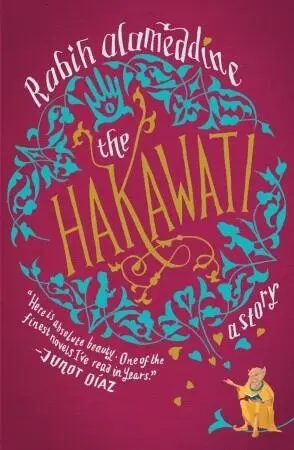
- Название:The Hakawati
- Автор:
- Издательство:Anchor
- Жанр:
- Год:2009
- ISBN:нет данных
- Рейтинг книги:4 / 5. Голосов: 1
-
Избранное:Добавить в избранное
- Отзывы:
-
Ваша оценка:
The Hakawati: краткое содержание, описание и аннотация
Предлагаем к чтению аннотацию, описание, краткое содержание или предисловие (зависит от того, что написал сам автор книги «The Hakawati»). Если вы не нашли необходимую информацию о книге — напишите в комментариях, мы постараемся отыскать её.
, or storyteller, and his bewitching tales are interwoven with classic stories of the Middle East. Here are Abraham and Isaac; Ishmael, father of the Arab tribes; the beautiful Fatima; Baybars, the slave prince who vanquished the Crusaders; and a host of mischievous imps. Through Osama, we also enter the world of the contemporary Lebanese men and women whose stories tell a larger, heartbreaking tale of seemingly endless war, conflicted identity, and survival. With
, Rabih Alameddine has given us an
for this century.
The Hakawati — читать онлайн бесплатно полную книгу (весь текст) целиком
Ниже представлен текст книги, разбитый по страницам. Система сохранения места последней прочитанной страницы, позволяет с удобством читать онлайн бесплатно книгу «The Hakawati», без необходимости каждый раз заново искать на чём Вы остановились. Поставьте закладку, и сможете в любой момент перейти на страницу, на которой закончили чтение.
Интервал:
Закладка:
I didn’t say anything. The receiver felt heavy. “They’re boarding,” I said.
“And if you ever come here again without visiting me, I swear I’ll roast you in a big Italian oven.”

On the journey out of Jerusalem, Maria lay within her litter, but she relaxed the curtains and smiled at her husband, who was riding beside her. Happiness made Ma  rouf sit up in his saddle. He rode close to his bride and beamed. Ma rouf led the entourage past the turnoff toward Jaffa, and the vizier of Genoa inquired where they were going. “To the Fort of Marqab,” Ma rouf replied, “so you can be my honored guests.”
A feast was held in the Fort of Marqab upon their return. And on the wedding night, Ma rouf visited his princess. The following morning, he left her chambers and took his usual seat among his men. The Genovese vizier said to Ma rouf, “You have been most kind and generous to us. We are grateful. And now we must be on our way.”
“Return to your home, and tell the king of Genoa that his daughter has become a Muslim and has married Ma rouf, the chief of forts and battlements.”
The vizier blanched. “Have you entered her chambers?”
“I surely have. She is my wife.”
The vizier moaned, slapped his face, and beat his breast. “Kill me now, sire. I cannot return to Genoa without her.”
The king of Genoa heard the wails and lamentations of Maria’s attendants before they walked into the court. The vizier, haggard and pale, announced, “Your Majesty, the princess has given up her faith and married a Muslim. She did not wish to return.”
The king turned wrathful. “Send a letter to King Saleh and kill this messenger.”
Back at the diwan, King Saleh’s judge read him the letter. “This cannot be, Your Majesty,” Arbusto said. “The king of Genoa trusted God and you with protecting his daughter’s honor. You entrusted Baybars, and he and his good friend Ma rouf betrayed you. A scandal of this magnitude I have never witnessed.” The king called Baybars to the diwan and demanded an explanation. Baybars said, “I have received a letter from Ma rouf saying that the princess chose the true faith and was not forced into it. God gifted her. Ma rouf has a fatwa from the imam of al-Aqsa confirming the gift of God and the princess’s choice of Ma rouf for a husband.”
King Saleh said, “That is a true story. Islam is a bequest from the Almighty. My judge, send a letter to the king of Genoa explaining what happened. Be gentle. His daughter’s choice to live so far from him will surely be difficult to hear and bear.”
The king’s judge was not gentle. “King Saleh has allowed his protégé, Prince Baybars, to kidnap your daughter,” the letter said, “and sell her to Ma rouf’s harem. If you send me a ship to Jaffa, a full money chest, and a battalion of men in disguise, I will return your daughter to Genoa myself. The king is ill in the mind, and I do not wish to remain here and witness the realm’s demise under his successors.” The king’s judge sent the letter to Genoa by messenger. He packed his belongings and all the goods he had stolen through the years. Arbusto discarded the robes of judge and abandoned the fair city of Cairo.
Maria woke up ill, and Ma rouf called in the doctor. “Heal my wife, surgeon,” he said. “I beg of you. Make her well.” The doctor examined Maria and said, “The change in climate is not doing her good. Take her to Deir ash-Shakeef, and have her rest for three months. I cannot identify the symptoms, but a three-month rest should cure whatever ails her.”
Ma rouf took his wife, accompanied by one squadron, and sought the healing air of Deir ash-Shakeef. Within a few weeks, she began to feel better, if slightly heavier. “My husband,” she said. “I am not ill, unless being with child is a disease.” Ma rouf jumped with joy.
Some while later, Arbusto paid a visit to Ma rouf in Deir ash-Shakeef. The villain presented himself as a rich merchant and offered Ma rouf a number of opulent textiles for his wife. “A glorious gift, honest merchant,” said Ma rouf, “but what have I done to deserve such generosity?” Arbusto said he only wished for one thing, a letter from the chief of forts and battlements authorizing the bearer to travel the lands without interference. “Your reputation for honesty and valor is well known,” Arbusto said. “If I have such a letter, no one will dare accost me.” Ma rouf obliged.
Arbusto slept the night outside Deir ash-Shakeef. In the morning, he tore his garments, washed his hair with sand, and hit his face with rocks. He called on Ma rouf, who exclaimed in shock, “What has become of you, honest merchant?” Arbusto said, “Twenty leagues north of town, I was waylaid by a band of ruffians. I showed them your letter, and they spat on it. ‘The chief of forts and battlements is a limp braggart and a toothless house-cat that professes to be a lion,’ the scofflaws said. They overwhelmed me and stole all my belongings.”
The hero stood up and yelled at the ceiling, “I, a house-cat?” He stormed off to retrieve his sword. “Stay here,” he told the merchant. “I will return with your valuables and the valueless heads of your attackers.” He and his men headed north, leaving his wife with two guards.
Arbusto paced before the soldiers, pretending to be anxious. He removed bonbons from his left pocket and stuffed them in his mouth. One of the guards asked what he was eating. “Date bonbons,” Arbusto replied. “Would you like some?” Out of his right pocket, he retrieved a bunch and gave them to the guards. Within a half hour, the sedative had coursed through their veins and the guards lay unconscious. Arbusto broke into the princess’s chambers, covered dormant Maria in a large burlap bag, and bore her away.
Beirut Airport’s arrival lounge seemed fuzzy, like the imprecision of settings in dreams. The space itself hadn’t changed, but the air was off-kilter, reeking of camphor, cigarettes, and humanity. Dust motes scurried across the stone floor, terrified of being stepped on. The ubiquitous posters of the unsmiling Syrian president forced me to stare ahead. His secret-service men, in polyester civilian, were only slightly less numerous than his pictures.
Читать дальшеИнтервал:
Закладка:
Похожие книги на «The Hakawati»
Представляем Вашему вниманию похожие книги на «The Hakawati» списком для выбора. Мы отобрали схожую по названию и смыслу литературу в надежде предоставить читателям больше вариантов отыскать новые, интересные, ещё непрочитанные произведения.









Обсуждение, отзывы о книге «The Hakawati» и просто собственные мнения читателей. Оставьте ваши комментарии, напишите, что Вы думаете о произведении, его смысле или главных героях. Укажите что конкретно понравилось, а что нет, и почему Вы так считаете.