Rabih Alameddine - The Hakawati
Здесь есть возможность читать онлайн «Rabih Alameddine - The Hakawati» весь текст электронной книги совершенно бесплатно (целиком полную версию без сокращений). В некоторых случаях можно слушать аудио, скачать через торрент в формате fb2 и присутствует краткое содержание. Год выпуска: 2009, Издательство: Anchor, Жанр: Современная проза, на английском языке. Описание произведения, (предисловие) а так же отзывы посетителей доступны на портале библиотеки ЛибКат.
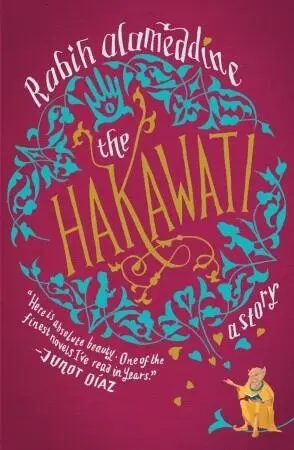
- Название:The Hakawati
- Автор:
- Издательство:Anchor
- Жанр:
- Год:2009
- ISBN:нет данных
- Рейтинг книги:4 / 5. Голосов: 1
-
Избранное:Добавить в избранное
- Отзывы:
-
Ваша оценка:
The Hakawati: краткое содержание, описание и аннотация
Предлагаем к чтению аннотацию, описание, краткое содержание или предисловие (зависит от того, что написал сам автор книги «The Hakawati»). Если вы не нашли необходимую информацию о книге — напишите в комментариях, мы постараемся отыскать её.
, or storyteller, and his bewitching tales are interwoven with classic stories of the Middle East. Here are Abraham and Isaac; Ishmael, father of the Arab tribes; the beautiful Fatima; Baybars, the slave prince who vanquished the Crusaders; and a host of mischievous imps. Through Osama, we also enter the world of the contemporary Lebanese men and women whose stories tell a larger, heartbreaking tale of seemingly endless war, conflicted identity, and survival. With
, Rabih Alameddine has given us an
for this century.
The Hakawati — читать онлайн бесплатно полную книгу (весь текст) целиком
Ниже представлен текст книги, разбитый по страницам. Система сохранения места последней прочитанной страницы, позволяет с удобством читать онлайн бесплатно книгу «The Hakawati», без необходимости каждый раз заново искать на чём Вы остановились. Поставьте закладку, и сможете в любой момент перейти на страницу, на которой закончили чтение.
Интервал:
Закладка:
In Genoa, Ma  rouf set forth toward the king’s palace. He unsheathed his sword and prepared to attack the gate, but a fork-tailed swallow circled his weapon twice and flew before him. Ma rouf followed the swallow’s flight and reached one of the palace’s towers, which was covered with a blooming canary vine. He heard faint weeping, which pinched his heart, for he recognized the sounds of his beloved. “I hear you,” he called.
He climbed the vine, clinging to nooks and fissures in the stones, until he reached the topmost window. Inside, he saw his wife sitting before a still loom.
“Who goes there?” Maria asked.
“I am Ma rouf, your husband.”
Maria whimpered and mewled. “You, Ma rouf, search for me, but you will not find me yet. I am as alive as this wrecked loom, and as empty as this dispirited yarn. Without my son, I do not exist, and without your son, you are not a man. He is on an island called Tabish. Bring me my son or I will not leave this mausoleum.”
Ma rouf joined his wife in weeping. He climbed down the tower, returned to the port, and sailed for Tabish. He searched the island. He scaled its hills, unseated its rocks, uprooted its trees. He tore up its monastery brick by brick, log by log. He could not find his son. Ma rouf knelt before the uncompromising sea and cried again, bemoaning the capriciousness of fate. “By the life of my father, and his father before him, and his father before all, I swear upon their blood that pulses through my veins, I will find my son, my blood, my life.”

“It’s almost time,” my mother said. She made Lina stand up and display herself. My mother, Aunt Samia, and the girls made sure that nothing was left to chance. No one seemed satisfied with the dress. It wasn’t store-bought, but it was definitely designer-rushed.
“You’re so beautiful,” Aunt Samia said. “You make us proud.” Lina looked perplexed, as if she weren’t sure the conversation was about her. “Look at her,” Aunt Samia told Mona. “Look how she carries herself. This is how a bride should be on her wedding night.” What I had never thought I would see, a blushing Lina, manifested itself before my eyes. “Learn from her, my daughter. Her head always high, beaming, full of confidence. If only my mother could see you now. She would be proud, just as I am.”
My mother took my sister’s hand, brought it to her lips, and kissed it.
“Get the veil,” Aunt Samia said. “You don’t want your father to have to wait when he gets here.” She held the fabric in her hand and examined it like a tester at a textile factory. “Are you using it as a train? Come on, girls. Make yourselves busy.” She turned to me. “What are you doing in this room, my boy? Get out of here. We have to talk about the honeymoon, and you shouldn’t be hearing this.”
“There won’t be a honeymoon yet,” Lina said. “He doesn’t have time. We’ll do it when the war ends.”
Aunt Samia’s face twitched. It seemed for an instant that her energy was about to crumble, but she caught herself in time. “That’s a great thing, if you ask me. Why go on a honeymoon and leave your loved ones behind while a war is going on? I didn’t have a good time on my honeymoon, so I don’t recommend them. My husband slept for the whole week in Cairo. You don’t believe me? Go out and ask him what was the best thing he saw in Cairo and he’ll tell you the pillow at the Hilton. You’ll probably have to wake him up to ask him, but he’ll tell you. Honeymoons — honeymoons are not for our family.”
“Are you ready?” my mother asked. She shooed everyone from the room. “If you want to see the bride come out, you had better be out yourselves.”
I looked at Lina, and she shook her head for me to stay. At the door, my mother announced, “I’ll send your father in a minute.”
“Mother,” Lina called. My mother stopped and turned around. She waited for Lina to say something, but Lina couldn’t speak. My mother closed the door and walked toward her.
“I want to kiss you,” my mother said, “but it’s not a good idea. Air kisses, however, won’t harm the makeup.” My mother held both of Lina’s hands, and they air-kissed three times. My mother walked toward the door. “You’d better be ready.”
My father, dapper and lordly, held his hand out to my sister. Lina hesitated, snatched one last glance at her reflection, and moved toward him. Arm in arm, they took one step and faltered. “I’m leading,” my father joked. They recommenced, but the march still looked off-kilter, as if my father had practiced for this moment all his life and life decided not to cooperate.
I had expected my father to be more subdued, but I had underestimated his resilience. He didn’t appear to be a man who had just survived the death of a second brother, his best friend at that. I lagged behind, stopped, and watched them as they passed down the darkened corridor into the light of the living room. Cheering, applause, whistles, and ululations broke out loud enough to obliterate Mendelssohn’s “Wedding March” piping out of the speakers. Someone, I assumed Uncle Akram, began drumming the derbakeh. A woman burst into the mountain wedding song, a paean to the beautiful bride. By the time I reached the end of the corridor, my father had handed his daughter to Elie, who was desperately trying to look confident in a suit instead of his usual fatigues. Elie looked around at the crowd before quickly kissing Lina — a brief peck to signify eternal commitment. Uncle Akram, visibly upset with Mendelssohn’s discordant competition, knocked the record player with his thigh. A scratch was heard, and then the strings stopped, and Uncle Akram banged the drum harder, with a faster syncopation.
The newlyweds carved the cake. Elie tried to put his arm through Lina’s, but the fork kept getting in the way. A piece of cake fell on her sleeve and to the floor. She laughed. My mother shook her head. A couple of kids reached for the fallen morsel. The bey’s grandson, bundled up in two sweaters despite the room’s heat, stuffed the cake into his mouth. Our future bey looked up to Lina, opened his mouth wide, extended his tongue, and showed her the piece of extra-moist cake in his mouth.
Everyone seemed in a festive mood, but it wasn’t just the wedding. Wartime parties are always inhibition-loosening, euphoric affairs. I tried to talk to Elie, but he seemed to be avoiding me — and the rest of the family, for that matter. It was disconcerting to see a militiaman with dozens of fighters under his command, a killer of men, desperately avoid making eye contact. When I cornered him to offer best wishes, he interrupted by blurting, “It’s not my fault. It was supposed to be just fun,” sounding like a terrified four-year-old, his eyes expanding to encompass the top half of his face.
• • •
My feet were sore, my arches throbbed. The last of the guests were filing out, but it wasn’t yet time to break up the receiving line. Lina looked the most tired of all, whereas Elie seemed to be gaining strength as the festivities wore on. Aunt Wasila and her children left with the guests, as did Uncle Halim and his family. Aunt Samia took off her heels and began to help the servants clear the tables, until my mother asked her to stop.
Читать дальшеИнтервал:
Закладка:
Похожие книги на «The Hakawati»
Представляем Вашему вниманию похожие книги на «The Hakawati» списком для выбора. Мы отобрали схожую по названию и смыслу литературу в надежде предоставить читателям больше вариантов отыскать новые, интересные, ещё непрочитанные произведения.








Обсуждение, отзывы о книге «The Hakawati» и просто собственные мнения читателей. Оставьте ваши комментарии, напишите, что Вы думаете о произведении, его смысле или главных героях. Укажите что конкретно понравилось, а что нет, и почему Вы так считаете.