Rabih Alameddine - The Hakawati
Здесь есть возможность читать онлайн «Rabih Alameddine - The Hakawati» весь текст электронной книги совершенно бесплатно (целиком полную версию без сокращений). В некоторых случаях можно слушать аудио, скачать через торрент в формате fb2 и присутствует краткое содержание. Год выпуска: 2009, Издательство: Anchor, Жанр: Современная проза, на английском языке. Описание произведения, (предисловие) а так же отзывы посетителей доступны на портале библиотеки ЛибКат.
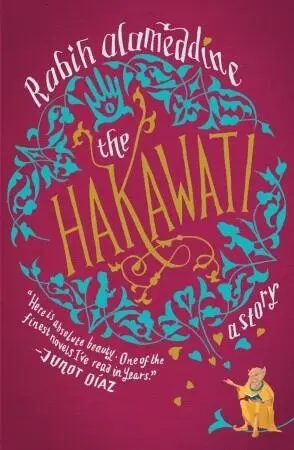
- Название:The Hakawati
- Автор:
- Издательство:Anchor
- Жанр:
- Год:2009
- ISBN:нет данных
- Рейтинг книги:4 / 5. Голосов: 1
-
Избранное:Добавить в избранное
- Отзывы:
-
Ваша оценка:
The Hakawati: краткое содержание, описание и аннотация
Предлагаем к чтению аннотацию, описание, краткое содержание или предисловие (зависит от того, что написал сам автор книги «The Hakawati»). Если вы не нашли необходимую информацию о книге — напишите в комментариях, мы постараемся отыскать её.
, or storyteller, and his bewitching tales are interwoven with classic stories of the Middle East. Here are Abraham and Isaac; Ishmael, father of the Arab tribes; the beautiful Fatima; Baybars, the slave prince who vanquished the Crusaders; and a host of mischievous imps. Through Osama, we also enter the world of the contemporary Lebanese men and women whose stories tell a larger, heartbreaking tale of seemingly endless war, conflicted identity, and survival. With
, Rabih Alameddine has given us an
for this century.
The Hakawati — читать онлайн бесплатно полную книгу (весь текст) целиком
Ниже представлен текст книги, разбитый по страницам. Система сохранения места последней прочитанной страницы, позволяет с удобством читать онлайн бесплатно книгу «The Hakawati», без необходимости каждый раз заново искать на чём Вы остановились. Поставьте закладку, и сможете в любой момент перейти на страницу, на которой закончили чтение.
Интервал:
Закладка:
But in the lower right corner, one image was scraped away, with the wall’s plaster showing through. I didn’t have to be told who scraped it off or what picture it was. After Uncle Jihad’s death, my father wouldn’t have wanted anyone to see the image of Alan Bates and Oliver Reed kissing fiercely. My father must have spent quite a bit of time scraping.
My finger still bled. I dabbed the blood around my lips and kissed the forlorn space. The red imprint of my lips matched Marlene’s.
Fourteen
Adam was bored. The Garden was lovely, but he wanted someone to talk to. “Dear God,” he prayed, “I need company.” God gave him a mate. Out of his tail, a woman was created, but Marwa turned out to be as mischievous as a monkey. Adam was not happy. “Dear God, I need better company.” Eve was brought forth from the thirteenth rib of his right side. Decent women can claim Eve as their ancestor. All giddy girls are descendants of Marwa.
This legend has a Jewish counterpart in that of Lilith, who was created at the same time as Adam, of the same dust. “I am your equal,” she said. “I will not lie helpless beneath you. I, too, seek fulfillment.” Adam was not happy. God made Eve from his side, to stand by him, to support him, to submit to him.
And Lilith? Lilith coupled with demons on the shores of the Red Sea. God forsook her.
I cannot tell you whether Fatima is a descendant of Lilith or Marwa, but I can tell you she had little to do with Eve.
In her part of the world, Fatima was famous — infamous, if you prefer, but not in the Western sense. She wasn’t a film star, her face didn’t appear in magazines, her name wasn’t bandied about in professional journals. She was famous in Arab terms, in discreet terms: she was talked about. No story was juicy enough if Fatima wasn’t on the gossiper’s tongue. Fatima didn’t couple with demons. She preferred short, filthy-wealthy Gulf Arabs, and “coupling” wouldn’t be the right word to use. Her reputation was solidified with her first marriage — solidified, mind you, for she’d already developed one by simply being Mariella’s little sister.
Story of her first marriage: June 1981, I had just graduated from UCLA and was hired as a computer engineer and programmer by Ellisen Engineering, the only company I’d ever work for. Fatima was studying psychology at the University of Rome and was due to graduate. She didn’t. Like my sister before her, she got married. Unlike my sister’s, her marriage lasted longer than her wedding, but not by much. He was an inordinately rich Saudi prince, a young one, one of numerous siblings, not in any line to rule, maybe a ministry one day. He met her in Rome and was besotted. He had never known anyone like her, he claimed, and probably would never again. “I liked him all right” was what Fatima would always say. His family wasn’t too happy but didn’t disapprove. The boy was Saudi, after all, and he had at least three more chances to improve his selection. The trouble began at the wedding, which I couldn’t attend because of work. It seemed the prince’s mother and his homely sisters kept good-naturedly pestering the bride, joking and demanding that she get pregnant. “Shouldn’t we finish the wedding first?” she replied. Two months later, when her mother-in-law inquired if Fatima might be pregnant, Fatima rolled up a newspaper — a Lebanese Al-Nahar —and smacked the princess on the nose three times: Don’t — smack — put your nose — smack — in my business — smack. As horrifying as that was, puppy-training her mother-in-law wasn’t the reason for the divorce. Horror of horrors, the prince took his wife’s side. When, finally, the prince’s father asked his son if Fatima had ever laid a hand on him, the prince turned crimson, and the nature of the couple’s sexual relationship was discovered. Even that could have been hushed up — this was the Arab world, after all — if the prince hadn’t admitted, much to his humiliation, that, even though they had been having sex since they met, he had yet to earn coitus. Straw, meet camel.

During his eighth-birthday celebration, Shams and his disciple were having laughing fits. It began innocently enough. The royalty and notables of the land lined up to offer the young prophet gifts and receive his blessing in return. Shams would whisper into Layl’s ear, and the two of them would giggle. The emir’s wife could hear what they were whispering, and she realized that the worshippers could as well: This one had a big nose. That one had body odor. The two red parrots were perched atop the throne, and the violet parrot, the one the emir’s wife hated most for his frequent use of obscenities, had settled atop the sun altar. All three were chuckling. But then the dark slave boy began to whisper into the prophet’s ear, and the prophet blushed and covered his mouth.
“Give us a funny face,” Shams commanded the genuflecting matronly princess.
“Funny face?” the confused princess asked. She nervously adjusted the sheer scarf covering her hair.
“Yes,” said the prophet, grinning. “Give us a funny face. A good one.”
“Now, dear,” the emir’s wife interjected, trying to appear calm, “you cannot ask such things of your wonderful supplicants. It is not mannerly.”
“What is the point of being a fornicating prophet,” Adam said, “if you can’t command the faithful?”
“No funny face, no blessing,” decreed the prophet.
“I do not understand, my lord,” said the princess. “I will offer any gift that pleases you. I do not know what a funny face is, or else I would gladly offer it.”
“This is a funny face.” Layl stuck his tongue out and pushed his nose up.
“This is better.” Shams pulled his mouth wide and stretched his eyelids with his fingers. “You better give us your funniest face. No blessing if it is not your best face.”
“You desire and I obey, my lord.” The princess jammed two fingers up her nose, stuck her tongue all the way out to the left, and surprised everyone by crossing her eyes. The boys screeched and buried their heads in the throne’s big pillow, their legs scissoring the air in delight. The princess smiled, proud of herself.
“Wait,” said the beautiful prophet, settling down. He placed his palm atop the princess’s head, squashed the scarf into her jewel-adorned hair. The whole room saw her body shudder with ecstasy and glow with joy. After she kissed the prophet’s hand and stood up, everyone gasped. Ten years had disappeared from her face. The emir’s wife thrust a mirror at her, and the princess yelped. She turned back to the prophet and kissed his feet over and over. “Thank you, thank you, thank you,” she mumbled.
• • •
On his eleventh birthday, the beautiful prophet and his faithful companion faced the adoring horde. Every year, the number of pilgrims had increased, and when the emir’s wife spread the word that the prophet would be giving his first sermon, thousands upon thousands of devotees arrived from the four corners of the earth. They sat, they stood, they covered the land to the horizon, buzzing with anticipation and good cheer.
“Blessed are you, my people,” Shams began. “Blessed are those of you who have traveled for weeks on your pilgrimage. I am grateful and not worthy of such devotion.” Shams hesitated, and Layl whispered into his ear. “Blessed are you who pray to God, but He demands more. From now on, you must pray eight times a day at least.” He nodded at his audience. “Yes, it is true. You must pray every three hours. Worry not. You will get used to sleeping in two-hour shifts. It is much healthier. Rejoice and be exceedingly glad. Oh, and bathing. You must bathe before each prayer, eight times a day. If we bathed more often, we would not smell so bad when there are a lot of us. Exult.” Layl nudged his twin, who rambled on. “And no farting.” Layl turned his head to hide his snickering. “I decree that if you have to fart you must fart downwind. Before you fart, make sure to gauge the wind’s direction. I decree further that silent farts are to be banned. Others must know who the guilty party is. And hear this, for I have a warning. If you fart silently upwind, a double transgression, there will be no absolution. You will not be able to wear my colors.”
Читать дальшеИнтервал:
Закладка:
Похожие книги на «The Hakawati»
Представляем Вашему вниманию похожие книги на «The Hakawati» списком для выбора. Мы отобрали схожую по названию и смыслу литературу в надежде предоставить читателям больше вариантов отыскать новые, интересные, ещё непрочитанные произведения.











Обсуждение, отзывы о книге «The Hakawati» и просто собственные мнения читателей. Оставьте ваши комментарии, напишите, что Вы думаете о произведении, его смысле или главных героях. Укажите что конкретно понравилось, а что нет, и почему Вы так считаете.