Rabih Alameddine - The Hakawati
Здесь есть возможность читать онлайн «Rabih Alameddine - The Hakawati» весь текст электронной книги совершенно бесплатно (целиком полную версию без сокращений). В некоторых случаях можно слушать аудио, скачать через торрент в формате fb2 и присутствует краткое содержание. Год выпуска: 2009, Издательство: Anchor, Жанр: Современная проза, на английском языке. Описание произведения, (предисловие) а так же отзывы посетителей доступны на портале библиотеки ЛибКат.
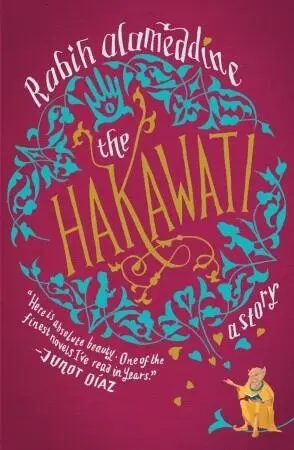
- Название:The Hakawati
- Автор:
- Издательство:Anchor
- Жанр:
- Год:2009
- ISBN:нет данных
- Рейтинг книги:4 / 5. Голосов: 1
-
Избранное:Добавить в избранное
- Отзывы:
-
Ваша оценка:
The Hakawati: краткое содержание, описание и аннотация
Предлагаем к чтению аннотацию, описание, краткое содержание или предисловие (зависит от того, что написал сам автор книги «The Hakawati»). Если вы не нашли необходимую информацию о книге — напишите в комментариях, мы постараемся отыскать её.
, or storyteller, and his bewitching tales are interwoven with classic stories of the Middle East. Here are Abraham and Isaac; Ishmael, father of the Arab tribes; the beautiful Fatima; Baybars, the slave prince who vanquished the Crusaders; and a host of mischievous imps. Through Osama, we also enter the world of the contemporary Lebanese men and women whose stories tell a larger, heartbreaking tale of seemingly endless war, conflicted identity, and survival. With
, Rabih Alameddine has given us an
for this century.
The Hakawati — читать онлайн бесплатно полную книгу (весь текст) целиком
Ниже представлен текст книги, разбитый по страницам. Система сохранения места последней прочитанной страницы, позволяет с удобством читать онлайн бесплатно книгу «The Hakawati», без необходимости каждый раз заново искать на чём Вы остановились. Поставьте закладку, и сможете в любой момент перейти на страницу, на которой закончили чтение.
Интервал:
Закладка:
“Give me twenty minutes to freshen up and I’ll be ready to go,” Lina told Elie.
He cleared his throat. “It’s probably best if I go back to Beirut with my men.” He could not lift his gaze from his shoes. “They have to be there just in case, and — uhmm — I don’t think it’s right if there’s a fight and I’m not there. We might get attacked.”
“On your wedding night?”
“Well, the enemy bastards don’t care about my wedding night,” he stammered.
“I guess you should go, then,” Lina said.
“Yes, I guess I should.” He backed away with slow, irresolute steps. “Thank you, everyone. That was a great wedding.” He looked briefly at my mother. “I wish my family could have been here. Thank you.” He walked out, hollered at his inebriated men. They got in three battered Range Rovers and sped down the hill toward the city. In the distance, Beirut, enveloped in utter darkness, swallowed the red rear lights whole.
“I guess I should change anyway,” Lina said.
“Yes,” my mother replied. She sat on the sofa and propped her feet on the small ottoman. “Change into something more comfortable, and I’ll make you a good scotch.”
As soon as Lina went into her room, my father allowed his rage to conquer his face. He dumped his body next to my mother. His heat and intensity radiated across the room. I knew that if he said one thing he would explode.
“I’ll make you a good scotch, too,” my mother said.
“Maybe we’ll get lucky,” Aunt Samia said. “Maybe they will get attacked tonight.”
“Ha,” my mother snorted. “You shouldn’t have said that.” She shook her head. “Ha.” She asked my father, “Is there anyone we can call?” My father chuckled.

You might have asked yourself what happened to the boy. You might have wondered why his father did not find him. Listen. Another storm brewed the waters of the Mediterranean and forced a ship carrying Kinyar, the king of Thessaly, to the island of Tabish. The king and his crew explored the island and discovered the monastery. “This is the cuddliest child my royal eyes have ever seen,” announced Kinyar. He reached out to pick up the son of Ma  rouf and Maria, but a powerful slap knocked him on his behind. He looked around in terror. His men drew their weapons. They saw nothing. “Why do you smite me?” Kinyar asked the monastery. “I am the father of this boy, come to deliver him to his mother.” He reached for the infant again, and this time he was not felled. He ran out with the boy, and his men rushed after him, fumbling and stumbling. They stole away on their ship.
The galleon from Thessaly stopped a pilgrim ship heading toward the Holy City. The king boarded the captured ship and declared, “I seek a volunteer, a wet nurse to feed my child. I will slay you all unless you give me what I want.”
A young nun said, “I have given my life before and I will give it once more. There is no need for all of us to die.” Kinyar took her to his ship and allowed her companions to go their way. The nun exposed her breast to the hungry boy, and milk miraculously flowed. “The baby will live,” the nun said, and Kinyar said, “I will call him Taboush, after the island that offered him to me.”
We had an early breakfast the morning following the wedding. My father had a piece of bread stuck in his throat. He coughed, smacked his chest, and reached for his glass of water. My mother kept watch, with a mild concern, from across the table. He cleared his throat, lit a cigarette, and sipped his coffee. “I’m going to check on our home,” he announced.
“There’s nothing to check on.” My mother spread butter on her toast. She was the only one in the family who buttered her bread. “We took everything that’s of any value.”
“I have to check on the building. Unless we make our presence felt, we’ll have squatters moving in.”
“The reason we don’t have squatters is that the neighborhood is still dangerous. Be reasonable. It’s not worth the risk, and your showing up once a month isn’t going to stop refugees from taking over.”
“I’ll be careful,” he said.
A bit later, I told my mother I was taking a long walk and sneaked into the car with him. If my mother didn’t approve of my father’s going to the old neighborhood, she certainly wouldn’t have wanted me to tag along. “Onward to our next adventure,” he said. We passed many checkpoints along the way, crossing from one militia zone into the next, and none gave us any trouble. You could probably encounter every militia and every denomination driving from our mountain village to the neighborhood in Beirut.
We arrived, and I felt off-balance. Our neighborhood hadn’t been hit as badly as others, but it was scarred. It was also Twilight Zone uninhabited.
My father checked each apartment. In ours, the furniture was shrouded with dusty linen, but anything that would fit into a car had been moved. Only one window was broken. I went to my room. My bed, bookshelf, and dresser looked like giant misshapen children dressed as ghosts for Halloween. My father gave Uncle Jihad’s apartment a cursory inspection. He didn’t wish to tarry there. I lingered. I walked around the living room and dining room. The coverings in this apartment had a palpable finality.
Uncle Jihad’s numerous obsessions were notorious. He was a devoted Italophile, a Brueghel aficionado, a film buff, a lover of folktales, and a collector of rare stamps, movie magazines, miniature crystal sculptures, matchboxes, restaurant menus, and Lebanese earthenware. His apartment used to be full of his essence, knickknacks and whatnots all over the place. Everything had been cleared out. Almost everything. Discarded on the floor I found a postcard of a Brueghel painting, Mad Meg , one of his favorites. Two things I could never forget about the painting, the determined look of Mad Meg herself, the I-will-get-what-is-rightfully-mine-in-this-hellhole attitude, and the giant freak using a poker to empty his butt of its contents while the crowd below him eagerly waited for the about-to-fall treasure. I picked up the card and examined the browns and ochers and reds, the weird creatures in hell, the spears and shields and misplaced heads, the animals and half-ships and battlements, and the woman, seemingly the only full human, an unsheathed sword in her right hand, a basket of goodies in her left, a filled bag tucked in at her waist, walking with a helmet and a steely determination. She got what she came for and it was time to leave. Just as I remembered. I pocketed it.
I walked into the den, and the movie wall was still up. It could not be moved. Through the years, Uncle Jihad had cut out images from movie magazines, particularly Italian ones, and had pasted a collage onto the whole wall. A window had been broken in the den, and a piece of glass had embedded itself in a picture of the Ferris wheel in The Third Man . I pulled it out and cut my index finger. I shoved my finger in my mouth and sucked on my wound.
I began to see the wall with Zen eyes. Movie stars stared back. At least three Marilyns, one in which she sat in a director’s chair, looking back. Jane Fonda in Klute and Barbarella , Bette Davis in Jezebel and Now, Voyager , Audrey Hepburn in Roman Holiday and Breakfast at Tiffany’s . Warren Beatty as Clyde lay on top of Faye Dunaway as Bonnie. Marlon Brando sat next to Jack Nicholson. Sophia Loren broke down on her knees in Two Women , Anna Magnani broke down in any one of her movies. Catherine Deneuve in Belle de Jour , Julie Christie in Doctor Zhivago . Hedy Lamarr in a long evening gown, her left arm behind her back, the hand encircling the right elbow, the poster saying “Il piu grande film per la stagione 1948–49, Disonorata.” Katharine Hepburn shared a scene with John Wayne, Glenda Jackson got off a train, Shirley MacLaine looked astonished. Julie Andrews and Christopher Plummer performed with the von Trapp kids. A horrified Joan Crawford, subtitled So che mi uccidrerai! Shirley Temple, Cary Grant, Clark Gable, Jimmy Stewart. Three-quarter view of Sissy Spacek and Shelley Duvall. A shirtless James Dean. A shirtless Sean Connery. Three versions of a mustached Burt Reynolds. Natalie Wood running joyfully toward her youth-gang boyfriend. Maria Callas sitting in an alcove in Pasolini’s Medea . Olivia de Havilland, Twiggy, and Ingrid Bergman. All the colors faded except for Marlene Dietrich’s lipstick, which seemed to have been touched up, her cigarette interrupting the red. A shark, Robert Shaw, Roy Scheider, and Richard Dreyfuss advertised the film Lo squalo . Gene Kelly dancing, Johnny Weissmuller as Tarzan. Beach scenes from Dr. No and From Here to Eternity . Dustin Hoffman with a woman’s thigh and on a horse surrounded by Indians. The Oscar in multiples. The delicious underarm of Rita Hayworth in Gilda , the sumptuous eyes of Elizabeth Taylor in A Place in the Sun . Mae West, belle of the nineties. Franco Nero, gorgeous with a five-o’clock shadow, Robert Redford and Paul Newman, Steve McQueen in Tom Horn , William Holden and Kim Novak, Dean Martin and Jerry Lewis. Ursula Andress, Romy Schneider, and Dalida. Judy Garland, Judy Garland, Judy Garland.
Читать дальшеИнтервал:
Закладка:
Похожие книги на «The Hakawati»
Представляем Вашему вниманию похожие книги на «The Hakawati» списком для выбора. Мы отобрали схожую по названию и смыслу литературу в надежде предоставить читателям больше вариантов отыскать новые, интересные, ещё непрочитанные произведения.










Обсуждение, отзывы о книге «The Hakawati» и просто собственные мнения читателей. Оставьте ваши комментарии, напишите, что Вы думаете о произведении, его смысле или главных героях. Укажите что конкретно понравилось, а что нет, и почему Вы так считаете.