Christopher Hope - Kruger's Alp
Здесь есть возможность читать онлайн «Christopher Hope - Kruger's Alp» весь текст электронной книги совершенно бесплатно (целиком полную версию без сокращений). В некоторых случаях можно слушать аудио, скачать через торрент в формате fb2 и присутствует краткое содержание. Год выпуска: 2009, Издательство: Atlantic Books, Жанр: Современная проза, на английском языке. Описание произведения, (предисловие) а так же отзывы посетителей доступны на портале библиотеки ЛибКат.
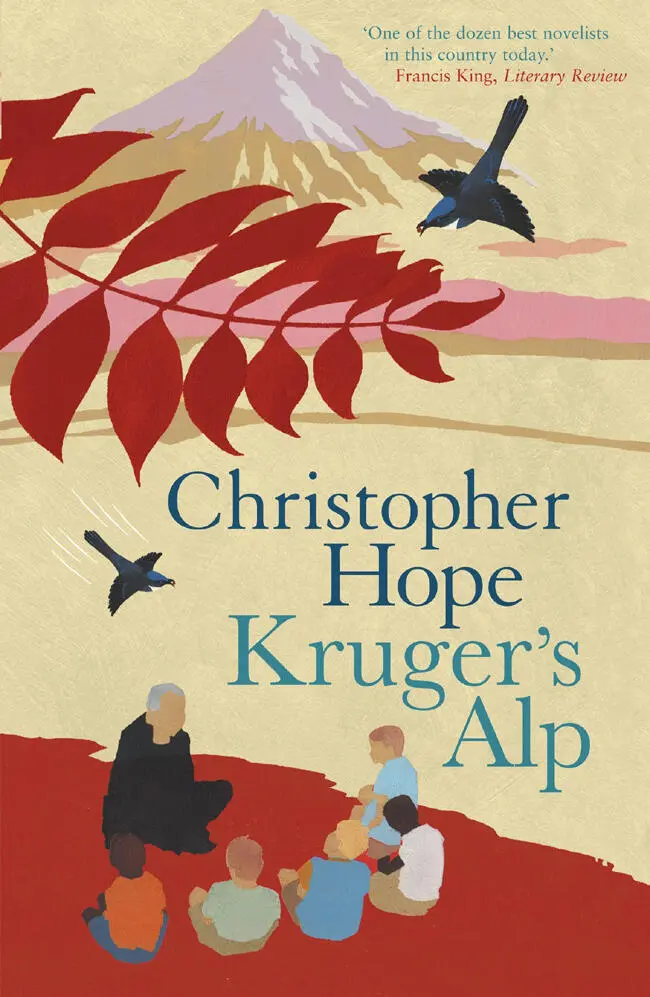
- Название:Kruger's Alp
- Автор:
- Издательство:Atlantic Books
- Жанр:
- Год:2009
- ISBN:нет данных
- Рейтинг книги:3 / 5. Голосов: 1
-
Избранное:Добавить в избранное
- Отзывы:
-
Ваша оценка:
Kruger's Alp: краткое содержание, описание и аннотация
Предлагаем к чтению аннотацию, описание, краткое содержание или предисловие (зависит от того, что написал сам автор книги «Kruger's Alp»). Если вы не нашли необходимую информацию о книге — напишите в комментариях, мы постараемся отыскать её.
Kruger's Alp — читать онлайн бесплатно полную книгу (весь текст) целиком
Ниже представлен текст книги, разбитый по страницам. Система сохранения места последней прочитанной страницы, позволяет с удобством читать онлайн бесплатно книгу «Kruger's Alp», без необходимости каждый раз заново искать на чём Вы остановились. Поставьте закладку, и сможете в любой момент перейти на страницу, на которой закончили чтение.
Интервал:
Закладка:
But with Magdalena, wow ! seemed just about to cover it. He had invited her to Bishop Blashford’s vineyard, his other garden, and she had nodded with complete enthusiasm. She had streaked blonde hair. Her face ended in a pointed chin. Her eyes were blue-grey.
He led her through the darkness with a churning stomach feeling rather like a young man who has come into a large fortune and has no idea how to begin spending it. She looked like a model, Van Vuuren had promised. So this was how a model looked! Clearly there could be no holding hands this time. He would grapple her to him. Kiss her. Remove her bra and fondle her breasts, maybe take them in his mouth. Why not? He was fifteen, it was about time. They would lie on the grass afterwards. It happened to be raining softly so perhaps they wouldn’t, but if it stopped raining they could lie on her mac. That she wore a mac was evidence of her practicality and added to her charm. Would he try and take off her pants? He doubted it — but nothing was ruled out. They stood beneath the dripping trees and Magdalena drew him towards her and said: ‘You’re a pretty boy.’ Her thin plastic raincoat crackled as she pressed him against her. There was something so practised in the kiss she gave him. Her lips were wet. With a stab of despair he noticed that the buttons on her mac were large and stuffed tightly through their buttonholes. This presented a smooth and shining armoured front. But she was well ahead of him and had no similar problems. Her hand reached up behind him under his shirt pressing into the small of his back. The other hand expertly opened his fly — smooth, fast, deft movements, and then she had his penis in her damp fingers and was lifting it over the elastic band of his underpants which slid painfully upwards to trap his testicles. But then she rubbed and rubbed and soon things grew warm and better. Then he groaned and spurted and all at once she laughed delightedly. ‘But you’re quick! The quickest I’ve ever met.’ Not quite scorn in the laugh, but tones of someone pleased at their own handiwork and still willing to continue. He knew the matter wasn’t closed as far as she was concerned. He also knew he’d come before he’d even kissed Magdalena. There might be more if he liked, he could feel it. It was up to him, he could feel that too. But of course it wasn’t. What was to come had been and gone. The elastic cut more cruelly into his testicles. ‘You’re really nice,’ Magdalena said, ‘we’ll do this again.’ His own incompetence baffled and enraged him. Afterwards he picked a small bunch of the Bishop’s grapes. Magdalena declined saying they were too sour, but he finished them anyway, sour or not, punishing himself. The perfectly ordinary, reasonable and agreeable reactions of human beings seemed closed to him. A few, like Magdalena, dwelt happily among them. And there was that girl he’d met when he was very much younger, somebody’s big sister, whose he couldn’t remember. He went to play with her, at her invitation. They played in the empty garage. Postman’s knock and spin the bottle.
‘How do you play?’
‘If your number comes up you pay forfeits.’
‘What forfeits?’
‘Well, for instance, kisses or feelings, if you like. Otherwise hair-pulls and toe-stamps.’
He won a lot and took hair-pulls and toe-stamps and it was very many years later that it occurred to him what was being offered and why there was that strange, softly appealing note in her voice.
There was no possibility of normal, natural, obvious behaviour for him.
Instead he had, as Lynch said, moral crusades.
‘You on our side believe in the multi-racial paradise in which Boer and Zulu lie down together like lambs. There are no longer any Kaffirs, coolies, Jew-boys, coloured bastards, hairies, rock spiders, Dutchmen, all the rich store of invective so vital to political debate — I mention too Rednecks and English swine — and no one notices what colour you are. You believe God is behind you in this. They, on the other side, believe that everyone has their own identity. Everyone deserves separate lavatories and if the crunch comes they will fight to the death, to the last man who will blow his brains out on the last beach, preferring death to dishonour and will go to heaven where there will also be parallel toilet facilities. We are all superior people, on both sides.’
Lynch spat on these dreams, sat beneath the Tree of Heaven spitting with amazing accuracy also into an old brass spittoon. Kruger had spat, with embarrassing frequency, he said, and he enjoyed learning how to do so. ‘This society is one of deep criminality, its ministers have a tough job laying down the law, that’s why if you want to be a priest, join the police force.’
The Bishop’s other garden had been closed to Lynch’s altar boys without warning. Three strands of barbed wire slanting inwards were fixed above the hedge and a great new lock appeared on the gate. Gabriel was given the key. The Garden of Eden had been closed, Father Lynch said, and the sinners ejected therefrom. The Archangel barred the way.
‘We don’t care a damn,’ Van Vuuren said, ‘he’ll have to clear up our mess.’
‘He’ll have to pick up the french letters, the old cigarettes and clear the well of about a hundred vodka and brandy bottles.’
‘He’s ending up as just another garden boy,’ Blanchaille said.
Father Lynch had listened to all of this with a faint smile. ‘But he’s in the Bishop’s employ, isn’t he? At his age and already an episcopal appointment! You keep an eye on Gabriel. That boy will go far.’
Bishop Blashford yawned and stretched. The interview was over.
‘Perhaps Gabriel is around? I thought I might say goodbye,’ Blanchaille said.
Bishop Blashford beat a retreat to the house where Ceres was waiting at the french windows. She held them open as he approached and once he’d slipped inside she quickly closed them to all but a few inches. Obviously Blanchaille was not invited to tea. ‘You go up and see Gabriel,’ Blashford shouted through the crack. ‘He’s our legal eagle. He’ll get you whatever papers you need to make the application. There’s no more I can do for you. Be it on your own head. Now, if you’ll excuse me, I must go and wash my hands.’
‘Your bags are outside by the front gate,’ Ceres said and closed the french windows with considerable dignity.
CHAPTER 6
Blanchaille walked down the hill struggling with the heavy cases. He regretted vaguely having brought them. Books, socks, clerical suits he had never worn; the blue barathea blazer he was wearing when he entered the seminary, big lapels and double vents — quite out of fashion now… the weeds of yesteryear.
The sky above the crest of the hill was dark grey and becoming blacker with every moment. There was something huge and flamboyant about a highveld storm, an occasion of relentless melodrama. The sky grew heavy and crowded in over you. As the storm built, the air became more highly charged. The trees shook themselves. Birds would swoop and flee. The hush would begin to weigh. Occasionally a small wind would drift a few leaves past your ankles or slide past the eyebrows carrying a faint watery scent. The first flash would come, white as a slash of chalk across a blackboard and a crash that split the ear-drums. But it did not necessarily mean rain, something might happen in the atmosphere and the storm would wheel and miss you leaving you only with prodigious explosions, blackness and vivid fractures of light. All show, impressive but empty bluster, truncheon weather, crash, bash, wallop. Your hair stood on end but you didn’t get wet. Yet you felt the threat, looked with respect at the towering darkness above. Not for nothing did the Regime sometimes broadcast important policy statements on radio and television during electrical storms, the words interspersed by static and thunder. When it did rain, the relief was palpable.
Читать дальшеИнтервал:
Закладка:
Похожие книги на «Kruger's Alp»
Представляем Вашему вниманию похожие книги на «Kruger's Alp» списком для выбора. Мы отобрали схожую по названию и смыслу литературу в надежде предоставить читателям больше вариантов отыскать новые, интересные, ещё непрочитанные произведения.










Обсуждение, отзывы о книге «Kruger's Alp» и просто собственные мнения читателей. Оставьте ваши комментарии, напишите, что Вы думаете о произведении, его смысле или главных героях. Укажите что конкретно понравилось, а что нет, и почему Вы так считаете.