Norman Lock - The Boy in His Winter
Здесь есть возможность читать онлайн «Norman Lock - The Boy in His Winter» весь текст электронной книги совершенно бесплатно (целиком полную версию без сокращений). В некоторых случаях можно слушать аудио, скачать через торрент в формате fb2 и присутствует краткое содержание. Год выпуска: 2014, Издательство: Bellevue Literary Press, Жанр: Современная проза, на английском языке. Описание произведения, (предисловие) а так же отзывы посетителей доступны на портале библиотеки ЛибКат.
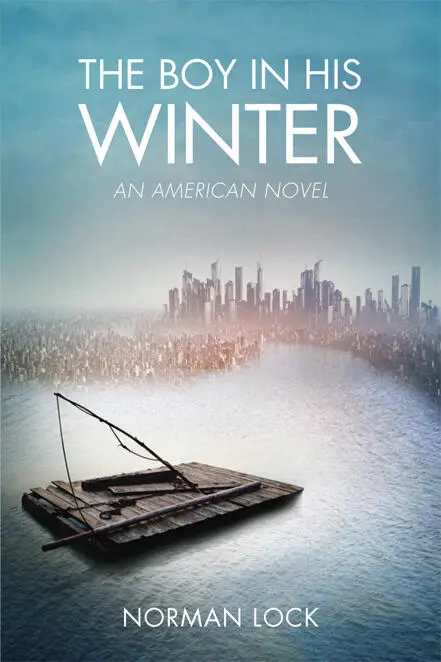
- Название:The Boy in His Winter
- Автор:
- Издательство:Bellevue Literary Press
- Жанр:
- Год:2014
- ISBN:нет данных
- Рейтинг книги:5 / 5. Голосов: 1
-
Избранное:Добавить в избранное
- Отзывы:
-
Ваша оценка:
The Boy in His Winter: краткое содержание, описание и аннотация
Предлагаем к чтению аннотацию, описание, краткое содержание или предисловие (зависит от того, что написал сам автор книги «The Boy in His Winter»). Если вы не нашли необходимую информацию о книге — напишите в комментариях, мы постараемся отыскать её.
The Boy in His Winter
The Boy in His Winter — читать онлайн бесплатно полную книгу (весь текст) целиком
Ниже представлен текст книги, разбитый по страницам. Система сохранения места последней прочитанной страницы, позволяет с удобством читать онлайн бесплатно книгу «The Boy in His Winter», без необходимости каждый раз заново искать на чём Вы остановились. Поставьте закладку, и сможете в любой момент перейти на страницу, на которой закончили чтение.
Интервал:
Закладка:
Edmund was named for a villain. In fact, both brothers had been given names recalling the fraternal pair in Lear. Their parents must have been exceptionally droll, or vicious. To call one son after an infamous bastard and the other after a character famed for virtue is to predispose them to brotherly strife. The joke was diabolical, like that which Mark Twain had played on me, annexing my name for fiction and making it a hobble to keep me in character. The similarity of the brothers’ given names made matters worse. To call themselves Ed resulted in misunderstandings, but Edgar and Edmund sounded ridiculously old-fashioned. Perhaps Mr. and Mrs. Connery — assuming their union had been sanctified — thought such highfalutin names would toughen their sons and make them mean enough to get on in the world. Or maybe they loved King Lear. I have, ever since the duke of Bridgewater introduced me to this and other works of the immortal bard when Jim and I were traveling together. (I’m not sure, now, whether that memory belongs to me or to the other Huck.)
“Horse feathers!” said Edmund, remarking on my story.
You don’t believe he said “horse feathers.”
Neither do I. Not such a piece of work as one who’d stab his brother in the back. All right, then: Let’s settle the issue of verisimilitude before you take down another word. Edmund, Edgar, James, and most of the other men and many of the women I met during my days and nights as Albert Barthelemy were casual in their employment of obscenity. It was a spice to enliven conversation, a rude noise for the elimination of silences, a sign of bravado and stylishness. For most of my life in the twenty-first century, I was no better than anybody else. I said (let me say them once and be done with them) shit, fuck, cunt, motherfucker, bitch, cocksucker, in addition to lesser terms of opprobrium like prick, twat, jerkoff, turd, dickhead, and douche bag.
Years ago, I experienced a kind of — what? Beatitude, revelation? No, nothing so exalted. I don’t want people to think I was abnormally good or virtuous, like those pious, hypocritical pismires Miss Watson and the Widow Douglas. (Goodness is a problem, isn’t it? How are we to be good in this world, in this age, and not seem laughable and absurd?) What has complicated matters is my questionable beginnings — and their remoteness from the present: Doubtless, I behaved according to the lights and customs of the time. But I could no more see the truth than Newton a boson or Hans Lippershey Uranus’s moons.
I wish I could remember — truly — the life I led then: what I did and the actual words I said. Obscenity, for instance — profanity, as it was called. What dirty words did Tom and I say to provoke the sadistic spinsters to yank us by the ears to the kitchen sink and wash our mouths with soap? I’m not convinced that the choicest curses available to us then were tarnation, cussed, bull, quim, blazes, bollocks, and lickfinger. Can you imagine a sailor of the time drawing his knife on a mule skinner and muttering murderously, “I’m gonna cut off your bollocks, you cussed lickfinger!”? Do you believe Abe Lincoln, reared on the frontier, swore “blue blazes” at Mary Todd? In any case, how Tom and I cussed can never be known: The participants and witnesses are deceased, or soon to be. What Edmund probably said when I’d reached a stopping place in the story of my rescue was, “What a crock a shit!” And that, reader, is my sole concession to literary naturalism.
“Shut your damned mouth!” said Edgar, a rebuke endearing him all the more to me.
“Let Albert finish,” said James, who would have been called, regrettably, by Deep South rednecks, a n——, not only in 1835 but also in 2005.
The villainous Edmund glared, clutched his knife, and went out on deck, silencing even the squabbling gulls.
“My brother’s manners stink,” Edgar said, nodding for me to continue.
“I did not know the color of the sky,” I said solemnly. “Eyes fixed on the water, I raced along, on top of my coffin, while the jetties narrowed and quickened the current. The river sounded like lard on a skittle or a sack of snakes. Just above Port Eads, the coffin snagged in branches of an uprooted swamp oak and slewed sideways against the current. It changed course as if I’d pulled hard on a sweep oar, jumped a low bank, and slipped into the flooded marsh. After a while, I came to rest in the high salt grass near the fishing camp. I lay, worn-out — brain reeling with what’d happened to me. Grief-stricken for my drowned folks, my brother Tom, Uncle Jim, and old Duke, I cried until I smelled your chicken cooking and came out of the swamp, hungry and generally miserable. The rest you know.”
“And you’ve got no family living anywhere?” asked Edgar, his voice soft and whispery.
“None,” I said, lowering my eyes from his — not in shame or embarrassment, mind you, but for effect. I’d learned the dramatic arts in company with the duke, who’d played Hamlet, Prince of Denmark, in London’s Drury Lane Theatre. Or so our handbill claimed in boldfaced twenty-four-point Baskerville when we trod the boards in a hellhole of a town in Arkansas, whose name I don’t recall.
“It’s a crying shame!” said James, taking off his fancy cap like a man coming into a house where there’d been a death. I liked him for it, even if the occasion for his delicacy was a lie.
Did I mind telling so personal a lie?
Since I hadn’t killed off anybody real in my imagination — no, I didn’t mind at all.
“I’m an orphan,” I said softly. If I’d had an onion, I would have oozed tears.
You disapprove. Well, you’re wrong! I might not have been recently bereaved, but I was very much an orphan and alone. I hadn’t many folks to call mine to begin with, except for Tom and Jim, after a fashion. I didn’t even have a dog to lick my hand. And in all the wide world in the year 2005, I knew none and none knew me, but for these three men. Who wouldn’t shed tears — genuine or false — if, like me, they had lost what little they had?
“James, a moment if you please?” said Edgar.
James nodded, emptied his coconut of rum, and followed Edgar out the saloon door and into the cockpit, where Edmund was savagely beheading a mangrove snapper with a bloody knife. James and Edgar stood with their backs to me, but I saw plainly how Edmund scowled. I wondered what they had in mind, without the least anxiety. I knew I’d be more than equal to their scheming. I was wonderfully sure of myself in those days, feeling, no doubt, a vestige of the mythic world in which lately I had traveled.
I turned the pages, idly, of a magazine devoted to the breasts of women and another showing men pulling great fish from the water by their gills. I’d have thumbed a magazine promising, on its cover, a body with the strength and endurance to wrestle alligators, subdue bears in hand-to-hand combat, and make women scream in ecstasy if James had not leaned in through the doorway and asked me to step outside. I put the magazine down and never did remember to open it again, though, like most thirteen-year-old boys, I was fascinated by alligators.
“Yes, sir?” I said, squinting in the sunlight glancing off the late-afternoon water.
“He’s a well-behaved boy,” James said approvingly.
“Yes, he is,” Edgar agreed with a broad smile.
Edmund mutely scowled.
“Al — do you mind if I call you Al?” asked Edgar. I was flattered by his deference. He could call me by any name he pleased so long as it wasn’t Huck. “Seeing as how you’re alone in the world. .” he began; and then he hesitated, saying, “You are telling us the truth, aren’t you, Al? There’s nobody that will miss you?”
Читать дальшеИнтервал:
Закладка:
Похожие книги на «The Boy in His Winter»
Представляем Вашему вниманию похожие книги на «The Boy in His Winter» списком для выбора. Мы отобрали схожую по названию и смыслу литературу в надежде предоставить читателям больше вариантов отыскать новые, интересные, ещё непрочитанные произведения.



Обсуждение, отзывы о книге «The Boy in His Winter» и просто собственные мнения читателей. Оставьте ваши комментарии, напишите, что Вы думаете о произведении, его смысле или главных героях. Укажите что конкретно понравилось, а что нет, и почему Вы так считаете.