Norman Lock - The Boy in His Winter
Здесь есть возможность читать онлайн «Norman Lock - The Boy in His Winter» весь текст электронной книги совершенно бесплатно (целиком полную версию без сокращений). В некоторых случаях можно слушать аудио, скачать через торрент в формате fb2 и присутствует краткое содержание. Год выпуска: 2014, Издательство: Bellevue Literary Press, Жанр: Современная проза, на английском языке. Описание произведения, (предисловие) а так же отзывы посетителей доступны на портале библиотеки ЛибКат.
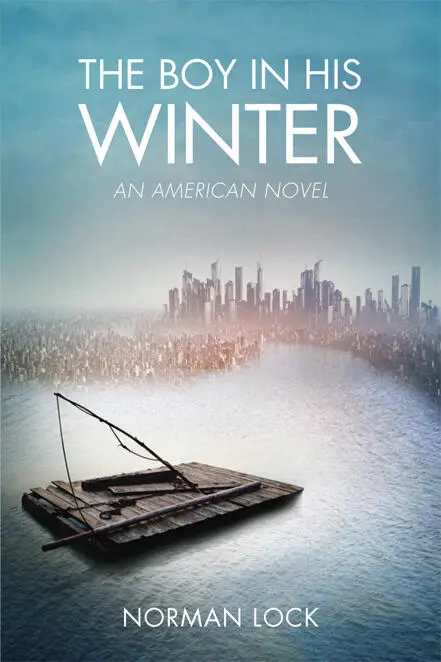
- Название:The Boy in His Winter
- Автор:
- Издательство:Bellevue Literary Press
- Жанр:
- Год:2014
- ISBN:нет данных
- Рейтинг книги:5 / 5. Голосов: 1
-
Избранное:Добавить в избранное
- Отзывы:
-
Ваша оценка:
The Boy in His Winter: краткое содержание, описание и аннотация
Предлагаем к чтению аннотацию, описание, краткое содержание или предисловие (зависит от того, что написал сам автор книги «The Boy in His Winter»). Если вы не нашли необходимую информацию о книге — напишите в комментариях, мы постараемся отыскать её.
The Boy in His Winter
The Boy in His Winter — читать онлайн бесплатно полную книгу (весь текст) целиком
Ниже представлен текст книги, разбитый по страницам. Система сохранения места последней прочитанной страницы, позволяет с удобством читать онлайн бесплатно книгу «The Boy in His Winter», без необходимости каждый раз заново искать на чём Вы остановились. Поставьте закладку, и сможете в любой момент перейти на страницу, на которой закончили чтение.
Интервал:
Закладка:
“Best not to attract attention,” James replied, laying a finger on his lips. “We’ve a long trip ahead of us.”
Did I know what was hidden on board?
Not then, I didn’t. And later on, when I knew, would it have made a difference to me? Would I have piped up in feeble protest or jumped ship and headed — where? Where had I to go? No, I would not have fussed. I confused natural probity with the lessons of the Sunday school. I did much out of spite for the self-righteous hypocrites who’d breathed their stale breaths down my neck. I wouldn’t understand virtue until much later, when I was in love, which is also variable and absurd. Besides, I thought, what is the crime of smuggling compared to stealing a man from his rightful owner?
JAMES AND I WENT INTO TOWN to buy groceries. Edgar walked the marina docks in search of an adventure, which I surmised — by his clean shirt, freshly shaved face, and the bottled scent he’d drizzled on his palms and patted on his cheeks and neck — involved a woman. He was a good-looking rogue with an easy, indulgent smile of well-aligned white teeth. Edmund, however, was not one of those villains with a pleasing shape. He was unshaven and untended. His teeth were tobacco-stained, his fingers yellowed. His wardrobe consisted mostly of gray T-shirts and dirty dungarees. He was a misanthrope without a philosophy to justify his mistrust and envy of others. I hated him. Neither brother, I later realized, was much good; but Edmund was a dangerous good-for-nothing.
James?
Even now, I can’t bring myself to judge him harshly, though he was a shady character whose choices had been motivated by self-interest. You could see it in the showy gold-clad tooth. But unlike Edmund, James was not vicious. I say this, knowing that he’d killed a man in Port-au-Spain and had to flee the island to escape the law and the vengeance of the dead man’s relations. He had been a young man then — he was in his fifties when I knew him — but still, he’d given way to fury and searched another’s innards with a knife. He may have had good reason. I never asked, and he did not know I knew. It was Edgar who told me because, I think, he was jealous of my admiration for the other man.
No, no, no! It was nothing like that! A man can be wounded by an unrequited love, whether for a woman, another man, a boy, or a dog. To think otherwise is not to have lived with open eyes and ears and mind. I liked James; I may even have loved him. Except for his name and race, he was nothing like my old Jim. But I couldn’t help feeling that, in some way, in some measure, the one was dissolved in the other. Jim was sugar stirred into James, sweetening him. It makes not a particle of sense, I know. Answer this: Do you, my scribe and sounding board, believe anything I’ve said?
No?
Sometimes, one must tell an outlandish story because the truth is too fantastic to be believed. What I believe is this: To read a book is not to experience life, but words — only them. But to say “only” is to underestimate them. Words in their sentences are a cosmography like arithmetic or the study of the stars and planets. I would not let you think that all these words — how many are there?
So many! I never guessed there’d be so many words, in rows and ranks, like soldiers in a forced march! Like automatons — cyborgs, they’re called now — impressed into the service of a mind. But that is something I choose not to believe: I mean that all these many words I’ve bundled into the world are a logical result of consciousness and an autocratic will. I insist on caprice as a necessary countermeasure to slavery. Otherwise, my own dictatorial mind must take — unknown to me — its instructions from a mastermind. And I insist, as well, that this story tells a truth.
The Gulfport Convenience Store was an inglorious relation to the grocery in Hannibal where I had filched apples and walnuts. James seemed unaware of the poverty of its stock. Could it be that even Trinidad, which I had associated in my childish fancy with a natural largesse enriched by the swag of buccaneers, was, in 2005, also a fallen paradise? In many ways, the twenty-first century has been a disappointment to me. We go faster; we go nowhere. We live longer, only to be sick and disillusioned at our end. There’s a chicken in every pot, with no thought to the suffering of the chicken. We consider ourselves lucky to have discovered, at last, ice-free routes for luxury cruises to an Arctic without snow or once indigenous life. We’ve applied the commercial notion of wholesale to death, which was sufficiently ample during the middle years of the nineteenth century. We have more geniuses than ever before, and the fruit of our genius is spoiled by the black spore of greed, murder, and catastrophe.
Would I have traveled back in time to pastoral America? (Notice, I do not say innocent .) No, life flows only in one direction, which is forward, and — moment by moment — becomes enamored of itself.
James filled the shopping cart with bread, cans of tomato soup, spaghetti, and tuna fish (with the nearby waters swimming with yellowfin, swordfish, grouper, tarpon, weakfish, drum, anchovies, sea trout, jacks, pompano, king mackerel, porgies, snook, red snapper, flounder, herring, grunts, and God knows what else or for how much longer), bottles of water and soda (cream, orange, root and birch beers), frozen hamburger, bacon, sausage, and boxes of doughnuts (jelly, cream, chocolate, and apple). He bought cigarettes in the brands favored by Edgar and by Edmund and, for himself, twisted cheroots soaked in bourbon.
“Anything you’d like, Mr. Albert?”
He always called me Mr. Albert. God rest his bones.
I put a corncob pipe and a foil pouch of cherry-flavored tobacco in the cart. Then I went to the rest room, though I did not need to rest, and splashed my own golden water onto a soggy mess of cigarette ends and wads of spent chewing gum.
James was waiting outside the store for me. Together, we walked home, admiring the soft night. I had discovered, while riding across the sound with him, that celestial observation was no longer necessary to navigation. The boat was equipped with GPS: Our positions and course were whispered to us by satellite. At the time, it was only another marvel to wonder at; but I’ve wondered lately what we may have lost by this device: a thread of light connecting our eyes to the sky. But I have — doubtless, you’ll have noticed — a sentimental strain to my character. I used to fight it by pretending to be harder than I am. In years to come, I’d be a salesman and a sort of journalist; and both require aggressiveness to succeed.
“I bought you this,” said James, taking from his jacket a paperback book. Pausing under a streetlight, I read its title: The Adventures of Huckleberry Finn. “You remind me of the boy in the story. Both of you floated down the Mississippi and smoked corncobs.”
What else could I do except to thank him for his kindness?
Did I read it?
No, but I pretended to, for his sake. It was kind of him. In fact, it was my first gift. Pap had never in his short, dissolute life given me anything but lickin’s. Miss Watson and the Widow Douglas gave me useless things at Christmas, like scratchy mufflers, girlish mittens, and grammar school primers. James was the first to give me a present for no reason other than human kindness. Human. It’s a word you don’t often hear, except by way of extenuation for a minor transgression. I stole my neighbor’s ripe tomatoes from the vine, the hubcaps from his car, the wife from his bed — I’m only human! Otherwise, you don’t hear or see the word used much. Perhaps it reminds us that we are, like all other living things, a species.
Have I ever read Twain’s book?
Читать дальшеИнтервал:
Закладка:
Похожие книги на «The Boy in His Winter»
Представляем Вашему вниманию похожие книги на «The Boy in His Winter» списком для выбора. Мы отобрали схожую по названию и смыслу литературу в надежде предоставить читателям больше вариантов отыскать новые, интересные, ещё непрочитанные произведения.






Обсуждение, отзывы о книге «The Boy in His Winter» и просто собственные мнения читателей. Оставьте ваши комментарии, напишите, что Вы думаете о произведении, его смысле или главных героях. Укажите что конкретно понравилось, а что нет, и почему Вы так считаете.