Norman Lock - The Boy in His Winter
Здесь есть возможность читать онлайн «Norman Lock - The Boy in His Winter» весь текст электронной книги совершенно бесплатно (целиком полную версию без сокращений). В некоторых случаях можно слушать аудио, скачать через торрент в формате fb2 и присутствует краткое содержание. Год выпуска: 2014, Издательство: Bellevue Literary Press, Жанр: Современная проза, на английском языке. Описание произведения, (предисловие) а так же отзывы посетителей доступны на портале библиотеки ЛибКат.
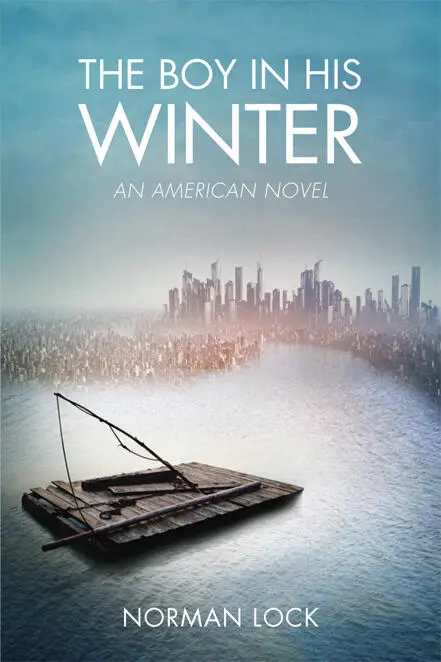
- Название:The Boy in His Winter
- Автор:
- Издательство:Bellevue Literary Press
- Жанр:
- Год:2014
- ISBN:нет данных
- Рейтинг книги:5 / 5. Голосов: 1
-
Избранное:Добавить в избранное
- Отзывы:
-
Ваша оценка:
The Boy in His Winter: краткое содержание, описание и аннотация
Предлагаем к чтению аннотацию, описание, краткое содержание или предисловие (зависит от того, что написал сам автор книги «The Boy in His Winter»). Если вы не нашли необходимую информацию о книге — напишите в комментариях, мы постараемся отыскать её.
The Boy in His Winter
The Boy in His Winter — читать онлайн бесплатно полную книгу (весь текст) целиком
Ниже представлен текст книги, разбитый по страницам. Система сохранения места последней прочитанной страницы, позволяет с удобством читать онлайн бесплатно книгу «The Boy in His Winter», без необходимости каждый раз заново искать на чём Вы остановились. Поставьте закладку, и сможете в любой момент перейти на страницу, на которой закончили чтение.
Интервал:
Закладка:
I could not keep my eyes open, because of the beer and my exertions coming from Venice on the river and in the swamp. I shut my eyes and slept.
I OPENED MY EYES ON A PLANKED CEILING close overhead. By the swaying movement of the berth and by the creaking noise of straining planks and ropes, I knew I was on a boat tied up to a dock. I crawled from the berth and looked out a porthole onto a channel winding through a marsh of black mangrove shrubs and cordgrass. A reddish egret stood on one leg, making of its long neck an elegant S. I supposed the channel wound its way to the Gulf, which was hidden by the green marsh. The sky was low and lacked the crystalline purity lent by the departing storm. The humidity was increasing, and the air in the little cabin was close. I tried the door and was relieved to find it unlocked.
On waking, I was scared I’d been made a captive by the Connerys, although I felt the older brother, Edgar, was kindly disposed toward me. Edmund, I didn’t trust and even feared, recalling his anger and impetuousness. I opened the door and stepped into a narrow passage, then climbed the companion-way to the saloon, where I met James Toussaint, a black man from Trinidad. When he smiled, I noticed a front tooth clad in gold framing the white enamel with the cutout of a heart. He wore a gold-braided captain’s hat bought, I learned later on, in a theatrical supply store. He was drinking rum from a halved coconut. Tom’s aunt Polly would have called him — her tone an alloy of affection and disapproval — a “character.” Had she been living still and aboard the boat, Miss Watson would have flown into a rage at the mere sight of him — wanting to pry the gold from his mouth, wash it out with soap, and purify his innards with castor oil. Or if she happened to be bilious, she’d demand Judge Thatcher hang him, without pausing to blow his patrician nose into his fine linen handkerchief, from Hannibal’s ancient oak, which served frontier justice and the town as gallows.
“How’re you doing?” asked Edgar, entering the saloon.
“I’m fine,” I said, easing into a barrel chair opposite the black man with the fancy hat.
“You were out on your feet, friend,” he said. “Edmund and I carried you aboard and put you to bed. I see you’ve met Jimbo.”
“My name is James,” the black man said, much annoyed. “James Touissant. Formerly of Port-au-Spain, Trinidad.” He began what would have been a slovenly and ironic bow toward me if there had been no table and rum-filled coconut in the way. Foiled, he lifted his head and showed me his mouth’s gold valentine.
“James is touchy about his dignity,” Edgar said, saluting him. “And that’s okay with us, because James is a first-class captain. We were lucky to get a man so at home in these waters.”
“And what would you be called?” James said to me.
I would not be Huckleberry Finn, Huck Finn, or any other of Mark Twain’s creatures. Just as I’d drowned his book, I would rename myself in order to begin life anew. Hesitating behind a feigned fit of coughing, during which Edgar brought me water, I hunted the air for a name and, seeing there the one carved above the black iron door of the sepulchre where I’d hidden from the storm, took it as my own.
“Albert Barthelemy.”
“It’s a pleasure to meet you, Albert,” said James, raising a mermaid-topped swizzle stick as though it were an aspergillum poised to sprinkle me with a blessing.
“So, Al, what’re you doing out here all by your lonesome?” Edgar asked.
And then and there, I created from whole cloth a story of my life. (It was not the first I had told and would not be the last.) I don’t intend to retell it now, except for my recent bereavement.
“We were living in a shack by the river in Venice when the hurricane blew Pap, Ma, Uncle Jim, my brother Tom, my dog Duke, and me into the flood,” I said. “Pap, who was a shrimper, got tangled in his nets and drowned. Twisted up in her nightdress, Ma followed him in death as she had in life, obediently. I managed to climb onto a crate the size and shape of a coffin. Meanwhile, Uncle Jim was trying to rescue Duke from a whirlpool, but before I knew it, both of them had drowned. I reached my hand out to Tom, but his mind seemed elsewhere; and in a minute, he was drowned, too, the light in his eyes put out forever. And there was nobody left in the river except me.”
I was enjoying myself immensely while I spun the yarn. I’ve always taken pleasure in invention. Of Tom Sawyer’s many and varied talents, the most admirable to me was his way with a story, which he could concoct, complicate, and elaborate with a facility and artfulness I consider nothing less than the stuff of genius. I paused a moment in the narration of my own fabrication, taking a drink of water — not because my throat or my imagination had gone dry, but for dramatic effect. My confidence in my ability to take up the thread, now that I had found it, was unshakable. The storytelling impulse was unstoppable once it had seized and fired my brain. I’ve never identified its origin — whether the gift of some muse that might be a spirit residing in the ferment of barley and hops or else in a more radiant atmosphere such as Swedenborg or Blake imbibed. While I took another draft of water, I looked out over the rim of the glass at my audience: James sat on the sofa with the coconut at rest on his knee, the mermaid swizzle stick in his hand like a conductor’s baton at the moment of a downbeat. Edgar leaned against the saloon bulkhead, hands in the pockets of his dungarees, his expression frozen midway between curiosity and pity. I had them in the palm of my hand, so to speak, and renewed my recitation.
“I rode the coffin — it seemed one to me after watching my family perish — downriver to the end of the world. On the way, the coffin bumped up against roofs and porches, barns and gazebos, Sunday schools and pianos, drowned pigs and cows — the whole mess of it moving toward the Gulf, like one of those Mexican parades where saints are carried through the streets by people dressed in black. It was a regular procession of last things, a flotilla of death. I lay on the coffin and waited to expire on its lid — struck by a floating tree, stabbed by a steeple or a weathervane, or smothered by an outhouse, its half-moon grinning at my corpse like a village idiot goggling at a passing hearse. I was ringed round by destruction: trees toppled; cars and pickup trucks flipped onto their backs like box turtles tormented by cruel boys; houses gone with the wind, their cast-iron bathtubs like something ancient and saurian muddling on clawed feet.”
Did I use those words and speak in just that way while I told them my story?
Those words or others, in that way or in another. However it was said, I went on with glee.
“The river churned with mud. On its bank, mud lay thick and oozing, rank with rotting crabs, their insides torn out by rapacious gulls, cormorants, and brown pelicans. Had I slipped off the coffin lid and drowned, I knew they’d soon be banqueting on my guts. The coffin plunged and shook and swerved in the contrary currents and rapids. I held on for dear life and might have prayed if I had not been made to in the past by a good Christian woman, who liked to lay a white sliver of soap on my tongue, like a holy wafer. I gripped my coffin and cursed — words truer to my nature than prayer — and looked down into the tangled water, hoping to catch a last glimpse of my family or, at least, the dog.”
My audience had increased by one: Edmund squatted in the saloon doorway, grinning at me while he twisted the point of his knife on his palm. He was a perfect specimen of Neanderthal man. His spite was universal. Not content with hating me, he despised fully grown Homo sapiens of either sex, as well as dogs, cats, insects, the fish he caught and savagely brained against the gunwale, even the squid and ballyhoo he used to catch them. He loved to test the temper of his knife on flesh — thawed or frozen. Flaying me would have been a pleasure.
Читать дальшеИнтервал:
Закладка:
Похожие книги на «The Boy in His Winter»
Представляем Вашему вниманию похожие книги на «The Boy in His Winter» списком для выбора. Мы отобрали схожую по названию и смыслу литературу в надежде предоставить читателям больше вариантов отыскать новые, интересные, ещё непрочитанные произведения.






Обсуждение, отзывы о книге «The Boy in His Winter» и просто собственные мнения читателей. Оставьте ваши комментарии, напишите, что Вы думаете о произведении, его смысле или главных героях. Укажите что конкретно понравилось, а что нет, и почему Вы так считаете.