Haruki Murakami - The Wind-Up Bird Chronicle
Здесь есть возможность читать онлайн «Haruki Murakami - The Wind-Up Bird Chronicle» весь текст электронной книги совершенно бесплатно (целиком полную версию без сокращений). В некоторых случаях можно слушать аудио, скачать через торрент в формате fb2 и присутствует краткое содержание. Год выпуска: 1998, ISBN: 1998, Издательство: Shinchosha, Жанр: Современная проза, на английском языке. Описание произведения, (предисловие) а так же отзывы посетителей доступны на портале библиотеки ЛибКат.
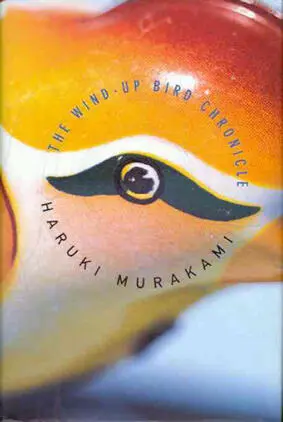
- Название:The Wind-Up Bird Chronicle
- Автор:
- Издательство:Shinchosha
- Жанр:
- Год:1998
- ISBN:0-679-77543-9
- Рейтинг книги:4 / 5. Голосов: 2
-
Избранное:Добавить в избранное
- Отзывы:
-
Ваша оценка:
The Wind-Up Bird Chronicle: краткое содержание, описание и аннотация
Предлагаем к чтению аннотацию, описание, краткое содержание или предисловие (зависит от того, что написал сам автор книги «The Wind-Up Bird Chronicle»). Если вы не нашли необходимую информацию о книге — напишите в комментариях, мы постараемся отыскать её.
In a Tokyo suburb a young man named Toru Okada searches for his wife's missing cat. Soon he finds himself looking for his wife as well in a netherworld that lies beneath the placid surface of Tokyo. As these searches intersect, Okada encounters a bizarre group of allies and antagonists: a psychic prostitute; a malevolent yet mediagenic politician; a cheerfully morbid sixteen-year-old-girl; and an aging war veteran who has been permanently changed by the hideous things he witnessed during Japan's forgotten campaign in Manchuria.
Gripping, prophetic, suffused with comedy and menace,
is a tour de force equal in scope to the masterpieces of Mishima and Pynchon.
The Wind-Up Bird Chronicle — читать онлайн бесплатно полную книгу (весь текст) целиком
Ниже представлен текст книги, разбитый по страницам. Система сохранения места последней прочитанной страницы, позволяет с удобством читать онлайн бесплатно книгу «The Wind-Up Bird Chronicle», без необходимости каждый раз заново искать на чём Вы остановились. Поставьте закладку, и сможете в любой момент перейти на страницу, на которой закончили чтение.
Интервал:
Закладка:
Several questions remained unanswered. Did Kumiko really want to divorce me? And had she asked her parents to try to convince me to go along with that?
Kumiko says she doesn't want to see you, her father had told me, exactly as her brother, Noboru Wataya, had said. This was probably not an out-and-out lie. Kumiko's parents were not above interpreting things in a manner convenient to themselves, but as far as I knew, they were not the sort to manufacture facts out of nothing. They were, for better or worse, realistic people. If what her father had said was true, then, was Kumiko now being sheltered by them?
But that I found impossible to believe. Love was simply not an emotion that Kumiko had felt for her parents and brother from the time she was a little girl. She had struggled for years to keep herself independent of them. It could well be that Kumiko had chosen to leave me because she had taken a lover. Even if I could not fully accept the explanation she had given me in her letter, I knew that it was not entirely out of the question. But what I could not accept was that Kumiko could have gone straight from me to them-or to some place they had prepared for her-and that she could be communicating with me through them.
The more I thought about it, the less I understood. One possibility was that Kumiko had experienced an emotional breakdown and could no longer sustain herself. Another was that she was being held against her will. I spent several days arranging and rearranging a variety of facts and words and memories, until I had to give up thinking. Speculation was getting me nowhere.
Autumn was drawing to a close, and a touch of winter hung in the air. As I always did in that season, I raked the dead leaves in the garden and , stuffed them into vinyl bags. I set a ladder against the roof and cleaned I the leaves out of the gutters. The little garden of the house I lived in had no trees, but the wind carried leaves in abundance from the broad-spreading deciduous trees in the gardens on both sides. I didn't mind the work. The time would pass as I watched the withered leaves floating down in the afternoon sunshine. One big tree in the neighbors to the right put out bright-red berries. Flocks of birds would perch there and chirp as if in competition with each other. These were brightly colored birds, with short, sharp cries that stabbed the air.
I wondered about how best to store Kumiko's summer clothing. I could do as she had said in her letter and get rid of them. But I remembered the care that she had given each piece. And it was not as if I had no place to keep them. I decided to leave them for the time being where they were. Still, whenever I opened the closet, I was confronted by Kumiko's absence. The dresses hanging there were the husks of something that had once existed. I knew how she looked in these clothes, and to some of them were attached specific memories. Sometimes I would find myself sitting on the edge of the bed, staring at the rows of dresses or blouses or skirts. I would have no idea how long I had been sitting there. It could have been ten minutes or an hour.
Sometimes, as I sat staring at a dress, I would imagine a man I didn't know helping Kumiko out of it. His hands would slip the dress off, then go on to remove the underwear beneath. They would caress her breasts and press her thighs apart. I could see those breasts and thighs in all their white softness, and the other mans hands touching them. I didn't want to think about such things, but I had no choice. They had probably happened in reality. I had to get myself used to such images. I couldn't just shove reality aside.
Now and then, I would recall the night I slept with Creta Kano, but the memory of it was mysteriously vague. I held her in my arms that night and joined my body with hers any number of times: that was an undeniable fact. But as the weeks passed by, the feeling of certainty began to disappear. I couldn't bring back concrete images of her body or of the ways in which it had joined with mine. If anything, the memories of what I had done with her earlier, in my mind-in unreality-were far more vivid than the memories of the reality of that night. The image of her mounted on me, wearing Kumiko's blue dress, in that strange hotel room, came back to me over and over again with amazing clarity.
Early October saw the death of the uncle of Noboru Wataya who had served as Niigata's representative to the Lower House. He suffered a heart attack shortly after midnight in his hospital bed in Niigata, and by dawn, despite the doctors best efforts, he was nothing but a corpse. The death had long been anticipated, of course, and a general election was expected shortly, so the uncles supporters lost no time in formalizing their earlier plan to have Noboru Wataya inherit the constituency. The late representatives vote-gathering machinery was solidly based and solidly conservative. Barring some major unforeseen event, Noboru Wataya's election was all but assured.
The first thing that crossed my mind when I read the article in a library newspaper was how busy the Wataya family was going to be from now on. The farthest thing from anybody's mind would be Kumiko's divorce.
The black-and-blue mark on my face neither grew nor shrank. It produced neither fever nor pain. I gradually forgot I even had it. I stopped trying to hide the mark by wearing sunglasses or a hat with the brim pulled down low. I would be reminded of it now and then when I went out shopping and people would stare at me or look away, but even these reactions stopped bothering me after a while. I wasn't harming them by having a mark on my face. I would examine it each morning when I washed and shaved, but I could see no change. Its size, color, and shape remained the same.
The number of individual human beings who voiced concern about the sudden appearance of a mark on my cheek was exactly four: the owner of the cleaning shop by the station, my barber, the young man from the Omura liquor store, and the woman at the counter of the neighborhood library. In each case, when asked about it, I made a show of annoyance and said something vague, like, I had a little accident. They would mumble, My, my or That's too bad, as if apologizing for having mentioned it.
I seemed to be growing more distant from myself with each day that went by. If I stared at my hand for a while, I would begin to feel that I was looking through it. I spoke with almost no one. No one wrote to me or called. All I found in my mailbox were utility bills and junk mail, and most of the junk mail consisted of designer-brand catalogs addressed to Kumiko, full of colorful photos of spring dresses and blouses and skirts. The winter was a cold one, but I sometimes forgot to turn on the heat, unsure whether the cold was real or just something inside me. I would throw the switch only after a look at the thermometer had convinced me that it really was cold, but even so, the cold I felt did not diminish.
I wrote to Lieutenant Mamiya with a general description of what had been happening to me. He might be more embarrassed than pleased to receive the letter, but I couldn't think of anyone else I could write to. I opened with that exact apology. Then I told him that Kumiko left me on the very day he had visited my house, that she had been sleeping with another man for some months, that I had spent close to three days in the bottom of a well, thinking, that I was now living here all alone, and that the keepsake from Mr. Honda had been nothing but an empty whiskey box.
Lieutenant Mamiya sent me an answer a week later.
To tell you the truth, you have been in my thoughts to an almost strange degree since we last met. I left your home feeling that we really ought to go on talking, to spill our guts to each other, so to speak, and the fact that we did not has been no small source of regret to me. Unfortunately, however, some urgent business had come up, which required me to return to Hiroshima that night. Thus, in a certain sense, I was very glad to have had the opportunity to receive a letter from you. I wonder if it was not Mr. Honda's intention all along to bring the two of us together. Perhaps he believed that it would be good for me to meet you and for you to meet me. The division of keepsakes may well have been an excuse to have me visit you. This may explain the empty box. My visit to you itself would have been his keepsake.
Читать дальшеИнтервал:
Закладка:
Похожие книги на «The Wind-Up Bird Chronicle»
Представляем Вашему вниманию похожие книги на «The Wind-Up Bird Chronicle» списком для выбора. Мы отобрали схожую по названию и смыслу литературу в надежде предоставить читателям больше вариантов отыскать новые, интересные, ещё непрочитанные произведения.








Обсуждение, отзывы о книге «The Wind-Up Bird Chronicle» и просто собственные мнения читателей. Оставьте ваши комментарии, напишите, что Вы думаете о произведении, его смысле или главных героях. Укажите что конкретно понравилось, а что нет, и почему Вы так считаете.