Haruki Murakami - The Wind-Up Bird Chronicle
Здесь есть возможность читать онлайн «Haruki Murakami - The Wind-Up Bird Chronicle» весь текст электронной книги совершенно бесплатно (целиком полную версию без сокращений). В некоторых случаях можно слушать аудио, скачать через торрент в формате fb2 и присутствует краткое содержание. Год выпуска: 1998, ISBN: 1998, Издательство: Shinchosha, Жанр: Современная проза, на английском языке. Описание произведения, (предисловие) а так же отзывы посетителей доступны на портале библиотеки ЛибКат.
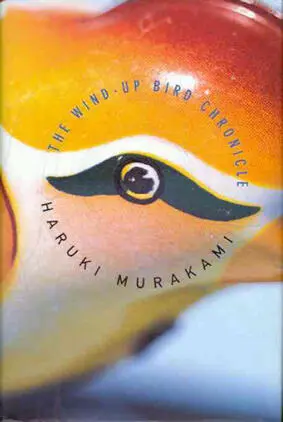
- Название:The Wind-Up Bird Chronicle
- Автор:
- Издательство:Shinchosha
- Жанр:
- Год:1998
- ISBN:0-679-77543-9
- Рейтинг книги:4 / 5. Голосов: 2
-
Избранное:Добавить в избранное
- Отзывы:
-
Ваша оценка:
The Wind-Up Bird Chronicle: краткое содержание, описание и аннотация
Предлагаем к чтению аннотацию, описание, краткое содержание или предисловие (зависит от того, что написал сам автор книги «The Wind-Up Bird Chronicle»). Если вы не нашли необходимую информацию о книге — напишите в комментариях, мы постараемся отыскать её.
In a Tokyo suburb a young man named Toru Okada searches for his wife's missing cat. Soon he finds himself looking for his wife as well in a netherworld that lies beneath the placid surface of Tokyo. As these searches intersect, Okada encounters a bizarre group of allies and antagonists: a psychic prostitute; a malevolent yet mediagenic politician; a cheerfully morbid sixteen-year-old-girl; and an aging war veteran who has been permanently changed by the hideous things he witnessed during Japan's forgotten campaign in Manchuria.
Gripping, prophetic, suffused with comedy and menace,
is a tour de force equal in scope to the masterpieces of Mishima and Pynchon.
The Wind-Up Bird Chronicle — читать онлайн бесплатно полную книгу (весь текст) целиком
Ниже представлен текст книги, разбитый по страницам. Система сохранения места последней прочитанной страницы, позволяет с удобством читать онлайн бесплатно книгу «The Wind-Up Bird Chronicle», без необходимости каждый раз заново искать на чём Вы остановились. Поставьте закладку, и сможете в любой момент перейти на страницу, на которой закончили чтение.
Интервал:
Закладка:
When the lunchtime crowd began to fill the cafe, I decided to take a walk. I had no particular goal other than to walk through the city I had not seen for so long. I walked from one street to another, my only thought being to avoid bumping into the people coming toward me. I turned right or left or went straight ahead, depending on the changing of the traffic signals or the whim of the moment. Hands in pockets, I concentrated on the physical act of walking-from the avenues with their rows of department stores and display windows, to the back alleys with their garishly decorated porno shops, to the lively streets with movie theaters, through the hushed precincts of a Shinto shrine, and back to the avenues. It was a warm afternoon, and close to half the crowd had left their coats indoors. The occasional breeze felt pleasant for a change. Before I realized it, I found myself standing in familiar surroundings. I looked at the tiles beneath my feet, at the little sculpture that stood there, and at the tall glass building that towered over me. I was standing in the middle of the small plaza outside the high-rise, the very one where I had gone last summer to watch the people passing by, as my uncle had advised me to do. I had kept it up for eleven days then, at the end of which I had followed the weird man with the guitar case into the strange apartment house lobby, where he attacked me with the bat. Aimless walking around Shinjuku had brought me to the same exact place.
As before, I bought myself coffee and a doughnut at Dunkin Donuts and took them with me to the plaza bench. I sat and watched the faces of the people passing by, which put me in an increasingly calm and peaceful mood. It felt good for some reason I could not fathom, as though I had found a comfortable niche in a wall where people would not notice me watching them. It had been a very long time since I had had such a good look at peoples faces. And not only peoples faces, I realized. I had hardly looked-really looked-at anything at all over these past six months. I sat up straight on the bench and poised myself to look at things. I looked at the people, I looked at the buildings soaring overhead, I looked at the spring sky where the clouds had parted, I looked at the colorful billboards, I picked up a newspaper lying close by and looked at it. Color seemed gradually to be returning to things as evening approached.
The next morning I took the train to Shinjuku again. I sat on the same bench and looked at the faces of the people passing by. Again for lunch I had a doughnut and coffee. I took the train home before the evening rush hour started. I made myself dinner, drank a beer, and listened to music on the radio. The next day I did exactly the same thing. Nothing happened that day, either. I made no discoveries, solved no riddles, answered no questions. But I did have the vague sense that I was, little by little, moving closer to something. I could see this movement, this gradually increasing closeness, whenever I looked at myself in the mirror above the sink. The color of my mark was more vivid than before, warmer than before. My mark is alive, I told myself. Just as I am alive, my mark is alive.
I repeated the routine every day, as I had done the previous summer, boarding the train for the city just after ten, sitting on the bench in the plaza by the high-rise, and looking at the people passing back and forth all day, without a thought in my head. Now and then, the real sounds around me would grow distant and fade away. The only thing I heard at those times was the deep, quiet sound of water flowing. I thought of Malta Kano. She had talked about listening to the sound of water. Water was her main motif. But I could not recall what Malta Kano had said about the sound of water. Nor could I recall her face. All that I could bring back was the red color of her vinyl hat. Why had she always worn that red vinyl hat?
But then sounds gradually returned to me, and once again I returned my gaze to the faces of the people.
On the afternoon of the eighth day of my going into town, a woman spoke to me. At that moment, I happened to be looking in another direction, with an empty coffee cup in my hand.
Excuse me, she said. I turned and raised my eyes to the face of the woman standing in front of me. It was the same middle-aged woman I had encountered here last summer-the only person who had spoken to me during the time I spent in the plaza. It had never occurred to me that we would meet again, but when in fact she spoke to me, it seemed like the natural conclusion of a great flow.
As before, the woman was extremely well dressed, in terms of both the quality of the individual items of clothing she wore and the style with which she had combined them. She wore dark tortoiseshell sunglasses, a smoky blue jacket with padded shoulders, and a red flannel skirt. Her blouse was of silk, and on the collar of her jacket shone a finely sculpted gold brooch. Her red high heels were simple in design, but I could have lived several months on what they must have cost her. My own outfit was a mess, as usual: the baseball jacket I bought the year I entered college, a gray sweatshirt with a stretched-out neck, frayed blue jeans, and formerly white tennis shoes that were now of an indeterminate color.
Despite the contrast, she sat down next to me, crossed her legs, and, without a word, took a box of Virginia Slims from her handbag. She offered me a cigarette as she had last summer, and again I declined. She put one between her lips and lit it, using a long, slender gold lighter the size of an eraser. Then she took off her sunglasses, put them in her jacket pocket, and stared into my eyes as if searching for a coin she had dropped into a shallow pond. I studied her eyes in return. They were strange eyes, of great depth but expressionless.
She narrowed her eyes slightly and said, So. You're back. I nodded. I watched the smoke rise from the tip of her narrow cigarette and drift away on the wind.
She turned to survey the scene around us, as if to ascertain with her own eyes exactly what it was I had been looking at from the bench. What she saw didn't seem to interest her, though. She turned her eyes to me again. She stared at my mark for a long time, then at my eyes, my nose, my mouth, and then my mark again. I had the feeling that what she really wanted to do was inspect me like a dog in a show: pry my lips open to check my teeth, look into my ears, and whatever else they do.
I guess I need some money now, I said. She paused a moment. How much? Eighty million yen should do it. She took her eyes from mine and peered up at the sky as if calculating the amount: lets see, if I take that from there, and move this from here ... I studied her makeup all the while-the eye shadow faint, like the shadow of a thought, the curl of the eyelashes subtle, like some kind of symbol.
That's not a small amount of money, she said, with a slight diagonal twist of the lips. Id say its enormous. Her cigarette was only one-third smoked when she dropped it to the ground and carefully crushed it beneath the sole of her high-heel shoe. Then she took a leather calling card case from her slim handbag and thrust a card into my hand.
Come to this address at exactly four o'clock tomorrow afternoon, she said.
The address-an office building in the wealthy Akasaka district was the only thing on the card. There was no name. I turned it over to check the back, but it was blank. I brought the card to my nose, but it had no fragrance. It was just a normal white paper card.
No name? I said.
She smiled for the first time and gently shook her head from side to side. I believe that what you need is money. Does money have a name?
I shook my head as she was doing. Money had no name, of course. And if it did have a name, it would no longer be money. What gave money its true meaning was its dark-night namelessness, its breathtaking inter-changeability.
Читать дальшеИнтервал:
Закладка:
Похожие книги на «The Wind-Up Bird Chronicle»
Представляем Вашему вниманию похожие книги на «The Wind-Up Bird Chronicle» списком для выбора. Мы отобрали схожую по названию и смыслу литературу в надежде предоставить читателям больше вариантов отыскать новые, интересные, ещё непрочитанные произведения.



Обсуждение, отзывы о книге «The Wind-Up Bird Chronicle» и просто собственные мнения читателей. Оставьте ваши комментарии, напишите, что Вы думаете о произведении, его смысле или главных героях. Укажите что конкретно понравилось, а что нет, и почему Вы так считаете.