Haruki Murakami - The Wind-Up Bird Chronicle
Здесь есть возможность читать онлайн «Haruki Murakami - The Wind-Up Bird Chronicle» весь текст электронной книги совершенно бесплатно (целиком полную версию без сокращений). В некоторых случаях можно слушать аудио, скачать через торрент в формате fb2 и присутствует краткое содержание. Год выпуска: 1998, ISBN: 1998, Издательство: Shinchosha, Жанр: Современная проза, на английском языке. Описание произведения, (предисловие) а так же отзывы посетителей доступны на портале библиотеки ЛибКат.
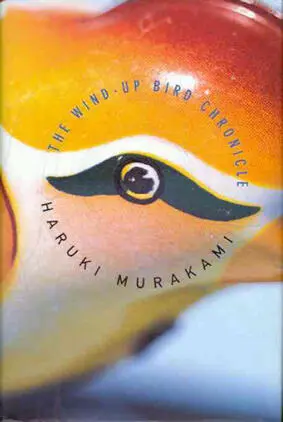
- Название:The Wind-Up Bird Chronicle
- Автор:
- Издательство:Shinchosha
- Жанр:
- Год:1998
- ISBN:0-679-77543-9
- Рейтинг книги:4 / 5. Голосов: 2
-
Избранное:Добавить в избранное
- Отзывы:
-
Ваша оценка:
The Wind-Up Bird Chronicle: краткое содержание, описание и аннотация
Предлагаем к чтению аннотацию, описание, краткое содержание или предисловие (зависит от того, что написал сам автор книги «The Wind-Up Bird Chronicle»). Если вы не нашли необходимую информацию о книге — напишите в комментариях, мы постараемся отыскать её.
In a Tokyo suburb a young man named Toru Okada searches for his wife's missing cat. Soon he finds himself looking for his wife as well in a netherworld that lies beneath the placid surface of Tokyo. As these searches intersect, Okada encounters a bizarre group of allies and antagonists: a psychic prostitute; a malevolent yet mediagenic politician; a cheerfully morbid sixteen-year-old-girl; and an aging war veteran who has been permanently changed by the hideous things he witnessed during Japan's forgotten campaign in Manchuria.
Gripping, prophetic, suffused with comedy and menace,
is a tour de force equal in scope to the masterpieces of Mishima and Pynchon.
The Wind-Up Bird Chronicle — читать онлайн бесплатно полную книгу (весь текст) целиком
Ниже представлен текст книги, разбитый по страницам. Система сохранения места последней прочитанной страницы, позволяет с удобством читать онлайн бесплатно книгу «The Wind-Up Bird Chronicle», без необходимости каждый раз заново искать на чём Вы остановились. Поставьте закладку, и сможете в любой момент перейти на страницу, на которой закончили чтение.
Интервал:
Закладка:
Then I realized the man was smiling. Even as I went on hitting him, the man kept smiling at me-the more I hit him, the bigger the smile, until finally, with blood streaming from his nose and lips, and choking on his own spit, the man gave out a high, thin laugh. He must be crazy, I thought, and I stopped punching him and stood up straight. I looked around and saw the black guitar case propped against the side of the shoe cabinet.
I left the man where he lay, still laughing, and approached the guitar case. Lowering it to the floor, I opened the clasps and lifted the cover. There was nothing inside. It was absolutely empty-no guitar, no candles. The man looked at me, laughing and coughing. I could hardly breathe. All of a sudden, the hot, steamy air inside this building became unbearable. The smell of mold, the touch of my own sweat, the smell of blood and saliva, my own sense of anger and of hatred: all became more than I could bear. I pushed the door open and went outside, closing the door behind me. As before, there was no sign of anyone in the area. All that moved was a large brown cat, slowly making its way across the vacant lot, oblivious of me.
I wanted to get out of there before anyone spotted me. I wasn't sure which way I should go, but I started walking and before long managed to find a bus stop labeled To Shinjuku Station. I hoped to calm my breathing and straighten my head out before the next bus came, but failed to do either. Over and over, I told myself: All I was trying to do was look at peoples faces! I was just looking at the faces of people passing by on the street, the way my uncle had said. I was just trying to untangle the simplest complications in my life, thats all. When I entered the bus, the passengers turned toward me. Each of them gave me the same shocked look and then averted his eyes. I assumed it was because of the mark on my face. Some time had to go by before I realized it was because of the splatters on my white shirt of the mans blood (mostly blood from his nose) and the baseball bat I was still clutching in my hands.
I ended up bringing the bat all the way home with me and throwing it in the closet.
That night I stayed awake until the sun came up. The places on my shoulder and left arm where the man had hit me with the bat began to swell and to throb with pain, and my right fist retained the sensation of punching the man over and over and over again. The hand was still a fist, I realized, still clutched into a ball and ready to fight. I tried to relax it, but the hand would not cooperate. And where sleeping was concerned, it was less a matter of being unable to sleep than of not wanting to sleep. If I went to sleep in my present state, there was no way I could avoid having terrible dreams. Trying to calm myself, I sat at the kitchen table, taking straight sips of the whiskey my uncle had left with me and listening to quiet music on the cassette player. I wanted to talk to someone. I wanted someone to talk to me. I set the telephone on the table and stared at it for hours. Call me, somebody, please, anybody-even the mysterious phone woman; I didn't care. It could be the most filthy and meaningless talk, the most disgusting and sinister conversation. That didn't matter. I just wanted someone to talk to me.
But the telephone never rang. I finished the remaining half-bottle of scotch, and after the sky grew light, I crawled into bed and went to sleep. Please don't let me dream, please just let my sleep be a blank space, if only for today.
But of course I did dream. And as I had expected, it was a terrible dream. The man with the guitar case was in it. I performed the same actions in the dream as I had in reality- following him, opening the front door of the apartment house, feeling the impact of the bat, and hitting and hitting and hitting the man. But after that it was different. When I stopped hitting him and stood up, the man, drooling and laughing wildly as he had in reality, pulled a knife from his pocket-a small, sharp-looking knife. The blade caught the faint evening glow that spilled in through the curtains, reflecting a white glimmer reminiscent of bone. But the man did not use the knife to attack me. Instead, he took all his clothes off and started to peel his own skin as if it were the skin of an apple. He worked quickly, laughing aloud all the while. The blood gushed out of him, forming a black, menacing pool on the floor. With his right hand, he peeled the skin of his left arm, and with his bloody, peeled left hand he peeled the skin of his right arm. In the end, he became a bright-red lump of flesh, but even then, he went on laughing from the dark hole of his open mouth, the white eyeballs moving spasmodically against the raw lump of flesh. Soon, as if in response to his unnaturally loud laughter, the mans peeled skin began to slither across the floor toward me. I tried to run away, but my legs would not move. The skin reached my feet and began to crawl upward. It crept over my own skin, the mans blood-soaked skin clinging to mine as an overlay. The heavy smell of blood was everywhere. Soon my legs, my body, my face, were entirely covered by the thin membrane of the mans skin. Then my eyes could no longer see, and the mans laughter reverberated in the hollow darkness. At that point, I woke up.
Confusion and fear overtook me then. For a while, I even lost hold of my own existence.
My fingers were trembling. But at the same time, I knew that I had reached a conclusion.
I could not-and should not-run away, not to Crete, not to anyplace. I had to get Kumiko back. With my own hands, I had to pull her back into this world. Because if I didn't, that would be the end of me. This person, this self that I thought of as me, would be lost.
Book Three: The Birdcatcher
October 1984 to December 1985
1The Wind-Up Bird in Winter
Between the end of that strange summer and the approach of winter, my life went on without change. Each day would dawn without incident and end as it had begun. It rained a lot in September. October had several warm, sweaty days. Aside from the weather, there was hardly anything to distinguish one day from the next. I worked at concentrating my attention on the real and useful. I would go to the pool almost every day for a long swim, take walks, make myself three meals.
But even so, every now and then I would feel a violent stab of loneliness. The very water I drank, the very air I breathed, would feel like long, sharp needles. The pages of a book in my hands would take on the threatening metallic gleam of razor blades. I could hear the roots of loneliness creeping through me when the world was hushed at four o'clock in the morning.
And yet there were a few people who wouldn't leave me alone-people from Kumiko's family, who wrote me letters. Kumiko could not go on being married to me, they said, and so I should immediately agree to a divorce. That would supposedly solve all the problems. The first few letters tried to exert pressure on me in a businesslike manner. When I failed to answer, they resorted to threats and, in the end, turned to pleading. All were looking for the same thing.
Eventually, Kumiko's father called.
I am not saying that I am absolutely opposed to a divorce, I said. But first I want to see Kumiko and talk to her, alone. If she can convince me its what she wants, then I will give her a divorce. That is the only way I will agree to it.
I turned toward the kitchen window and looked at the dark, rain-filled sky stretching away into the distance. It had been raining for four straight days, into a wet, black world.
Kumiko and I talked everything over before we decided to get married, and if we are going to end that marriage, I want to do it the same way.
Kumiko's father and I went on making parallel statements, arriving nowhere- or nowhere fruitful, at least.
Читать дальшеИнтервал:
Закладка:
Похожие книги на «The Wind-Up Bird Chronicle»
Представляем Вашему вниманию похожие книги на «The Wind-Up Bird Chronicle» списком для выбора. Мы отобрали схожую по названию и смыслу литературу в надежде предоставить читателям больше вариантов отыскать новые, интересные, ещё непрочитанные произведения.








Обсуждение, отзывы о книге «The Wind-Up Bird Chronicle» и просто собственные мнения читателей. Оставьте ваши комментарии, напишите, что Вы думаете о произведении, его смысле или главных героях. Укажите что конкретно понравилось, а что нет, и почему Вы так считаете.