Haruki Murakami - The Wind-Up Bird Chronicle
Здесь есть возможность читать онлайн «Haruki Murakami - The Wind-Up Bird Chronicle» весь текст электронной книги совершенно бесплатно (целиком полную версию без сокращений). В некоторых случаях можно слушать аудио, скачать через торрент в формате fb2 и присутствует краткое содержание. Год выпуска: 1998, ISBN: 1998, Издательство: Shinchosha, Жанр: Современная проза, на английском языке. Описание произведения, (предисловие) а так же отзывы посетителей доступны на портале библиотеки ЛибКат.
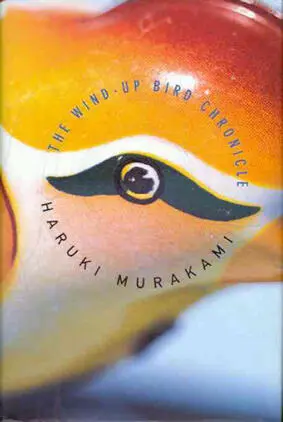
- Название:The Wind-Up Bird Chronicle
- Автор:
- Издательство:Shinchosha
- Жанр:
- Год:1998
- ISBN:0-679-77543-9
- Рейтинг книги:4 / 5. Голосов: 2
-
Избранное:Добавить в избранное
- Отзывы:
-
Ваша оценка:
The Wind-Up Bird Chronicle: краткое содержание, описание и аннотация
Предлагаем к чтению аннотацию, описание, краткое содержание или предисловие (зависит от того, что написал сам автор книги «The Wind-Up Bird Chronicle»). Если вы не нашли необходимую информацию о книге — напишите в комментариях, мы постараемся отыскать её.
In a Tokyo suburb a young man named Toru Okada searches for his wife's missing cat. Soon he finds himself looking for his wife as well in a netherworld that lies beneath the placid surface of Tokyo. As these searches intersect, Okada encounters a bizarre group of allies and antagonists: a psychic prostitute; a malevolent yet mediagenic politician; a cheerfully morbid sixteen-year-old-girl; and an aging war veteran who has been permanently changed by the hideous things he witnessed during Japan's forgotten campaign in Manchuria.
Gripping, prophetic, suffused with comedy and menace,
is a tour de force equal in scope to the masterpieces of Mishima and Pynchon.
The Wind-Up Bird Chronicle — читать онлайн бесплатно полную книгу (весь текст) целиком
Ниже представлен текст книги, разбитый по страницам. Система сохранения места последней прочитанной страницы, позволяет с удобством читать онлайн бесплатно книгу «The Wind-Up Bird Chronicle», без необходимости каждый раз заново искать на чём Вы остановились. Поставьте закладку, и сможете в любой момент перейти на страницу, на которой закончили чтение.
Интервал:
Закладка:
After a few days had gone by, though, I found myself capable of just sitting and watching peoples faces without a thought in my head. Most of the ones who passed by that place were men and women who worked in offices in the high-rise. The men wore white shirts and neckties and carried briefcases, the women mostly wore high-heeled shoes. Others I saw included patrons of the buildings restaurants and shops, family groups headed for the observation deck on the top floor, and a few people who were just passing through the space, walking from point A to point B. Here most of the people tended not to walk very quickly. I just let myself watch them all, without any clear purpose. Occasionally there would be people who attracted my interest for some reason or other, and then I would concentrate on their faces and follow them with my eyes.
Every day, I would take the train to Shinjuku at ten o'clock, after the rush hour, sit on the bench in the plaza, and stay there almost motionless until 4:00 p.m., staring at peoples faces. Only after I had actually tried this out did I realize that by training my eyes on one passing face after another, I was able to make my head completely empty, like pulling the cork from a bottle. I spoke to no one, and no one spoke to me. I thought nothing, I felt nothing. I often had the sense that I had become part of the stone bench.
Someone did speak to me once, though-a thin, well-dressed middle-aged woman. She wore a bright-pink, tight-fitting dress, dark sunglasses with tortoiseshell frames, and a white hat, and she carried a white mesh handbag. She had nice legs and had on expensive-looking spotless white leather sandals. Her makeup was thick, but not offensively so. She asked me if I was in some kind of difficulty. Not at all, I replied. I seem to see you here every day, she said, and asked what I could be doing. I said I was looking at peoples faces. She asked if I was doing it for some purpose, and I said I was not.
Sitting down beside me, she took a pack of Virginia Slims from her bag and lit up with a small gold lighter. She offered me one, but I shook my head. Then she took off her sunglasses and, without a word, stared directly at my face. More precisely, she stared at the mark on my face. In return, I stared back, into her eyes. But I was unable to read any emotion stirring there. I saw nothing but two dark pupils that seemed to be functioning as they were meant to. She had a small, pointed nose. Her lips were thin, and color had been applied to them with great care. I found it hard to guess her age, but I supposed she was in her mid-forties. She looked younger than that at first glance, but the lines beside her nose had a special kind of weariness about them. Do you have any money? she asked.
This took me off guard. Money? What do you mean, do I have any money? I'm just asking: Do you have any money? Are you broke?
No. At the moment, I'm not broke, I said. She drew her lips slightly to one side, as if examining what I had said, and continued to concentrate all her attention on me. Then she nodded. And then she put her sunglasses on, dropped her cigarette to the ground, rose gracefully from her seat, and, without a glance in my direction, slipped away. Amazed, I watched her disappear into the crowd. Maybe she was a little crazy. But her immaculate grooming made that hard to believe. I stepped on her discarded cigarette, crushing it out, and then I did a slow scan of my surroundings, which turned out to be filled with the usual real world. People were moving from one place to another, each with his or her own purpose. I didn't know who they were, and they didn't know who I was. I took a deep breath and went back to my task of looking at the faces of these people, without a thought in my head.
I went on sitting there for eleven days altogether. Every day, I had my coffee and doughnuts and did nothing but watch the faces of the people passing by. Aside from the meaningless little conversation with the well-dressed woman who approached me, I spoke with no one for the whole eleven days. I did nothing special, and nothing special happened to me. Even after this eleven-day vacuum, however, I was unable to come to any conclusion. I was still lost in a complex maze, unable to solve the simplest problem.
But then, on the evening of the eleventh day, something very strange occurred. It was a Sunday, and I had stayed there watching faces until later than usual. The people who came to Shinjuku on a Sunday were different from the weekday crowd, and there was no rush hour. I caught sight of a young man with a black guitar case. He was of average height. He wore glasses with black plastic frames, had hair down to his shoulders, was dressed in blue denim top and bottom, and trudged along in worn-out sneakers. He walked past me looking straight ahead, a thoughtful expression in his eyes. When I saw him, something struck me. My heart gave a thump. I know that guy, I thought. I've seen him somewhere. But it took me a few seconds to remember who he was-the singer I had seen that night in the snack bar in Sapporo. No doubt about it: he was the one.
I immediately left my bench and hurried after him. Given his almost leisurely pace, it was not difficult to catch up with him. I followed ten steps behind, adjusting my pace to his. I strongly considered the possibility of speaking to him. I would say something like, You were singing three years ago in Sapporo, weren't you? I heard you there.
Oh, really? he would say. Thank you very much. And then what? Should I say, My wife had an abortion that night. And she left me not too long ago. She had been sleeping with another man? I decided just to follow him and see what happened. Maybe as I walked along I would figure out some good way to handle it.
He was walking away from the station. He passed beyond the string of high-rises, crossed the Ome Highway, and headed for Yoyogi. He seemed to be deep in thought. Apparently at home in the area, he never hesitated or looked around. He kept walking at the same pace, facing straight ahead. I followed after him, thinking about the day that Kumiko had her abortion. Sapporo in early March. The earth was hard and frozen, and now and then a few snowflakes would flutter down. I was back in those streets, my lungs full of frozen air. I saw the white breath coming from peoples mouths.
Then it hit me: that was probably when things started to change. Yes, definitely. That had been a turning point. After that, the flow around me had begun to evidence a change. Now that I thought about it, that abortion had been an event of great significance for the two of us. At the time, however, I had not been able to perceive its true importance. I had been all too distracted by the act of abortion itself, while the genuinely important thing may have been something else entirely.
I had to do it, she said. I felt it was the right thing to do, the best thing for both of us. But theres something else, something you don't know about, something I cant put into words just yet. I'm not hiding anything from you. I just cant be sure whether or not its something real. Which is why I cant put it into words yet. Back then, she couldn't be sure that that something was real. And that something, without a doubt, had been more connected with the pregnancy than with the abortion. Maybe it had had something to do with the child in her womb. What could it have been? What had sent her into such confusion? Had she had relations with another man and refused to give birth to his baby? No, that was out of the question. She herself had declared that it was out of the question. It had been my child, that was certain. But still, there had been something she was unable to tell me. And that something was inseparably connected to her decision to leave me. Everything had started from that.
But what the secret was, what had been concealed there, I had no idea. I was the only one left alone, the only one in the dark. All I knew for certain was that as long as I failed to solve the secret of that something, Kumiko would never come back to me. Gradually, I began to sense a quiet anger growing inside my body, an anger directed toward that something that remained invisible to me. I stretched my back, drew in a deep breath, and calmed the pounding of my heart. Even so, the anger, like water, seeped soundlessly into every corner of my body. It was an anger steeped in sorrow. There was no way for me to smash it against something, nothing I could do to dispel it.
Читать дальшеИнтервал:
Закладка:
Похожие книги на «The Wind-Up Bird Chronicle»
Представляем Вашему вниманию похожие книги на «The Wind-Up Bird Chronicle» списком для выбора. Мы отобрали схожую по названию и смыслу литературу в надежде предоставить читателям больше вариантов отыскать новые, интересные, ещё непрочитанные произведения.








Обсуждение, отзывы о книге «The Wind-Up Bird Chronicle» и просто собственные мнения читателей. Оставьте ваши комментарии, напишите, что Вы думаете о произведении, его смысле или главных героях. Укажите что конкретно понравилось, а что нет, и почему Вы так считаете.