Russell Banks - Continental Drift
Здесь есть возможность читать онлайн «Russell Banks - Continental Drift» весь текст электронной книги совершенно бесплатно (целиком полную версию без сокращений). В некоторых случаях можно слушать аудио, скачать через торрент в формате fb2 и присутствует краткое содержание. Год выпуска: 2007, Издательство: Harper Perennial Modern, Жанр: Современная проза, на английском языке. Описание произведения, (предисловие) а так же отзывы посетителей доступны на портале библиотеки ЛибКат.
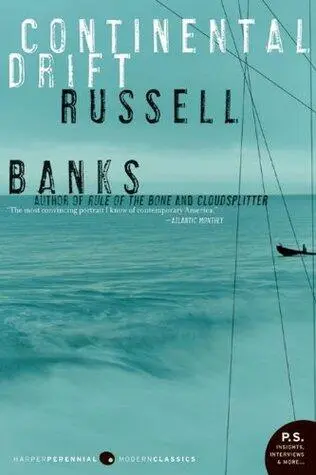
- Название:Continental Drift
- Автор:
- Издательство:Harper Perennial Modern
- Жанр:
- Год:2007
- ISBN:нет данных
- Рейтинг книги:4 / 5. Голосов: 1
-
Избранное:Добавить в избранное
- Отзывы:
-
Ваша оценка:
Continental Drift: краткое содержание, описание и аннотация
Предлагаем к чтению аннотацию, описание, краткое содержание или предисловие (зависит от того, что написал сам автор книги «Continental Drift»). Если вы не нашли необходимую информацию о книге — напишите в комментариях, мы постараемся отыскать её.
is a masterful novel of hope lost and gained, and a gripping, indelible story of fragile lives uprooted and transformed by injustice, disappointment, and the seductions and realities of the American dream.
Continental Drift — читать онлайн бесплатно полную книгу (весь текст) целиком
Ниже представлен текст книги, разбитый по страницам. Система сохранения места последней прочитанной страницы, позволяет с удобством читать онлайн бесплатно книгу «Continental Drift», без необходимости каждый раз заново искать на чём Вы остановились. Поставьте закладку, и сможете в любой момент перейти на страницу, на которой закончили чтение.
Интервал:
Закладка:
With the baby asleep in her arms, she stands, pulling the boy off the wall to a standing position beside her, and together they watch the yellow dog draw near. He has an intelligent, slightly cockeyed face, one ear perked, the other flopping, and he moves on two front legs and one hind more easily, it seems, than if he had all four. He walks with a slightly airy lope, as if gravity did not hold him quite the same way other creatures are held.
A few feet away, the dog stops and stares orange-eyed up at them, one eye looking straight at Vanise, the other studying the boy. He sniffs the air, then suddenly darts toward the basket at the boy’s feet.
Feed him! Vanise whispers hoarsely. He wants to be fed!
The dog pokes his muzzle at the bottom of the boy’s basket and then looks up and says in a smooth voice, What have you got in there? I want what I smell in your basket.
The boy looks wonderingly over at his aunt. Feed him! she commands. He wants the ham. Feed him.
Quickly, the boy yanks the top from the basket and reaches down, gropes past the clothing and comes to the ham his mother carefully wrapped two nights ago in Allanche. He draws it out, unties the knot in the red kerchief and lays the meat and bone on the ground next to the drawing in the dust. The dog watches warily.
Put it at the top, above the cross, Vanise says in a calm voice.
The boy obeys, moves the ham and stands, and the dog leaps upon the offering, grabs the meat with his mouth near the smaller end, sinks his teeth deeply into it and lifts it, the heavy end dragging the dog’s head down on one side like a man with a pipe in the corner of his mouth.
Then the dog turns away from them, takes a few steps and looks back. He puts the ham carefully down in the middle of the road and says, Come along now. Hurry. Then he grabs onto the ham again, lifts it and starts trotting quickly up the road in the direction he came from. Vanise and Claude reach for their baskets, hoist them to their heads and follow along behind.
The dog moves swiftly, and they can barely keep up. At the top of the hill, he stops a second, looks back at them and steps into the bush. Then it’s down into a tangle of liana vines and low, dense mahoe trees and macca, with the yellow dog darting up and down and over limestone outcroppings and underbrush, the woman, baby and boy with their heavy baskets scrambling along behind, panting in the heat, lashed in the face and on the arms by vines and low branches, losing sight of the dog for an instant, then spotting him again and clambering over stones and fallen trees after him. The baby is awake now and crying, frightened. Vanise ignores the child and scolds Claude, telling him to hurry, run on ahead, don’t lose sight of him!
Soon they find themselves running along a sandy pathway that winds down a narrow defile between two limestone ridges. The dog stops ahead of them a ways and watches them stumble along behind. He drops the ham again, as if to rest a moment, and says loudly, with tricky laughter in his low, smooth voice, Come on, now, Vanise! Don’t tell me you can’t keep up with an old, three-legged dog! He laughs and grabs up the ham and races on, suddenly leaving the path and scrambling up the steep side of the defile to the top of the ridge and over. They follow, out of breath and wet with sweat, Vanise pushing the boy from behind, urging him on. Hurry, Claude, don’t lose sight of him! Get to the top and find him.
At the top, they stop for a second and search the underbrush beyond, low palmettos all the way to a turquoise streak of sea in the distance. They see the tin roofs of scattered cabins and small, cleared patches of ground here and there. He’s gone! the boy wails. I can’t see him. Then, a second later, No, there he is! and he points ahead at a yellow flash of fur on the ridge fifty yards beyond.
When the dog at last picks his way down the rocky side and enters the palmettos, they leave the ridge and in the palmettos come upon a mud flat, circle it halfway, following the dog’s three-legged tracks in the gray mud when they cannot see the dog itself. Then, beyond the mud flat, the ground rises slightly and opens to a grassy field, and they see at the far end of the field a small, unpainted cinder-block house. The dog heads straight for the house, through a corn field, old, dry corn stalks clattering in the afternoon breeze, across a packed-dirt front yard and around the side of the house to the back.
Vanise and Claude run along the windowless side of the house, their breath rough, their clothing wet and stuck with burrs and leaves, and they suddenly come upon the dog lying in the center of the backyard, gnawing at the ham with deep concentration, as if he has been there all afternoon.
There is a door and stoop on the back side of the house, closed, curtainless windows on either side of it. Beyond the dog there is a shed or henhouse made of old doors and roofed over with green corrugated plastic, and beyond the shed, a garden plot with yam poles stuck in the ground and tiny, bright green corn shoots peeping through the dirt. In the distance is a field, then woods, then sea.
Vanise sits heavily down on the stoop, and the boy sits next to her. Before long, their breathing slows, their hearts stop pounding, and their clothes, in the cooling breeze off the sea, loosen and dry. The yellow dog goes on chewing at the ham quite as if they were not present. Beside them squats a large metal drum, a rain barrel with a spout leading to it from the low roof. Lying on the ground next to the barrel is a white enameled cup, and the boy grabs it up, fills it with water and hands it to his aunt, who drinks and hands the cup back in silence. The boy drinks, then sits down again next to Vanise, and they resume waiting.
Will Papa Legba speak to us again? Claude asks.
Just be silent, she whispers. See, even the baby knows how to behave, she adds, looking down at the infant asleep in her lap. Give him water, she commands, pointing toward the dog with her chin, and Claude quickly obeys, filling the cup and placing it with great tenderness a few feet in front of the animal.
The dog studies him, and when the boy has returned to the stoop, lets go of the ham, steps warily toward the cup and slurps at the water. Returning to the ham, the dog curls around it, and holding the meat with his front paws, tears at it with renewed concentration, getting down to the white bone now, licking and chewing, gnawing against it and poking his long pink tongue after the marrow.
Suddenly, they hear from the other side of the house the sound of a car, loud and blatting, a car without a muffler approaching the house rapidly, bumping across rocks and ruts and coming to an abrupt stop. A door slams, a man shouts, a harsh, loud voice that carries no sense to Vanise and Claude but is filled with the sound of anger and impatience. Robbie! Where de fuck you at, mon? Come get you out here, mon! You goddamn bumba-clot, me gwan tan you hide, mon! Then silence again, until the front door squeaks open and is flung shut, and the man hollers again, this time from inside the house. Robbie! Lazy sonofabitch! Me cyan leave dis house a minute widdout trouble.
Vanise and Claude do not move. They hear the sounds of someone rummaging through the house, hear pans clatter behind them, then silence. A moment passes, and the screened door at their backs opens, bangs against them, forcing them quickly off the short stoop, and when they turn, they face a large, coal-black man, balding on top, with a thick, bristly gray mustache and wearing a bright green safari shirt and khaki trousers. He puts his fisted hands on his hips and stares down at them. His large brown eyes are covered with a film, as if behind a pane of yellow glass, and several shiny scars lie across his cheeks and upper arms, raised and thick, like serpents. Vanise sees the cross-eyed dog peer across the yard at the man and flop its thin tail against the dusty ground.
Читать дальшеИнтервал:
Закладка:
Похожие книги на «Continental Drift»
Представляем Вашему вниманию похожие книги на «Continental Drift» списком для выбора. Мы отобрали схожую по названию и смыслу литературу в надежде предоставить читателям больше вариантов отыскать новые, интересные, ещё непрочитанные произведения.


Обсуждение, отзывы о книге «Continental Drift» и просто собственные мнения читателей. Оставьте ваши комментарии, напишите, что Вы думаете о произведении, его смысле или главных героях. Укажите что конкретно понравилось, а что нет, и почему Вы так считаете.