Russell Banks - Continental Drift
Здесь есть возможность читать онлайн «Russell Banks - Continental Drift» весь текст электронной книги совершенно бесплатно (целиком полную версию без сокращений). В некоторых случаях можно слушать аудио, скачать через торрент в формате fb2 и присутствует краткое содержание. Год выпуска: 2007, Издательство: Harper Perennial Modern, Жанр: Современная проза, на английском языке. Описание произведения, (предисловие) а так же отзывы посетителей доступны на портале библиотеки ЛибКат.
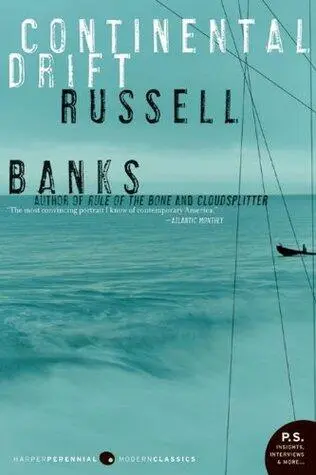
- Название:Continental Drift
- Автор:
- Издательство:Harper Perennial Modern
- Жанр:
- Год:2007
- ISBN:нет данных
- Рейтинг книги:4 / 5. Голосов: 1
-
Избранное:Добавить в избранное
- Отзывы:
-
Ваша оценка:
Continental Drift: краткое содержание, описание и аннотация
Предлагаем к чтению аннотацию, описание, краткое содержание или предисловие (зависит от того, что написал сам автор книги «Continental Drift»). Если вы не нашли необходимую информацию о книге — напишите в комментариях, мы постараемся отыскать её.
is a masterful novel of hope lost and gained, and a gripping, indelible story of fragile lives uprooted and transformed by injustice, disappointment, and the seductions and realities of the American dream.
Continental Drift — читать онлайн бесплатно полную книгу (весь текст) целиком
Ниже представлен текст книги, разбитый по страницам. Система сохранения места последней прочитанной страницы, позволяет с удобством читать онлайн бесплатно книгу «Continental Drift», без необходимости каждый раз заново искать на чём Вы остановились. Поставьте закладку, и сможете в любой момент перейти на страницу, на которой закончили чтение.
Интервал:
Закладка:
“What came clear?” Bob asks. He’s begun to fear that maybe Elaine is right, that Eddie is a little crazy—“off the beam,” is how she likes to put it — which makes Bob picture his brother as a cartoon character walking happily on air while the rest of them cling terrified to a tree trunk laid between two cliffs across a bottomless chasm.
“It came to me that money is what makes the world go round. Like I said. I know, I know, everybody with a mouth says it, but most people don’t really believe it , which is why they don’t really understand it. You have to believe something before you can understand it. Anyhow, that’s why most people end up ignoring the facts, and the most important fact is that the guys with most of the money are always doing at least two of the only three things you can do in this life, which happen to be making things, selling things and buying things. The really big guys, your Rockefellers, your Fords, your Du Ponts, they do all three. Because that’s all you can do in life anyhow, three things. If you do at least two of those things, and one of them happens to be selling, then your ass is golden. Simple. It came to me when I was eighteen, and it’s been my guiding light ever since. My philosophy of life. My religion. I buy things and I sell things. All you ever done, up to now, is buy things. And the only way that takes you is downhill. Sure, you sold your time and your skills when you were fixing people’s broken furnaces in the middle of the fucking night in the middle of the fucking winter, but in the real world, the world that money makes go round, time and skills, brother, are not things . A trade is not a thing. So I buy land and I buy booze, which, as you know, are things, and then I sell them for more than I paid for them, and then I take the difference and buy some more land and some more booze, and maybe I build a couple houses too, which I sell, and so on up the hill, all the way to pig heaven. That’s the only way to beat the system, kid.”
“What is?” What in hell is this man talking about? Bob wonders.
“You make things and you sell them, or else you buy things and you sell them. Which means that you can never really work for someone else. You always got to work for yourself.”
“Well, I work for you.”
“Hey. No, you don’t, Bob. Only temporary. Only until you catch hold of the system. Then we’re partners. Then you’ll be out there making yourself a fucking killing, man. A killing.”
Bob presses his brother for details on how, exactly, and when he will be transformed from employee to partner, from being a man who merely sells things to one who both buys and sells things, but Eddie, like a badly schooled priest explaining the mass, grows vague and dogmatic, until finally, since Bob persists, Eddie reminds him that it all comes down to trust in him, personal trust. Faith. Belief. After all, they are brothers, aren’t they, and if you can’t have faith in your brother, who can you have faith in? Strangers?
This morning, a cool, early March morning, Bob does have faith in his brother and in his brother’s system as well, his system for beating the system. After all, Bob now has a house for his family, even if it is a trailer, which at first made him feel slightly ashamed, but after a few weeks he began to look around and saw that the only people who did not live in trailers seemed to be either the kind of people he has always envied, doctors, lawyers, successful businessmen, or the kind of people he has always felt superior to, the poor whites (“crackers,” he has learned to call them), the blacks and the foreigners, Cubans mostly, but also Haitians, Jamaicans and other West Indians, though he hasn’t yet learned to tell them apart from the black Americans. He feels normal , which pleases him. His daughter Ruthie has been enrolled in school in Oleander Park, and they have figured out the school bus schedule so that every morning he is able to drink his second cup of coffee and watch her from the kitchen window as she walks down Tangelo Lane between the facing rows of trailers to the highway, where she stands with the other children from the park waiting for the bus. When the bus has picked up the children, Bob drains his cup, places it in the sink, kisses his wife goodbye, checks in the kids’ bedroom to say goodbye to Emma, if she’s awake, and leaves for work. An old ritual in a new place has been established, making the place seem familiar.
Though he works from nine to nine, and it’s dark by the time he gets home, it’s also true that the work is not difficult or especially tiring, so that when he does come home from the store he has more energy than when he got home from work in Catamount. He came home in darkness there too, at least from November till April he did. Exhausted, he usually emptied a couple of king-sized cans of Schlitz, ate supper, and fell asleep in front of the television set, only to be wakened by Elaine at nine to kiss the girls before they went to bed. He barely had enough energy or interest in his life or hers to stay awake with his wife, unless they were watching a television show that amused him. Then, finally, she would grow sleepy herself, and bored, and around eleven the two of them would climb the stairs to bed, where once or twice a week they made love, happily enough but lethargically, and fell asleep.
Since arriving in Florida, however, he helps put the girls to bed, often reading them a story, and then sits in the kitchen with his wife, talking intently to her, listening to her descriptions of her day’s events and encounters and telling her his. Even later, after they have made love, which they do more frequently now, they go on talking. All the trivia of their daily lives seem strangely significant to them — the route taken by the bus into downtown Oleander Park several miles away, the funny woman in pink hot pants at the supermarket, the cortisone cream Elaine bought at the drugstore for Emma’s rash; and on Bob’s part, the trouble he has understanding what old George Dill is saying to him but how it’s getting easier every day, so that now he not only understands George almost all the time, but he also understands the Cubans and the Haitians pretty well too, at least most of the time, and only when they speak English, of course, and so long as they know the name of what they want; and the kids with phony ID’s from the base that he can spot before they cross the parking lot by the careful, self-conscious way they walk, as if they think they’re on stage; and a long, rambling phone call from Eddie, half drunk at four in the afternoon, checking on the day’s receipts before he floats a check for a part of a tract of marshland out near a town called Yeehaw Junction (Bob swears that’s what Eddie said) that he and “some very big guys from Miami” plan to drain and cut into house lots and have a half-dozen cinder-block houses going up by the end of summer that they’ll sell by fall to generate enough cash both to pay off the note for the original purchase and get started on a second half-dozen houses, which by Christmas will have generated enough cash to finance a shopping center right there in Yeehaw Junction, a report whose coherence makes Bob feel that he really is beginning to grasp the way the system works, both the big system and Eddie’s smaller one, which feeling gives Bob, for the first time, the belief that before long he, too, will have a new, large house with a pool out on Crump Road near the yacht club and a big new air-conditioned car, a Mercedes, maybe, not an Eldorado like Eddie’s, and his kids, too, will learn how to ride horses English style and go to summer camp in New Hampshire.
He thinks, as he pulls his Chevy wagon into the lot in front of the liquor store, that tonight he’ll tell Elaine about that mist he saw rising from the lake on the way to work, how beautiful it was, and how it made him want to buy a canoe or maybe a small rowboat or another Boston whaler to replace the one he sold in New Hampshire, so he can go fishing for bass one Sunday morning soon while she and the kids are at mass.
Читать дальшеИнтервал:
Закладка:
Похожие книги на «Continental Drift»
Представляем Вашему вниманию похожие книги на «Continental Drift» списком для выбора. Мы отобрали схожую по названию и смыслу литературу в надежде предоставить читателям больше вариантов отыскать новые, интересные, ещё непрочитанные произведения.


Обсуждение, отзывы о книге «Continental Drift» и просто собственные мнения читателей. Оставьте ваши комментарии, напишите, что Вы думаете о произведении, его смысле или главных героях. Укажите что конкретно понравилось, а что нет, и почему Вы так считаете.