Russell Banks - Continental Drift
Здесь есть возможность читать онлайн «Russell Banks - Continental Drift» весь текст электронной книги совершенно бесплатно (целиком полную версию без сокращений). В некоторых случаях можно слушать аудио, скачать через торрент в формате fb2 и присутствует краткое содержание. Год выпуска: 2007, Издательство: Harper Perennial Modern, Жанр: Современная проза, на английском языке. Описание произведения, (предисловие) а так же отзывы посетителей доступны на портале библиотеки ЛибКат.
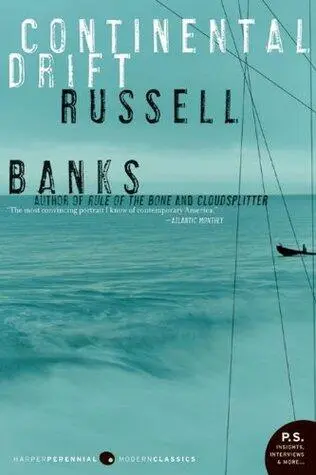
- Название:Continental Drift
- Автор:
- Издательство:Harper Perennial Modern
- Жанр:
- Год:2007
- ISBN:нет данных
- Рейтинг книги:4 / 5. Голосов: 1
-
Избранное:Добавить в избранное
- Отзывы:
-
Ваша оценка:
Continental Drift: краткое содержание, описание и аннотация
Предлагаем к чтению аннотацию, описание, краткое содержание или предисловие (зависит от того, что написал сам автор книги «Continental Drift»). Если вы не нашли необходимую информацию о книге — напишите в комментариях, мы постараемся отыскать её.
is a masterful novel of hope lost and gained, and a gripping, indelible story of fragile lives uprooted and transformed by injustice, disappointment, and the seductions and realities of the American dream.
Continental Drift — читать онлайн бесплатно полную книгу (весь текст) целиком
Ниже представлен текст книги, разбитый по страницам. Система сохранения места последней прочитанной страницы, позволяет с удобством читать онлайн бесплатно книгу «Continental Drift», без необходимости каждый раз заново искать на чём Вы остановились. Поставьте закладку, и сможете в любой момент перейти на страницу, на которой закончили чтение.
Интервал:
Закладка:
“Don’t be a pansy, Bob,” Eddie says. “And anyhow, it’s not like you’re going to have to shoot anybody. Just so long as the bastards know you got a gun, they’ll leave you alone. That’s all. It’s like dealing with the fucking Russians. The second those suckers think you’re not ready for them, ready and able to nuke their eyes out, you’re a dead man. You got to let these people know you’re serious, Bob.”
“Yeah,” Bob says quietly. Then, smiling, “I’m just not sure I am serious.”
“Sure you are,” Eddie says, and he gets up from the sofa, stretches and heads for the kitchen. “Hey, Elaine, sweetie, when’s supper, for Christ’s sake? I’m so hungry my stomach feels like it’s got a hard-on.”
“Eddie, please,” she says. “Your mouth. The children.”
“Sorry, sorry, sorry,” he says, nuzzling her neck until she draws her shoulder up and pushes his face away.
“Eddie, please, I’m trying to peel potatoes!” she says, and laughs.
Eddie pats her on the ass and opens the refrigerator for more beer. “Sorry, sorry, sorry,” he sings. “Sorry, sorry, sorry.”
3
Central Florida is cratered with small, shallow, smooth-shored lakes, mile-wide potholes in the limestone subsoil scattered from Gainesville in the north to Lake Okeechobee and the Everglades in the south. For thousands of years, water has eroded the soil from below as much as from above, until finally the simple weight of the land can no longer be supported, and one morning an entire meadow disappears, leaving in its place a pond, which, as the months go by, grows larger, as if it were eating the land that surrounds it, becoming at last a fairly large, nameless lake with a temporarily stabilized shoreline. In a few years, the ecology of the neighborhood will have accepted the lake’s presence, and if human beings have been living in the area, they, too, will have accepted and adjusted to the presence of the lake, will have forgotten the recent date of its arrival, will name it and treat and think of it as if it has been there since prehistory. In time, the lake will appear on maps, and roads and streets will circle the lake and bypass it, towns and neighborhoods will be laid out along its shores, water will be pumped from it to irrigate the citrus groves and fields, to flush the toilets and sprinkle the lawns and wash the cars, and if the lake is large enough, a marina will open for business on one shore, and soon motorboats will draw girls in bathing suits over its sparkling surface on skis, while the water table drops half a foot a year. Then, late one night, in the middle of a marshy field across town and well in sight of a housing complex still under construction, a cow will break through the ground, and attempting to escape from the widening hole, will drown. By morning, half a hundred square yards of land will be under water. Mothers will instruct their children to stay away from it, as if it were alive and warm-blooded, but even so, the children will come out to the edge of the hole and stare at it, exchanging risk for wonder, tossing sticks and small chunks of limestone into the water, their tight, high voices crossing through the morning air like swallows.
It’s not until Bob has been in Oleander Park for over a full month, however, that he is able to look out his car window on the way to work one morning and for the first time actually see these lakes that surround him. It’s as if, a passenger on a bus, he has been reading a book for hours, and closing the book, looks around and realizes that he’s in a bus station in a strange city surrounded by strangers. He thought he was alone, that the privacy of his dream was his waking reality as well, and suddenly he sees that the wall around him, made for him by his fears and anxieties, is very close to him indeed, and stretching beyond that wall for miles and miles, all the way to the horizon, is a brand-new world.
He is driving to work one cool morning, past the Cypress Gardens airport, and turning his gaze away from it toward Lake Eloise on his right, he observes for the first time a golden haze lifting slowly in thick swirls from the surface of the lake and drifting toward the trees along the far shore, bald cypress and locust and live oak trees with liana vines and Spanish moss drooping like memories from the branches, and he is struck by the soft, warm ease of the scene, and he wants to enter that scene.
Bob Dubois is a sensual man — that is, most of his deeper responses to his presence in the world make themselves known to his body before moving eventually on to his mind, a condition he learned early in life to trust and respect. If he were more articulate, more like his older brother, perhaps, and words did not so often feel like a tasteless paste in his mouth, he would probably, like most people, mistrust the information regarding the world that gets brought to him by means of his body’s delight, or else he would hold the world so revealed in contempt. But he’s not like Eddie, he’s not like most people, and consequently, a beautiful sound makes him want to listen more closely, a beautiful meal makes him hungry when he wasn’t, a beautiful woman makes him tumescent, and the sight of a morning haze rising off a still, dark lake makes him want to row a small, flat-bottomed boat quietly along the shore, to raise the dripping oars every now and then and cast a line among the knobby cypress roots for bass. His desires, then, reveal the world to him. His fears and anxieties, his aversions, obscure it.
Until this morning, he has not arrived at work feeling happy. Each day has brought a new disappointment, disillusionment or the kind of frustration you have to lie about to keep from blaming on anyone but yourself, because if you do blame it on anyone but yourself, you will be very angry at that person. And Bob cannot afford to be very angry at his brother Eddie; he is too dependent on him.
He works twelve hours a day, six days a week, and except for the part-time stock clerk, a black man in his late sixties named George Dill, he is alone in the store. Though he’s paid in cash, with no taxes or other deductions taken out, his weekly pay is only twenty-five dollars more than it was in Catamount. Eddie calls him his future partner, though, and has promised Bob that when the new store is open, Bob will be running both stores and will be paid a share of the profits — assuming, Eddie tells him carefully, he demonstrates a knack for this kind of business, which of course Eddie is sure he possesses, because, after all, isn’t he one of the Dubois brothers, and haven’t the Dubois brothers always been able to do whatever they set out to do?
Bob’s main problem in life, Eddie tells him, is that he’s never set his goals high enough. Until now, that is. “You got no experience at anything except fixing fucking oil burners.” He told this to Bob one noontime when he happened to drop by the store, and Bob, after having worked at the store for ten days, took the opportunity to complain lightly about the utter boredom of the job. “That’s because you’re not learning anything,” Eddie said. “And the reason you’re not learning anything is because your goals are too low. All you want to do is learn how to do a simple job, which you have done, and now you’re bored. What you got to do is learn about what you want to know about, which should be money. You don’t know anything about money, honey, and money-honey is what makes the world go round, so if you want to go around with it, you better learn a little about money-honey, brother of mine, or your ass will be brass and somebody else’s golden.”
Bob isn’t sure he’ll be able to learn much about money while standing behind a counter selling whiskey and beer to servicemen — the store is located on Route 17, halfway between Winter Haven and Shure air base — keeping inventory, stocking shelves, unloading delivery trucks and crushing and stuffing the empty cartons into a Dempster-Dumpster out back, but Eddie reassures him that one morning he’s going to wake up and everything will be clear to him. It happened that way to him, Eddie says, only he was just a kid when it happened, one year out of high school and working in the Thom McAn’s shoe store in Catamount, wondering how come he was selling shoes instead of buying or making them, because it seemed to him, he tells Bob, that the people who were buying shoes and the people who were making shoes had a lot more money than the people who were only selling shoes. That’s when it all came clear to him.
Читать дальшеИнтервал:
Закладка:
Похожие книги на «Continental Drift»
Представляем Вашему вниманию похожие книги на «Continental Drift» списком для выбора. Мы отобрали схожую по названию и смыслу литературу в надежде предоставить читателям больше вариантов отыскать новые, интересные, ещё непрочитанные произведения.




Обсуждение, отзывы о книге «Continental Drift» и просто собственные мнения читателей. Оставьте ваши комментарии, напишите, что Вы думаете о произведении, его смысле или главных героях. Укажите что конкретно понравилось, а что нет, и почему Вы так считаете.