William Gerhardie - Futility
Здесь есть возможность читать онлайн «William Gerhardie - Futility» весь текст электронной книги совершенно бесплатно (целиком полную версию без сокращений). В некоторых случаях можно слушать аудио, скачать через торрент в формате fb2 и присутствует краткое содержание. Год выпуска: 2012, Издательство: Melville House, Жанр: Классическая проза, на английском языке. Описание произведения, (предисловие) а так же отзывы посетителей доступны на портале библиотеки ЛибКат.
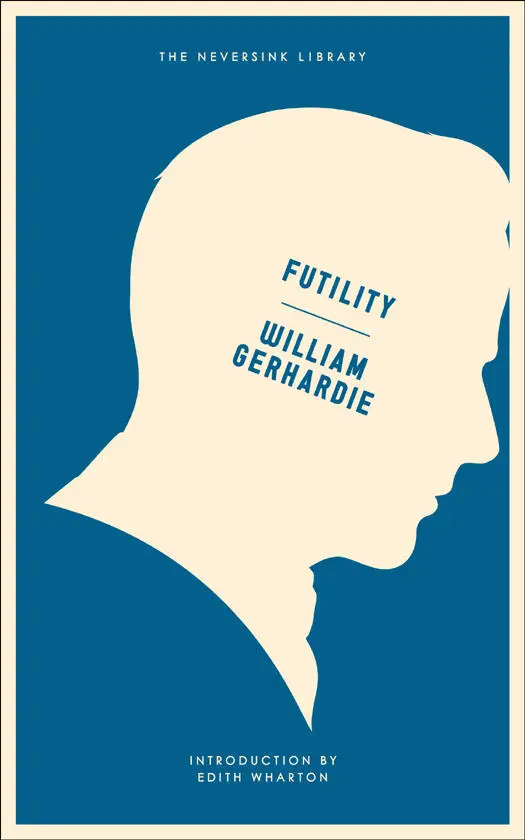
- Название:Futility
- Автор:
- Издательство:Melville House
- Жанр:
- Год:2012
- ISBN:нет данных
- Рейтинг книги:4 / 5. Голосов: 1
-
Избранное:Добавить в избранное
- Отзывы:
-
Ваша оценка:
Futility: краткое содержание, описание и аннотация
Предлагаем к чтению аннотацию, описание, краткое содержание или предисловие (зависит от того, что написал сам автор книги «Futility»). Если вы не нашли необходимую информацию о книге — напишите в комментариях, мы постараемся отыскать её.
one of the century's neglected masterpieces.
It tells the story of someone very similar to Gerhardie himself: a young Englishman raised in Russia who returns to St. Petersburg and falls in love with the daughter of a hilariously dysfunctional family-all played out with the armies of the Russian Revolution marching back and forth outside the parlor window.
Part British romantic comedy, part Russian social realism, and with a large cast of memorable characters, this astoundingly funny and poignant novel is the tale of people persisting in love and hope despite the odds.
Futility — читать онлайн бесплатно полную книгу (весь текст) целиком
Ниже представлен текст книги, разбитый по страницам. Система сохранения места последней прочитанной страницы, позволяет с удобством читать онлайн бесплатно книгу «Futility», без необходимости каждый раз заново искать на чём Вы остановились. Поставьте закладку, и сможете в любой момент перейти на страницу, на которой закончили чтение.
Интервал:
Закладка:
I rose and stood by him, and we looked at Russia, whirling past. Then I left him. When I returned, the General was still lying on the sofa, but his melancholy had vanished and he was spitting at the ceiling, probably for want of anything better to do.
On we went. Two days before we had left Irkutsk. The train rushed and roared and rattled. It was a weather that breeds pessimists. I stood looking out upon the steppes, these immense, monotonous Siberian plains, dull and melancholy in the rain, when Zina came to me and said her mother wished to see me privately. As I entered her coupé the old lady was drinking tea. She bade me sit down. “It’s about Uncle Kostia,” she began. She sighed, and there was a prolonged pause. “Cleverness! Wisdom!.. Oh, I don’t know, Andrei Andreiech. God in heaven knows”—she crossed herself—“that we are groping in the dark and none of us know what we are about or what’s what, and I am an old ignorant, sinful woman. But if you ask me, Andrei Andreiech, I’d just as soon have a fool as a wise man. Take Uncle Kostia. Such a clever man — and what’s the good of it? I am stupid, dotty in my old age, but really I don’t see where all his cleverness is leading to. And I say it is time he did something and gave up living upon others. Zina tells me she can’t keep on asking Nikolai Vasilievich for money, and I really do think it is time Uncle Kostia began to work … and published something. I thought perhaps you could get the Admiral to place him on some paper — propaganda of some sort. It isn’t that one is sorry to keep Uncle Kostia. He is clever, they all say. Heaven knows he has lived on his brother long enough, and one was never sorry to give him all he wanted since the man is clever, you understand, and writes. But now there is nothing to give … since there is nothing, you see? I don’t want to appear obdurate or unfeeling; but I thought perhaps you could talk it over with Uncle Kostia. I know he likes you and he might listen to you.”
I went, promising to do what I could.
When I knocked at the door of Uncle Kostia’s coupé it was late in the afternoon. The train rushed, and the dreary monotonous steppes receded, whirling past. Twilight was falling within and without. The candles had not yet been lit. Then the door of the coupé was pulled open and revealed Uncle Kostia sitting on the sofa, laboriously rubbing his eyes. I inquired if I had disturbed him. He assured me that I had not. He sprinkled some eau de Cologne on his hands and rubbed his face — a substitute for washing — then made room for me on the sofa, and rubbing his eyes with his fists he yawned widely and looked at the window. The melancholy of the Siberian plain must have communicated itself to both of us. For a time we sat in silence, contemplating the unspeakable disorder of the coupé. I was about to frame an adequate sentence to open conversation when he preceded me.
“There!” he said, and struck his forehead with his palm. “And I am called a clever man. Andrei Andreiech, I have been thinking. I have been thinking a good deal these last days.” He stopped abruptly.
“What have you been thinking about, Uncle Kostia?” I asked.
“That’s just the trouble,” he said, “I can’t tell you.”
I waited.
“I don’t know myself,” he explained.
I still waited.
“I have been thinking of this and that and the other, in fact, of one thing and another — precious but elusive thoughts, Andrei Andreiech. Beautiful emotions. A kaleidoscope of the most subtle colours, if I may so express myself. And, Andrei Andreiech, it has taught me a great truth. It has taught me the futility of writing.”
“But now really, Uncle Kostia,” I remonstrated.
“Don’t interrupt me,” said Uncle Kostia. “It is a truth that only ten per cent, if that, of the substance of our thoughts and feelings can be transferred on paper. It can’t be done, Andrei Andreiech — and that’s all there is to it.
“And when I think what a fool I have been, writing all these years, toiling, slaving at a desk like a clerk — when I ought to have been thinking, only thinking.”
“But, Uncle Kostia—” I began.
“Andrei Andreiech, it’s no use. How can I write down what I think? The subtlety, the privacy, the exquisite intimacy, the thousand and one inexplicable impulses that prompt and make up thought and stir emotion … Andrei Andreiech, how can I? Think! how can I? Oh, you are hopeless … hopeless!.. To-day I have been thinking. It will seem nothing to you if I tell you; it will seem nothing to me if I tell it; but, believe me, it was something infinitely deep, infinitely complex, infinitely beautiful just when I thought of it — without the labour of exertion.”
“What was it, Uncle Kostia?” I inquired.
“It was vague,” he said evasively.
“Oh, come, Uncle Kostia?”
“How can I tell? I know too much.”
I was aware of the unpleasant shrinking of ideas when set down on paper. So I persisted:
“Come on, Uncle Kostia! out with it!”
“Well,” said Uncle Kostia, and his face became that of a mystic. “I thought, for instance — I wonder if you will understand me? — I thought: Where are we all going?”
“Hm,” I said significantly.
“I thought: Why are we all moving?”
“You have not far to seek for motives,” said I. “I presume there are motives in each case.”
“Motives!” he cried. “That is the very point. There are no motives. The motives are naught. It is the consequences. Where are we going? Why are we going? Look: we are moving. Going somewhere. Doing something. The train rushes through Siberia. The wheels are moving. The engine-drivers are adding fuel to the engines. Why? Why are we here? What are we doing in Siberia? Where are we heading for? Something. Somewhere. But what? Where? Why?”
I think I must have misunderstood Uncle Kostia’s subtle thoughts. Or was it that my commission was continually in my mind? But I asked him:
“Is it that you are doomed by your sense of inutility, Uncle Kostia?”
His eyes flashed. He spoke impatiently: “ My inutility! Your inutility! What the devil does it matter whose inutility? Is your Admiral very utile , may I ask? What I was saying was that we all behaved as if we were actually doing things, boarding this Trans-Siberian Express as if in order to do something at the end of the journey, while actually the journey is in excess of anything we are likely to achieve.”
But I thought I would keep him to the point, that is to say, my point. “Then would you rather not travel in this train, Uncle Kostia?”
An anxious look came into his eyes.
“Why? I like travelling in this train. I am comfortable.”
“But the futility of it?”
“Oh!” groaned Uncle Kostia at my stupidity. “Can’t you understand that it is the very fact of this physical futility that inflates me with a sense of spiritual importance?”
I looked at him with a blank expression.
“When I am at home — I mean anywhere at a standstill — I am wretched intolerably. I write and I think—” He stopped.
“What?”
“ What am I writing for: what on earth am I thinking for?”
“So you have doubts?”
“Yes, at moments I am seized by misgivings: what is it all for? I ask.”
“I see.”
“Now it is different. We are moving, apparently doing something, going somewhere. One has a sense of accomplishing something. I lie here in my coupé and I think: It is good. At last I am doing something. Living, not recording. Living! Living! I look out of the window, and my heart cries out: Life! Life! and so living, living vividly, I lapse into my accustomed sphere of meditation, and then before I know exactly where I am I begin to meditate: Where are we all going to? Isn’t our journey the kernel of absurdity? And so, by contrast, as it were, I gain a sense of the importance of meditation.… That is how we deceive ourselves, Andrei Andreiech.”
Читать дальшеИнтервал:
Закладка:
Похожие книги на «Futility»
Представляем Вашему вниманию похожие книги на «Futility» списком для выбора. Мы отобрали схожую по названию и смыслу литературу в надежде предоставить читателям больше вариантов отыскать новые, интересные, ещё непрочитанные произведения.











Обсуждение, отзывы о книге «Futility» и просто собственные мнения читателей. Оставьте ваши комментарии, напишите, что Вы думаете о произведении, его смысле или главных героях. Укажите что конкретно понравилось, а что нет, и почему Вы так считаете.