William Gerhardie - Futility
Здесь есть возможность читать онлайн «William Gerhardie - Futility» весь текст электронной книги совершенно бесплатно (целиком полную версию без сокращений). В некоторых случаях можно слушать аудио, скачать через торрент в формате fb2 и присутствует краткое содержание. Год выпуска: 2012, Издательство: Melville House, Жанр: Классическая проза, на английском языке. Описание произведения, (предисловие) а так же отзывы посетителей доступны на портале библиотеки ЛибКат.
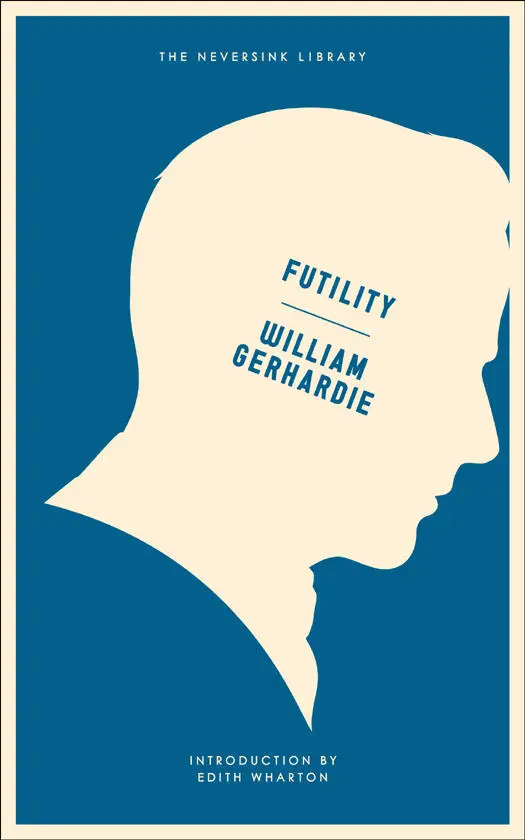
- Название:Futility
- Автор:
- Издательство:Melville House
- Жанр:
- Год:2012
- ISBN:нет данных
- Рейтинг книги:4 / 5. Голосов: 1
-
Избранное:Добавить в избранное
- Отзывы:
-
Ваша оценка:
Futility: краткое содержание, описание и аннотация
Предлагаем к чтению аннотацию, описание, краткое содержание или предисловие (зависит от того, что написал сам автор книги «Futility»). Если вы не нашли необходимую информацию о книге — напишите в комментариях, мы постараемся отыскать её.
one of the century's neglected masterpieces.
It tells the story of someone very similar to Gerhardie himself: a young Englishman raised in Russia who returns to St. Petersburg and falls in love with the daughter of a hilariously dysfunctional family-all played out with the armies of the Russian Revolution marching back and forth outside the parlor window.
Part British romantic comedy, part Russian social realism, and with a large cast of memorable characters, this astoundingly funny and poignant novel is the tale of people persisting in love and hope despite the odds.
Futility — читать онлайн бесплатно полную книгу (весь текст) целиком
Ниже представлен текст книги, разбитый по страницам. Система сохранения места последней прочитанной страницы, позволяет с удобством читать онлайн бесплатно книгу «Futility», без необходимости каждый раз заново искать на чём Вы остановились. Поставьте закладку, и сможете в любой момент перейти на страницу, на которой закончили чтение.
Интервал:
Закладка:
“Tell me,” whined Nigger voices, “why nights are lonesome,” and the cymbals beat the pulse; “tell me why days are blue .… ” And we moved rhythmically to the incantation, stooping, jerking gently, swaying smoothly, like plants in the water. When the song ceased it was immediately encored. And when the bands went, a handful of us, those who had enjoyed it most, lingered for a while. I and Nina, the Baron and his painted lady, Vera and Holdcroft, danced to the husky gramophone; and Sonia sat on the window-sill and stared at Holdcroft with unmitigated admiration.
And in the evening I called for them in our car and took them to the concert. We arrived a little late because at a point in the journey our progress had been impeded by a car that blocked the road. Inside was a drunken gentleman who was being urged by the chauffeur to pay his fare. “Don’t want to pay,” the gentleman responded.
“Then get out!”
“Don’t want to get out.”
“Get out, you— ”
“Who’re you talking to?” came from within. “Don’t you know I’m an officer?”
“Officer. There’s a lot of you here, we know your kind.… Get out!”
“Don’t want to get out.”
“Then kindly pay your fare.”
“Don’t want to pay.”
At length our chauffeur succeeded in disentangling our car. “I’m always so frightened for the children. Awful language these drunkards use,” said Fanny Ivanovna.
The theatre, as we entered the box, was a gallery of distinguished generals, admirals and Allied high commissioners; and the orchestra was sending forth the plaintive strains of the familiar Czecho-Slovak marching song.
I sat next to Nina, and the Admiral was in the other corner, half screened from the public view by the dusty curtain. To the great delight of Sonia and Fanny Ivanovna, there was the Overture to Tannhäuser; and as the initial pilgrims’ chorus was being repeated in its last resort, the conductor urging the executants to ever greater efforts, and the trombones blazed away their utmost perturbation, a chuckle of glee and satisfaction spread over the Admiral’s fine-set face. “There’s more discipline in an orchestra like this,” said he, “than in a battalion of Marines,” and clapped his hands uproariously.
The concert over, the Admiral dispatched me first in his car with the family and waited for me to return for him. Driving home through the warm and starry night, Fanny Ivanovna praised the immaculate politeness of Sir Hugo; but added afterwards, “He’s frightfully nervous, and keeps fiddling with something or other all the time.”
“And keeps saying ‘Splendid! Splendid!’ ” added Nina.
“There’s something curious about his mind, too,” she said.
“Ah! you’ve discovered that!” I laughed. “It’s a grasp of the inessential, a passion for detail and exactitude unexcelled in creation. You don’t know him. To-day, for instance, I met him on the landing, before lunch. ‘Hello!’ he said. ‘Full of work?’ Now it had seemed to me that he said ‘Full of drink?’ and naturally enough I said, ‘No, not at this hour, sir.’ ‘At what hour do you start, pray?’ he began, and thinking he was talking about cocktails, I said, ‘Oh, just before dinner.’ ‘Hm!’ he said. ‘Just before dinner. I shall have to look into that.’ ‘I’m sorry, sir,’ I said, ‘I think I must have heard you wrong. Do you mind telling me again what you said?’ ‘Hm!’ he said, ‘I’ve been talking to you on this landing for the last three minutes on the basis of my original inquiry, and you now ask me what it was I said. I said — I think these were the exact words I used — I said: “Hello!” I said. “Full of work?” ‘Full of work?’ I cried, ‘and I thought you said “Full of drink.” ‘Full of drink,’ he said, ‘full of drink indeed. Good morning to you!’ And he went his way.”
The car had pulled up.
“Good night, Andrei Andreiech, and thank you very, very much.”
“Good night,” smiled the three sisters.
The Admiral was bucked as we drove home. I knew that he was fond of young girls. On the other hand, he liked mature women. He praised the girls. I breathed to him that they had praised him.
The Admiral smiled one of his most adorable smiles.
“Fanny Ivanovna,” I said, “was struck by your appearance.”
The gallant Admiral blushed like a girl.
“There is something in having an appearance,” he said at last.
He looked out into the dark and silent night. Some minutes later he said, with conviction, “She’s a good woman, that Fanny Ivanovna.”
“Russian women are so much more interesting and fascinating,” I babbled, “than other women.”
“Yes,” he agreed. “But she’s a Boche.”
“Unfortunately,” I sighed.
The Admiral yawned. “Never mind,” he said. “I don’t mind the Germans. What I can’t stick are the dirty Bolsheviks.”
“Russian girls,” I continued, “are far more interesting and clever than other girls.”
“All girls,” the Admiral replied, “are stupid.”
IV
MUCH OF MY EXPERIENCES MUST NOW APPEAR IN the nature of a farce. This is not my fault. A good deal of life is a hilarious farce, and yet, as in the case of the affiliation of Nikolai Vasilievich’s family, it all comes about in the proper constitutional way, through a string of human motives. For a week or so Nikolai Vasilievich kept on applying to the Admiral for a coupé in his train to Omsk, in the teeth of implacable refusals. Then, after much opposition from the Admiral, and a passionate, though somewhat vague attempt on the part of Nikolai Vasilievich to identify his personal misfortunes with that of “honest” Russia, and the doings of the Czechs, the miners, and the punitive expedition whose disinterestedness he had begun to doubt, with that of international Bolshevism, this was conceded. But on hearing of this step, Fanny Ivanovna at once concluded that Nikolai Vasilievich was trying to escape from her — a suspicion she always entertained — and she immediately applied to see the Admiral in person and asked for two additional coupés, to accommodate her and the three sisters. The Admiral was a sailor and a gentleman. He promised her two coupés. I forget which wing of the family was the next to apply. I remember that every day that week our waiting-room was crowded with petitioners. The Admiral said No. He found himself saying No innumerable times each day. Now it is an intrinsic part of the Russian character that it does not accept No for No. It is constitutionally incapable of doing so. Its institutions are all a negation of that principle. And what is more, it refuses to confine that fact to within the Russian border. It regards it in the light of world-wide application, assuming that it is indeed nothing less than human nature.
The Admiral still said No. He held that it was not human nature but just Russian nature, and as an illustration of his point he meant to show that when an Englishman says No he does mean No. But none of them would understand the Admiral’s interpretation of No. They had all grown up with the idea that No meant Yes after an adequate amount of pressure and insistence. The pressure was of various kinds, according to the age, sex and nature of the applicant. There were tears, entreaties. There were questions, such as the “object” of the Allies in Siberia, since they monopolized the best trains and refused to help the Russians in their primary needs. There were direct questions which it was thought must needs shatter the impregnability of the Admiral’s No, such as, for instance: Did the Admiral wish to starve them, as he evidently did, by cutting them adrift from Nikolai Vasilievich, the bread-winner?
Читать дальшеИнтервал:
Закладка:
Похожие книги на «Futility»
Представляем Вашему вниманию похожие книги на «Futility» списком для выбора. Мы отобрали схожую по названию и смыслу литературу в надежде предоставить читателям больше вариантов отыскать новые, интересные, ещё непрочитанные произведения.












Обсуждение, отзывы о книге «Futility» и просто собственные мнения читателей. Оставьте ваши комментарии, напишите, что Вы думаете о произведении, его смысле или главных героях. Укажите что конкретно понравилось, а что нет, и почему Вы так считаете.