William Gerhardie - Futility
Здесь есть возможность читать онлайн «William Gerhardie - Futility» весь текст электронной книги совершенно бесплатно (целиком полную версию без сокращений). В некоторых случаях можно слушать аудио, скачать через торрент в формате fb2 и присутствует краткое содержание. Год выпуска: 2012, Издательство: Melville House, Жанр: Классическая проза, на английском языке. Описание произведения, (предисловие) а так же отзывы посетителей доступны на портале библиотеки ЛибКат.
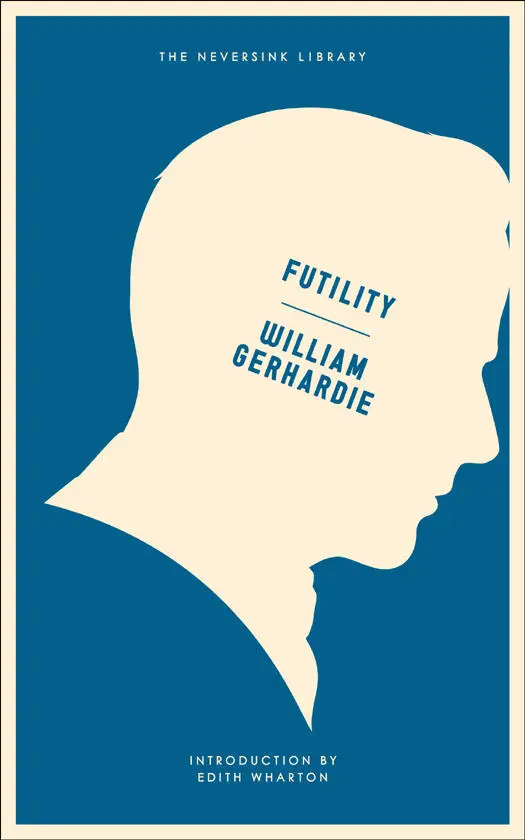
- Название:Futility
- Автор:
- Издательство:Melville House
- Жанр:
- Год:2012
- ISBN:нет данных
- Рейтинг книги:4 / 5. Голосов: 1
-
Избранное:Добавить в избранное
- Отзывы:
-
Ваша оценка:
Futility: краткое содержание, описание и аннотация
Предлагаем к чтению аннотацию, описание, краткое содержание или предисловие (зависит от того, что написал сам автор книги «Futility»). Если вы не нашли необходимую информацию о книге — напишите в комментариях, мы постараемся отыскать её.
one of the century's neglected masterpieces.
It tells the story of someone very similar to Gerhardie himself: a young Englishman raised in Russia who returns to St. Petersburg and falls in love with the daughter of a hilariously dysfunctional family-all played out with the armies of the Russian Revolution marching back and forth outside the parlor window.
Part British romantic comedy, part Russian social realism, and with a large cast of memorable characters, this astoundingly funny and poignant novel is the tale of people persisting in love and hope despite the odds.
Futility — читать онлайн бесплатно полную книгу (весь текст) целиком
Ниже представлен текст книги, разбитый по страницам. Система сохранения места последней прочитанной страницы, позволяет с удобством читать онлайн бесплатно книгу «Futility», без необходимости каждый раз заново искать на чём Вы остановились. Поставьте закладку, и сможете в любой момент перейти на страницу, на которой закончили чтение.
Интервал:
Закладка:
As a pièce de résistance , I danced with a little niece of Uncle Kostia, Olya Olenin. She was stout and round, like a football, and we banged into people and against walls carelessly and with the harmlessness of a football.
“To-day I have grown ten years older,” confided Nikolai Vasilievich, as I came up to him. “I shall not forget it.”
“You take it much too seriously,” I said.
“I blame myself for being such a fool as to have listened to her. I didn’t want to come.”
“Nikolai Vasilievich, really!”
“Oh, please don’t take it that way. It was charming of you to ask us. I like your Admiral … and that other officer, his assistant, who says ‘Splendid! Splendid!’ ”
“Sir Hugo,” I supplied.
Then Uncle Kostia, spectacled, and with the air of a profound philosopher taking stock of his impressions, joined us. “I’ve been talking to your Admiral,” he said.
“Well?”
“Fine-looking man. Combines the manner of Napoleon I with the mind, I think, of Napoleon III. Wants to get to Moscow. But what he’ll do when he gets there (if he gets there), curiously enough doesn’t seem to have occurred to him! The simplicity of the scheme is touching. All right, let’s assume he gets there and plants a constitutional Russian government and retains an Allied army to support it. Will he keep the Allied troops there indefinitely? And when at last they go, what’s to prevent the government from collapsing like a pack of cards at the hands of a population inevitably resentful of foreign interference? Then there’s your country. You think your country will support you. But it will be divided.”
“I disagree,” said Nikolai Vasilievich. “I’d much rather, for example, the gold-mining area was occupied by English troops, or even by the Japanese, than by the Russians. I know what I am talking about. I am a typical Russian myself. There are honest men in Russia, and there are clever men in Russia; but there are no honest clever men in Russia. And if there are, they are probably heavy drinkers.”
Uncle Kostia “pooh-poohed” this sweeping charge; but Nikolai Vasilievich continued:
“To take my book-keeper Stanitski. Andrei Andreiech knows him. Dishonest as you make them. And still I am obliged to keep him on. Why? Because if I took an honest man he would make such a hash of all the books that I wouldn’t know where I was at all.”
“But do you know where you are with a dishonest book-keeper, Nikolai Vasilievich?” said Uncle Kostia with that keen spasmodic interest that highly abstract men have of taking, periodically, in practical affairs, almost as a relief from themselves. “I am a man of letters, no business man in any sense; still it would seem to me—”
“To be candid,” said the other, “it doesn’t matter much either way just now. Till we can get the goldmines back there is no doing any business. I get money in advance occasionally. He sees to the paying of the interest, which is paid out of the same money, and puts it down in the books. For the present that is all.”
“Hm!.. Still, I should do something about that,” said Uncle Kostia, “if I may presume to give advice in these matters.”
“When we get the gold-mines there will be time enough to act,” Nikolai Vasilievich answered somewhat gruffly. “I only mentioned it as an illustration of the political situation we have to contend with. The foreigners here must laugh at our methods!”
“Why? They’re only muddling up our issues.”
“The idea,” I attempted to amend Uncle Kostia’s proposition, “is that the Allied troops should help to raise and train Russian cadres and so lay the foundation for a new Russian Army which, in its turn, would make it possible to rebuild the State. It’s not an invasion by foreign troops. You may rest your mind in peace on that point.”
“Oh!.. Oh!.. If that’s the idea,” said Uncle Kostia in augmented tones, “then I am doubly alarmed; for I can guess the elements which will form the backbone of this new White Russian Army — monarchists altogether too brainless to realize that theirs is a lost cause.”
“Most of them, I think, would favour a Constitutional Monarchy,” proffered Nikolai Vasilievich.
“A constitutional monarchy in Russia,” retorted Uncle Kostia, “would invariably be more monarchical than constitutional.”
“Anyhow,” I said, “do have a drink.”
I could see Sir Hugo’s ruddy, weather-beaten face, as he served Fanny Ivanovna with her ice-cream; and as I came up to her I overheard her say to him in German: “I think the Bolsheviks are bound to be beaten soon because it is impossible to do any trade while they are in power.”
“Splendid!” said Sir Hugo somewhat inconsequently. “Splendid!”
“We simply can’t recover our mines, and Nikolai Vasilievich—”
She stopped.…
She danced heavily; and as I turned her each time, revolved a few times of her own momentum. She sought to direct me by sheer strength of will. “Who is steering, Fanny Ivanovna? You or me?” I asked in exasperation.
“I am sorry, Andrei Andreiech,” she answered. “I do it unintentionally.”
The Baron asked me for the third time about Persia or Mesopotamia; but the Admiral’s approach frightened him away.
We watched Kniaz, who was shaking hands cordially with everybody as he took his leave. “That Kniaz of yours looks as if one day he’d been unspeakably astonished — and remained so ever since.”
“Look at General Bologoevski, sir, dancing with that painted woman.”
The Admiral’s face drew out and darkened. “That man,” said he, “is the biggest fool in the Russian Army.” He pondered. “The Russian men are no damned good. But the women are splendid! What about that Czech concert to-night? You can bring your women if you like into the box. Don’t want the men. Ha! ha! ha! Look at old Hugo talking to the young girls!”
“I’ll ask the three sisters.…”
“Those three there sitting on the window-sill?”
“Yes.… And Fanny Ivanovna,” I added.
“All right. Let’s have the Hun.
“Well, Nikolai Vasilievich,” he turned to his guest. “I hear you know English very well. Where have you picked it up?”
“No, no,” blushed Nikolai Vasilievich; and said in Russian, “Your English spelling is so difficult. In English you spell a word ‘London’ and pronounce it ‘Birmingham.’ ”
“Ha! ha! ha! ha!” laughed the Admiral loudly, but with dignity; and then asked, “Are you comfortable in Vladivostok? Can you get all the food you want for your family? I hope you will tell me if there is anything I can do?”
“I am very grateful,” bowed the Russian.
“Now mind you don’t forget to ask.…”
Nikolai Vasilievich, as things went, did not forget; nor did he wait to be asked twice. On the spot he said that he understood the Admiral was shortly travelling by special train up-country, and all he, Nikolai Vasilievich, requested was one modest coupé in that special train, as it was urgent that he should see a certain Russian general at Omsk, relative to the forthcoming punitive expedition to his goldmines.
The Admiral returned the classic answer: “I’ll see what I can do.”
“Will you kindly introdooce me to the young lady yonder?” said a very smart, stiff-collared U.S. naval officer. He looked in the direction of the window-sill.
“Which one?”
The next moment he was dancing with Nina.
“Who’s that officer?” asked General Bologoevski.
“Ward.”
“What eyes! What calves! What ankles!” he sighed again. “Look here, really, why in the world don’t you marry her?”
“And now,” said I, “it’s my turn,” as the waltz subsided on the last three beats.
Читать дальшеИнтервал:
Закладка:
Похожие книги на «Futility»
Представляем Вашему вниманию похожие книги на «Futility» списком для выбора. Мы отобрали схожую по названию и смыслу литературу в надежде предоставить читателям больше вариантов отыскать новые, интересные, ещё непрочитанные произведения.









Обсуждение, отзывы о книге «Futility» и просто собственные мнения читателей. Оставьте ваши комментарии, напишите, что Вы думаете о произведении, его смысле или главных героях. Укажите что конкретно понравилось, а что нет, и почему Вы так считаете.