Теодор Драйзер - The Genius
Здесь есть возможность читать онлайн «Теодор Драйзер - The Genius» весь текст электронной книги совершенно бесплатно (целиком полную версию без сокращений). В некоторых случаях можно слушать аудио, скачать через торрент в формате fb2 и присутствует краткое содержание. Год выпуска: 2014, Издательство: epubBooks Classics, Жанр: Классическая проза, на английском языке. Описание произведения, (предисловие) а так же отзывы посетителей доступны на портале библиотеки ЛибКат.
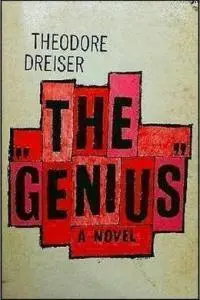
- Название:The Genius
- Автор:
- Издательство:epubBooks Classics
- Жанр:
- Год:2014
- ISBN:нет данных
- Рейтинг книги:4 / 5. Голосов: 1
-
Избранное:Добавить в избранное
- Отзывы:
-
Ваша оценка:
The Genius: краткое содержание, описание и аннотация
Предлагаем к чтению аннотацию, описание, краткое содержание или предисловие (зависит от того, что написал сам автор книги «The Genius»). Если вы не нашли необходимую информацию о книге — напишите в комментариях, мы постараемся отыскать её.
The Genius — читать онлайн бесплатно полную книгу (весь текст) целиком
Ниже представлен текст книги, разбитый по страницам. Система сохранения места последней прочитанной страницы, позволяет с удобством читать онлайн бесплатно книгу «The Genius», без необходимости каждый раз заново искать на чём Вы остановились. Поставьте закладку, и сможете в любой момент перейти на страницу, на которой закончили чтение.
Интервал:
Закладка:
"I'm sorry," he whispered, "really I am. Won't you forgive me?"
"Oh, I don't know what to do! what to think!" moaned Angela after a time.
"Please do, Angela," he urged, holding her questioningly.
There was more of this pleading and emotional badgering until finally out of sheer exhaustion Angela said yes. Eugene's nerves were worn to a thread by the encounter. He was pale, exhausted, distraught. Many scenes like this, he thought, would set him crazy; and still he had to go through a world of petting and love–making even now. It was not easy to bring her back to her normal self. It was bad business, this philandering, he thought. It seemed to lead to all sorts of misery for him, and Angela was jealous. Dear Heaven! what a wrathful, vicious, contentious nature she had when she was aroused. He had never suspected that. How could he truly love her when she acted like that? How could he sympathize with her? He recalled how she sneered at him—how she taunted him with Christina's having discarded him. He was weary, excited, desirous of rest and sleep, but now he must make more love. He fondled her, and by degrees she came out of her blackest mood; but he was not really forgiven even then. He was just understood better. And she was not truly happy again but only hopeful—and watchful.
Chapter XII
Spring, summer and fall came and went with Eugene and Angela first in Alexandria and then in Blackwood. In suffering this nervous breakdown and being compelled to leave New York, Eugene missed some of the finest fruits of his artistic efforts, for M. Charles, as well as a number of other people, were interested in him and were prepared to entertain him in an interesting and conspicuous way. He could have gone out a great deal, but his mental state was such that he was poor company for anyone. He was exceedingly morbid, inclined to discuss gloomy subjects, to look on life as exceedingly sad and to believe that people generally were evil. Lust, dishonesty, selfishness, envy, hypocrisy, slander, hate, theft, adultery, murder, dementia, insanity, inanity—these and death and decay occupied his thoughts. There was no light anywhere. Only a storm of evil and death. These ideas coupled with his troubles with Angela, the fact that he could not work, the fact that he felt he had made a matrimonial mistake, the fact that he feared he might die or go crazy, made a terrible and agonizing winter for him.
Angela's attitude, while sympathetic enough, once the first storm of feeling was over, was nevertheless involved with a substratum of criticism. While she said nothing, agreed that she would forget, Eugene had the consciousness all the while that she wasn't forgetting, that she was secretly reproaching him and that she was looking for new manifestations of weakness in this direction, expecting them and on the alert to prevent them.
The spring–time in Alexandria, opening as it did shortly after they reached there, was in a way a source of relief to Eugene. He had decided for the time being to give up trying to work, to give up his idea of going either to London or Chicago, and merely rest. Perhaps it was true that he was tired. He didn't feel that way. He couldn't sleep and he couldn't work, but he felt brisk enough. It was only because he couldn't work that he was miserable. Still he decided to try sheer idleness. Perhaps that would revive his wonderful art for him. Meantime he speculated ceaselessly on the time he was losing, the celebrities he was missing, the places he was not seeing. Oh, London, London! If he could only do that.
Mr. and Mrs. Witla were immensely pleased to have their boy back with them again. Being in their way simple, unsophisticated people, they could not understand how their son's health could have undergone such a sudden reverse.
"I never saw Gene looking so bad in all his life," observed Witla pére to his wife the day Eugene arrived. "His eyes are so sunken. What in the world do you suppose is ailing him?"
"How should I know?" replied his wife, who was greatly distressed over her boy. "I suppose he's just tired out, that's all. He'll probably be all right after he rests awhile. Don't let on that you think he's looking out of sorts. Just pretend that he's all right. What do you think of his wife?"
"She appears to be a very nice little woman," replied Witla. "She's certainly devoted to him. I never thought Eugene would marry just that type, but he's the judge. I suppose people thought that I would never marry anybody like you, either," he added jokingly.
"Yes, you did make a terrible mistake," jested his wife in return. "You worked awfully hard to make it."
"I was young! I was young! You want to remember that," retorted Witla. "I didn't know much in those days."
"You don't appear to know much better yet," she replied, "do you?"
He smiled and patted her on the back. "Well, anyhow I'll have to make the best of it, won't I? It's too late now."
"It certainly is," replied his wife.
Eugene and Angela were given his old room on the second floor, commanding a nice view of the yard and the street corner, and they settled down to spend what the Witla parents hoped would be months of peaceful days. It was a curious sensation to Eugene to find himself back here in Alexandria looking out upon the peaceful neighborhood in which he had been raised, the trees, the lawn, the hammock replaced several times since he had left, but still in its accustomed place. The thought of the little lakes and the small creek winding about the town were a comfort to him. He could go fishing now and boating, and there were some interesting walks here and there. He began to amuse himself by going fishing the first week, but it was still a little cold, and he decided, for the time being, to confine himself to walking.
Days of this kind grow as a rule quickly monotonous. To a man of Eugene's turn of mind there was so little in Alexandria to entertain him. After London and Paris, Chicago and New York, the quiet streets of his old home town were a joke. He visited the office of the Appeal but both Jonas Lyle and Caleb Williams had gone, the former to St. Louis, the latter to Bloomington. Old Benjamin Burgess, his sister's husband's father, was unchanged except in the matter of years. He told Eugene that he was thinking of running for Congress in the next campaign—the Republican organization owed it to him. His son Henry, Sylvia's husband, had become a treasurer of the local bank. He was working as patiently and quietly as ever, going to church Sundays, going to Chicago occasionally on business, consulting with farmers and business men about small loans. He was a close student of the several banking journals of the country, and seemed to be doing very well financially. Sylvia had little to say of how he was getting along. Having lived with him for eleven years, she had become somewhat close–mouthed like himself. Eugene could not help smiling at the lean, slippered subtlety of the man, young as he was. He was so quiet, so conservative, so intent on all the little things which make a conventionally successful life. Like a cabinet maker, he was busy inlaying the little pieces which would eventually make the perfect whole.
Angela took up the household work, which Mrs. Witla grudgingly consented to share with her, with a will. She liked to work and would put the house in order while Mrs. Witla was washing the dishes after breakfast. She would make special pies and cakes for Eugene when she could without giving offense, and she tried to conduct herself so that Mrs. Witla would like her. She did not think so much of the Witla household. It wasn't so much better than her own—hardly as good. Still it was Eugene's birthplace and for that reason important. There was a slight divergence of view–point though, between his mother and herself, over the nature of life and how to live it. Mrs. Witla was of an easier, more friendly outlook on life than Angela. She liked to take things as they came without much worry, while Angela was of a naturally worrying disposition. The two had one very human failing in common—they could not work with anyone else at anything. Each preferred to do all that was to be done rather than share it at all. Both being so anxious to be conciliatory for Eugene's sake and for permanent peace in the family, there was small chance for any disagreement, for neither was without tact. But there was just a vague hint of something in the air—that Angela was a little hard and selfish, on Mrs. Witla's part; that Mrs. Witla was just the least bit secretive, or shy or distant—from Angela's point of view. All was serene and lovely on the surface, however, with many won't–you–let–me's and please–do–now's on both sides. Mrs. Witla, being so much older, was, of course, calmer and in the family seat of dignity and peace.
Читать дальшеИнтервал:
Закладка:
Похожие книги на «The Genius»
Представляем Вашему вниманию похожие книги на «The Genius» списком для выбора. Мы отобрали схожую по названию и смыслу литературу в надежде предоставить читателям больше вариантов отыскать новые, интересные, ещё непрочитанные произведения.






Обсуждение, отзывы о книге «The Genius» и просто собственные мнения читателей. Оставьте ваши комментарии, напишите, что Вы думаете о произведении, его смысле или главных героях. Укажите что конкретно понравилось, а что нет, и почему Вы так считаете.