Теодор Драйзер - The Genius
Здесь есть возможность читать онлайн «Теодор Драйзер - The Genius» весь текст электронной книги совершенно бесплатно (целиком полную версию без сокращений). В некоторых случаях можно слушать аудио, скачать через торрент в формате fb2 и присутствует краткое содержание. Год выпуска: 2014, Издательство: epubBooks Classics, Жанр: Классическая проза, на английском языке. Описание произведения, (предисловие) а так же отзывы посетителей доступны на портале библиотеки ЛибКат.
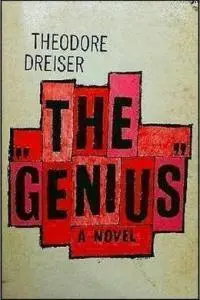
- Название:The Genius
- Автор:
- Издательство:epubBooks Classics
- Жанр:
- Год:2014
- ISBN:нет данных
- Рейтинг книги:4 / 5. Голосов: 1
-
Избранное:Добавить в избранное
- Отзывы:
-
Ваша оценка:
The Genius: краткое содержание, описание и аннотация
Предлагаем к чтению аннотацию, описание, краткое содержание или предисловие (зависит от того, что написал сам автор книги «The Genius»). Если вы не нашли необходимую информацию о книге — напишите в комментариях, мы постараемся отыскать её.
The Genius — читать онлайн бесплатно полную книгу (весь текст) целиком
Ниже представлен текст книги, разбитый по страницам. Система сохранения места последней прочитанной страницы, позволяет с удобством читать онлайн бесплатно книгу «The Genius», без необходимости каждый раз заново искать на чём Вы остановились. Поставьте закладку, и сможете в любой момент перейти на страницу, на которой закончили чтение.
Интервал:
Закладка:
But oh, the cruelty, the insincerity, the unkindness, the brutality of it all.
The fact that Eugene was out for several hours following her discovery gave her ample time to reflect as to a suitable course of action. Being so impressed by the genius of the man, as imposed upon her by the opinion of others and her own affection, she could not readily think of anything save some method of ridding her soul of this misery and him of his evil tendencies, of making him ashamed of his wretched career, of making him see how badly he had treated her and how sorry he ought to be. She wanted him to feel sorry, very sorry, so that he would be a long time repenting in suffering, but she feared at the same time that she could not make him do that. He was so ethereal, so indifferent, so lost in the contemplation of life that he could not be made to think of her. That was her one complaint. He had other gods before her—the god of his art, the god of nature, the god of people as a spectacle. Frequently she had complained to him in this last year—"you don't love me! you don't love me!" but he would answer, "oh, yes I do. I can't be talking to you all the time, Angel–face. I have work to do. My art has to be cultivated. I can't be making love all the time."
"Oh, it isn't that, it isn't that!" she would exclaim passionately. "You just don't love me, like you ought to. You just don't care. If you did I'd feel it."
"Oh, Angela," he answered, "why do you talk so? Why do you carry on so? You're the funniest girl I ever knew. Now be reasonable. Why don't you bring a little philosophy to bear? We can't be billing and cooing all the time!"
"Billing and cooing! That's the way you think of it. That's the way you talk of it! As though it were something you had to do. Oh, I hate love! I hate life! I hate philosophy! I wish I could die."
"Now, Angela, for Heaven's sake, why will you take on so? I can't stand this. I can't stand these tantrums of yours. They're not reasonable. You know I love you. Why, haven't I shown it? Why should I have married you if I didn't? I wasn't obliged to marry you!"
"Oh, dear! oh, dear!" Angela would sob on, wringing her hands. "Oh, you really don't love me! You don't care! And it will go on this way, getting worse and worse, with less and less of love and feeling until after awhile you won't even want to see me any more—you'll hate me! Oh, dear! oh, dear!"
Eugene felt keenly the pathos involved in this picture of decaying love. In fact, her fear of the disaster which might overtake her little bark of happiness was sufficiently well founded. It might be that his affection would cease—it wasn't even affection now in the true sense of the word,—a passionate intellectual desire for her companionship. He never had really loved her for her mind, the beauty of her thoughts. As he meditated he realized that he had never reached an understanding with her by an intellectual process at all. It was emotional, subconscious, a natural drawing together which was not based on reason and spirituality of contemplation apparently, but on grosser emotions and desires. Physical desire had been involved—strong, raging, uncontrollable. And for some reason he had always felt sorry for her—he always had. She was so little, so conscious of disaster, so afraid of life and what it might do to her. It was a shame to wreck her hopes and desires. At the same time he was sorry now for this bondage he had let himself into—this yoke which he had put about his neck. He could have done so much better. He might have married a woman of wealth or a woman with artistic perceptions and philosophic insight like Christina Channing, who would be peaceful and happy with him. Angela couldn't be. He really didn't admire her enough, couldn't fuss over her enough. Even while he was soothing her in these moments, trying to make her believe that there was no basis for her fears, sympathizing with her subconscious intuitions that all was not well, he was thinking of how different his life might have been.
"It won't end that way," he would soothe. "Don't cry. Come now, don't cry. We're going to be very happy. I'm going to love you always, just as I'm loving you now, and you're going to love me. Won't that be all right? Come on, now. Cheer up. Don't be so pessimistic. Come on, Angela. Please do. Please!"
Angela would brighten after a time, but there were spells of apprehension and gloom; they were common, apt to burst forth like a summer storm when neither of them was really expecting it.
The discovery of these letters now checked the feeling, with which she tried to delude herself at times, that there might be anything more than kindness here. They confirmed her suspicions that there was not and brought on that sense of defeat and despair which so often and so tragically overcame her. It did it at a time, too, when Eugene needed her undivided consideration and feeling, for he was in a wretched state of mind. To have her quarrel with him now, lose her temper, fly into rages and compel him to console her, was very trying. He was in no mood for it; could not very well endure it without injury to himself. He was seeking for an atmosphere of joyousness, wishing to find a cheerful optimism somewhere which would pull him out of himself and make him whole. Not infrequently he dropped in to see Norma Whitmore, Isadora Crane, who was getting along very well on the stage, Hedda Andersen, who had a natural charm of intellect with much vivacity, even though she was a model, and now and then Miriam Finch. The latter was glad to see him alone, almost as a testimony against Angela, though she would not go out of her way to conceal from Angela the fact that he had been there. The others, though he said nothing, assumed that since Angela did not come with him he wanted nothing said and observed his wish. They were inclined to think that he had made a matrimonial mistake and was possibly artistically or intellectually lonely. All of them noted his decline in health with considerate apprehension and sorrow. It was too bad, they thought, if his health was going to fail him just at this time. Eugene lived in fear lest Angela should become aware of any of these visits. He thought he could not tell her because in the first place she would resent his not having taken her with him; and in the next, if he had proposed it first, she would have objected, or set another date, or asked pointless questions. He liked the liberty of going where he pleased, saying nothing, not feeling it necessary to say anything. He longed for the freedom of his old pre–matrimonial days. Just at this time, because he could not work artistically and because he was in need of diversion and of joyous artistic palaver, he was especially miserable. Life seemed very dark and ugly.
Eugene, returning and feeling, as usual, depressed about his state, sought to find consolation in her company. He came in at one o'clock, their usual lunch hour, and finding Angela still working, said, "George! but you like to keep at things when you get started, don't you? You're a regular little work–horse. Having much trouble?"
"No–o," replied Angela, dubiously.
Eugene noted the tone of her voice. He thought she was not very strong and this packing was getting on her nerves. Fortunately there were only some trunks to look after, for the vast mass of their housekeeping materials belonged to the studio. Still no doubt she was weary.
"Are you very tired?" he asked.
"No–o," she replied.
"You look it," he said, slipping his arm about her. Her face, which he turned up with his hand, was pale and drawn.
"It isn't anything physical," she replied, looking away from him in a tragic way. "It's just my heart. It's here!" and she laid her hand over her heart.
"What's the matter now?" he asked, suspecting something emotional, though for the life of him he could not imagine what. "Does your heart hurt you?"
Читать дальшеИнтервал:
Закладка:
Похожие книги на «The Genius»
Представляем Вашему вниманию похожие книги на «The Genius» списком для выбора. Мы отобрали схожую по названию и смыслу литературу в надежде предоставить читателям больше вариантов отыскать новые, интересные, ещё непрочитанные произведения.





Обсуждение, отзывы о книге «The Genius» и просто собственные мнения читателей. Оставьте ваши комментарии, напишите, что Вы думаете о произведении, его смысле или главных героях. Укажите что конкретно понравилось, а что нет, и почему Вы так считаете.