Теодор Драйзер - The Genius
Здесь есть возможность читать онлайн «Теодор Драйзер - The Genius» весь текст электронной книги совершенно бесплатно (целиком полную версию без сокращений). В некоторых случаях можно слушать аудио, скачать через торрент в формате fb2 и присутствует краткое содержание. Год выпуска: 2014, Издательство: epubBooks Classics, Жанр: Классическая проза, на английском языке. Описание произведения, (предисловие) а так же отзывы посетителей доступны на портале библиотеки ЛибКат.
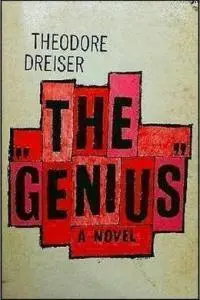
- Название:The Genius
- Автор:
- Издательство:epubBooks Classics
- Жанр:
- Год:2014
- ISBN:нет данных
- Рейтинг книги:4 / 5. Голосов: 1
-
Избранное:Добавить в избранное
- Отзывы:
-
Ваша оценка:
The Genius: краткое содержание, описание и аннотация
Предлагаем к чтению аннотацию, описание, краткое содержание или предисловие (зависит от того, что написал сам автор книги «The Genius»). Если вы не нашли необходимую информацию о книге — напишите в комментариях, мы постараемся отыскать её.
The Genius — читать онлайн бесплатно полную книгу (весь текст) целиком
Ниже представлен текст книги, разбитый по страницам. Система сохранения места последней прочитанной страницы, позволяет с удобством читать онлайн бесплатно книгу «The Genius», без необходимости каждый раз заново искать на чём Вы остановились. Поставьте закладку, и сможете в любой момент перейти на страницу, на которой закончили чтение.
Интервал:
Закладка:
To be able to sit about in a chair, lie in a hammock, stroll in the woods and country fields and be perfectly happy in idle contemplation and loneliness, requires an exceptional talent for just that sort of thing. Eugene once fancied he had it, as did his parents, but since he had heard the call of fame he could never be still any more. And just at this time he was not in need of solitude and idle contemplation but of diversion and entertainment. He needed companionship of the right sort, gayety, sympathy, enthusiasm. Angela had some of this, when she was not troubled about anything, his parents, his sister, his old acquaintances had a little more to offer. They could not, however, be forever talking to him or paying him attention, and beyond them there was nothing. The town had no resources. Eugene would walk the long country roads with Angela or go boating or fishing sometimes, but still he was lonely. He would sit on the porch or in the hammock and think of what he had seen in London and Paris—how he might be at work. St. Paul's in a mist, the Thames Embankment, Piccadilly, Blackfriars Bridge, the muck of Whitechapel and the East End—how he wished he was out of all this and painting them. If he could only paint. He rigged up a studio in his father's barn, using a north loft door for light and essayed certain things from memory, but there was no making anything come out right. He had this fixed belief, which was a notion purely, that there was always something wrong. Angela, his mother, his father, whom he occasionally asked for an opinion, might protest that it was beautiful or wonderful, but he did not believe it. After a few altering ideas of this kind, under the influences of which he would change and change and change things, he would find himself becoming wild in his feelings, enraged at his condition, intensely despondent and sorry for himself.
"Well," he would say, throwing down his brush, "I shall simply have to wait until I come out of this. I can't do anything this way." Then he would walk or read or row on the lakes or play solitaire, or listen to Angela playing on the piano that his father had installed for Myrtle long since. All the time though he was thinking of his condition, what he was missing, how the gay world was surging on rapidly elsewhere, how long it would be before he got well, if ever. He talked of going to Chicago and trying his hand at scenes there, but Angela persuaded him to rest for a while longer. In June she promised him they would go to Blackwood for the summer, coming back here in the fall if he wished, or going on to New York or staying in Chicago, just as he felt about it. Now he needed rest.
"Eugene will probably be all right by then," Angela volunteered to his mother, "and he can make up his mind whether he wants to go to Chicago or London."
She was very proud of her ability to talk of where they would go and what they would do.
Chapter XIII
If it had not been for the lurking hope of some fresh exciting experience with a woman, he would have been unconscionably lonely. As it was, this thought with him—quite as the confirmed drunkard's thought of whiskey—buoyed him up, kept him from despairing utterly, gave his mind the only diversion it had from the ever present thought of failure. If by chance he should meet some truly beautiful girl, gay, enticing, who would fall in love with him! that would be happiness. Only, Angela was constantly watching him these days and, besides, more girls would simply mean that his condition would be aggravated. Yet so powerful was the illusion of desire, the sheer animal magnetism of beauty, that when it came near him in the form of a lovely girl of his own temperamental inclinations he could not resist it. One look into an inviting eye, one glance at a face whose outlines were soft and delicate—full of that subtle suggestion of youth and health which is so characteristic of girlhood—and the spell was cast. It was as though the very form of the face, without will or intention on the part of the possessor, acted hypnotically upon its beholder. The Arabians believed in the magic power of the word Abracadabra to cast a spell. For Eugene the form of a woman's face and body was quite as powerful.
While he and Angela were in Alexandria from February to May, he met one night at his sister's house a girl who, from the point of view of the beauty which he admired and to which he was so susceptible, was extremely hypnotic, and who for the ease and convenience of a flirtation was very favorably situated. She was the daughter of a traveling man, George Roth by name, whose wife, the child's mother, was dead, but who lived with his sister in an old tree–shaded house on the edge of Green Lake not far from the spot where Eugene had once attempted to caress his first love, Stella Appleton. Frieda was the girl's name. She was extremely attractive, not more than eighteen years of age, with large, clear, blue eyes, a wealth of yellowish–brown hair and a plump but shapely figure. She was a graduate of the local high school, well developed for her years, bright, rosy–cheeked, vivacious and with a great deal of natural intelligence which attracted the attention of Eugene at once. Normally he was extremely fond of a natural, cheerful, laughing disposition. In his present state he was abnormally so. This girl and her foster mother had heard of him a long time since through his parents and his sister, whom they knew well and whom they visited frequently. George Roth had moved here since Eugene had first left for Chicago, and because he was so much on the road he had not seen him since. Frieda, on all his previous visits, had been too young to take an interest in men, but now at this age, when she was just blossoming into womanhood, her mind was fixed on them. She did not expect to be interested in Eugene because she knew he was married, but because of his reputation as an artist she was curious about him. Everybody knew who he was. The local papers had written up his success and published his portrait. Frieda expected to see a man of about forty, stern and sober. Instead she met a smiling youth of twenty–nine, rather gaunt and hollow–eyed, but none the less attractive for that. Eugene, with Angela's approval, still affected a loose, flowing tie, a soft turn–down collar, brown corduroy suits as a rule, the coat cut with a belt, shooting jacket fashion, a black iron ring of very curious design upon one of his fingers, and a soft hat. His hands were very thin and white, his skin pale. Frieda, rosy, as thoughtless as a butterfly, charmingly clothed in a dress of blue linen, laughing, afraid of him because of his reputation, attracted his attention at once. She was like all the young, healthy, laughing girls he had ever known, delightful. He wished he were single again that he might fall into a jesting conversation with her. She seemed inclined to be friendly from the first.
Angela being present, however, and Frieda's foster mother, it was necessary for him to be circumspect and distant. The latter, Sylvia and Angela, talked of art and listened to Angela's descriptions of Eugene's eccentricities, idiosyncrasies and experiences, which were a never–failing source of interest to the common run of mortals whom they met. Eugene would sit by in a comfortable chair with a weary, genial or indifferent look on his face as his mood happened to be. To–night he was bored and a little indifferent in his manner. No one here interested him save this girl, the beauty of whose face nourished his secret dreams. He longed to have some such spirit of youth near him always. Why could not women remain young?
While they were laughing and talking, Eugene picked up a copy of Howard Pyle's "Knights of the Round Table" with its warm heavy illustrations of the Arthurian heroes and heroines, and began to study the stately and exaggerated characteristics of the various characters. Sylvia had purchased it for her seven–year old boy Jack, asleep upstairs, but Frieda had read it in her girlhood a few years before. She had been moving restlessly about, conscious of an interest in Eugene but not knowing how to find an opportunity for conversation. His smile, which he sometimes directed toward her, was to her entrancing.
Читать дальшеИнтервал:
Закладка:
Похожие книги на «The Genius»
Представляем Вашему вниманию похожие книги на «The Genius» списком для выбора. Мы отобрали схожую по названию и смыслу литературу в надежде предоставить читателям больше вариантов отыскать новые, интересные, ещё непрочитанные произведения.





Обсуждение, отзывы о книге «The Genius» и просто собственные мнения читателей. Оставьте ваши комментарии, напишите, что Вы думаете о произведении, его смысле или главных героях. Укажите что конкретно понравилось, а что нет, и почему Вы так считаете.