Теодор Драйзер - The Genius
Здесь есть возможность читать онлайн «Теодор Драйзер - The Genius» весь текст электронной книги совершенно бесплатно (целиком полную версию без сокращений). В некоторых случаях можно слушать аудио, скачать через торрент в формате fb2 и присутствует краткое содержание. Год выпуска: 2014, Издательство: epubBooks Classics, Жанр: Классическая проза, на английском языке. Описание произведения, (предисловие) а так же отзывы посетителей доступны на портале библиотеки ЛибКат.
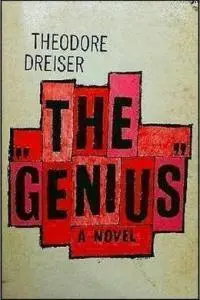
- Название:The Genius
- Автор:
- Издательство:epubBooks Classics
- Жанр:
- Год:2014
- ISBN:нет данных
- Рейтинг книги:4 / 5. Голосов: 1
-
Избранное:Добавить в избранное
- Отзывы:
-
Ваша оценка:
The Genius: краткое содержание, описание и аннотация
Предлагаем к чтению аннотацию, описание, краткое содержание или предисловие (зависит от того, что написал сам автор книги «The Genius»). Если вы не нашли необходимую информацию о книге — напишите в комментариях, мы постараемся отыскать её.
The Genius — читать онлайн бесплатно полную книгу (весь текст) целиком
Ниже представлен текст книги, разбитый по страницам. Система сохранения места последней прочитанной страницы, позволяет с удобством читать онлайн бесплатно книгу «The Genius», без необходимости каждый раз заново искать на чём Вы остановились. Поставьте закладку, и сможете в любой момент перейти на страницу, на которой закончили чтение.
Интервал:
Закладка:
Chapter XXXIII
When Eugene called, Mr. Daniel C. Summerfield was in no great rush about any particular matter, but he had decided in this case as he had in many others that it was very important that anyone who wanted anything from him should be made to wait. Eugene was made to wait a solid hour before he was informed by an underling that he was very sorry but that other matters had so detained Mr. Summerfield that it was now impossible for him to see him at all this day, but that tomorrow at twelve he would be glad to see him. Eugene was finally admitted on the morrow, however, and then, at the first glance, Mr. Summerfield liked him. "A man of intelligence," he thought, as he leaned back in his chair and stared at him. "A man of force. Young still, wide–eyed, quick, clean looking. Perhaps I have found someone in this man who will make a good art director." He smiled, for Summerfield was always good–natured in his opening relationships—usually so in all of them, and took most people (his employees and prospective employees particularly) with an air of superior but genial condescension.
"Sit down! Sit down!" he exclaimed cheerfully and Eugene did so, looking about at the handsomely decorated walls, the floor which was laid with a wide, soft, light brown rug, and the mahogany desk, flat–topped, glass covered, on which lay handsome ornaments of silver, ivory and bronze. This man looked so keen, so dynamic, like a polished Japanese carving, hard and smooth.
"Now tell me all about yourself," began Summerfield. "Where do you come from? Who are you? What have you done?"
"Hold! Hold!" said Eugene easily and tolerantly. "Not so fast. My history isn't so much. The short and simple annals of the poor. I'll tell you in two or three sentences."
Summerfield was a little taken back at this abruptness which was generated by his own attitude; still he liked it. This was something new to him. His applicant wasn't frightened or apparently even nervous so far as he could judge. "He is droll," he thought, "sufficiently so—a man who has seen a number of things evidently. He is easy in manner, too, and kindly."
"Well," he said smilingly, for Eugene's slowness appealed to him. His humor was something new in art directors. So far as he could recall, his predecessors had never had any to speak of.
"Well, I'm an artist," said Eugene, "working on the World . Let's hope that don't militate against me very much."
"It don't," said Summerfield.
"And I want to become an art director because I think I'd make a good one."
"Why?" asked Summerfield, his even teeth showing amiably.
"Well, because I like to manage men, or I think I do. And they take to me."
"You know that?"
"I do. In the next place I know too much about art to want to do the little things that I'm doing. I can do bigger things."
"I like that also," applauded Summerfield. He was thinking that Eugene was nice and good looking, a little pale and thin to be wholly forceful, perhaps, he wasn't sure. His hair a little too long. His manner, perhaps, a bit too deliberate. Still he was nice. Why did he wear a soft hat? Why did artists always insist on wearing soft hats, most of them? It was so ridiculous, so unbusinesslike.
"How much do you get?" he added, "if it's a fair question."
"Less than I'm worth," said Eugene. "Only fifty dollars. But I took it as a sort of health cure. I had a nervous breakdown several years ago—better now, as Mulvaney used to say—and I don't want to stay at that. I'm an art director by temperament, or I think I am. Anyhow, here I am."
"You mean," said Summerfield, "you never ran an art department before?"
"Never."
"Know anything about advertising?"
"I used to think so."
"How long ago was that?"
"When I worked on the Alexandria, Illinois, Daily Appeal ."
Summerfield smiled. He couldn't help it.
"That's almost as important as the Wickham Union , I fancy. It sounds as if it might have the same wide influence."
"Oh, much more, much more," returned Eugene quietly. "The Alexandria Appeal had the largest exclusively country circulation of any county south of the Sangamon."
"I see! I see!" replied Summerfield good–humoredly. "It's all day with the Wickham Union . Well, how was it you came to change your mind?"
"Well, I got a few years older for one thing," said Eugene. "And then I decided that I was cut out to be the greatest living artist, and then I came to New York, and in the excitement I almost lost the idea."
"I see."
"But I have it again, thank heaven, tied up back of the house, and here I am."
"Well, Witla, to tell you the truth you don't look like a real live, every day, sure–enough art director, but you might make good. You're not quite art–y enough according to the standards that prevail around this office. Still I might be willing to take one gosh–awful chance. I suppose if I do I'll get stung as usual, but I've been stung so often that I ought to be used to it by now. I feel sort of spotted at times from the hornets I've hired in the past. But, be that as it may, what do you think you could do with a real live art directorship if you had it?"
Eugene mused. This persiflage entertained him. He thought Summerfield would hire him now that they were together.
"Oh, I'd draw my salary first and then I'd see that I had the proper system of approach so that any one who came to see me would think I was the King of England, and then I'd―"
"I was really busy yesterday," interpolated Summerfield apologetically.
"I'm satisfied of that," replied Eugene gaily. "And finally I might condescend, if I were coaxed enough, to do a little work."
This speech at once irritated and amused Mr. Summerfield. He liked a man of spirit. You could do something with someone who wasn't afraid, even if he didn't know so much to begin with. And Eugene knew a good deal, he fancied. Besides, his talk was precisely in his own sarcastic, semi–humorous vein. Coming from Eugene it did not sound so hard as it would have coming from himself, but it had his own gay, bantering attitude of mind in it. He believed Eugene could make good. He wanted to try him, instanter, anyhow.
"Well, I'll tell you what, Witla," he finally observed. "I don't know whether you can run this thing or not—the probabilities are all against you as I have said, but you seem to have some ideas or what might be made some under my direction, and I think I'll give you a chance. Mind you, I haven't much confidence. My personal likes usually prove very fatal to me. Still, you're here, and I like your looks and I haven't seen anyone else, and so―"
"Thanks," said Eugene.
"Don't thank me. You have a hard job ahead of you if I take you. It's no child's play. You'd better come with me first and look over the place," and he led the way out into the great central room where, because it was still noon time, there were few people working, but where one could see just how imposing this business really was.
"Seventy–two stenographers, book–keepers, canvassers and writers and trade–aid people at their desks," he observed with an easy wave of his hand, and moved on into the art department, which was in another wing of the building where a north and east light could be secured. "Here's where you come in," he observed, throwing open the door where thirty–two artists' desks and easels were ranged. Eugene was astonished.
"You don't employ that many, do you?" he asked interestedly. Most of the men were out to lunch.
"From twenty to twenty–five all the time, sometimes more," he said. "Some on the outside. It depends on the condition of business."
"And how much do you pay them, as a rule?"
"Well, that depends. I think I'll give you seventy–five dollars a week to begin with, if we come to an understanding. If you make good I'll make it a hundred dollars a week inside of three months. It all depends. The others we don't pay so much. The business manager can tell you."
Читать дальшеИнтервал:
Закладка:
Похожие книги на «The Genius»
Представляем Вашему вниманию похожие книги на «The Genius» списком для выбора. Мы отобрали схожую по названию и смыслу литературу в надежде предоставить читателям больше вариантов отыскать новые, интересные, ещё непрочитанные произведения.



Обсуждение, отзывы о книге «The Genius» и просто собственные мнения читателей. Оставьте ваши комментарии, напишите, что Вы думаете о произведении, его смысле или главных героях. Укажите что конкретно понравилось, а что нет, и почему Вы так считаете.