Теодор Драйзер - The Genius
Здесь есть возможность читать онлайн «Теодор Драйзер - The Genius» весь текст электронной книги совершенно бесплатно (целиком полную версию без сокращений). В некоторых случаях можно слушать аудио, скачать через торрент в формате fb2 и присутствует краткое содержание. Год выпуска: 2014, Издательство: epubBooks Classics, Жанр: Классическая проза, на английском языке. Описание произведения, (предисловие) а так же отзывы посетителей доступны на портале библиотеки ЛибКат.
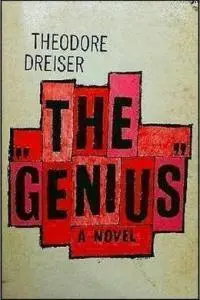
- Название:The Genius
- Автор:
- Издательство:epubBooks Classics
- Жанр:
- Год:2014
- ISBN:нет данных
- Рейтинг книги:4 / 5. Голосов: 1
-
Избранное:Добавить в избранное
- Отзывы:
-
Ваша оценка:
The Genius: краткое содержание, описание и аннотация
Предлагаем к чтению аннотацию, описание, краткое содержание или предисловие (зависит от того, что написал сам автор книги «The Genius»). Если вы не нашли необходимую информацию о книге — напишите в комментариях, мы постараемся отыскать её.
The Genius — читать онлайн бесплатно полную книгу (весь текст) целиком
Ниже представлен текст книги, разбитый по страницам. Система сохранения места последней прочитанной страницы, позволяет с удобством читать онлайн бесплатно книгу «The Genius», без необходимости каждый раз заново искать на чём Вы остановились. Поставьте закладку, и сможете в любой момент перейти на страницу, на которой закончили чтение.
Интервал:
Закладка:
He could not fathom Eugene so readily, for he had never met anyone of his kind. He was looking closely in his case, as he was in that of all the others, to see if he could not find some weakness in his ideas. He had a gleaming, insistent, almost demoniac eye, a habit of chewing incessantly and even violently the stub end of a cigar, the habit of twitching, getting up and walking about, stirring things on his desk, doing anything and everything to give his restless, generative energy a chance to escape.
"Now, professor," he would say when Eugene came in and seated himself quietly and unobtrusively in some corner, "we have a very difficult thing here to solve today. I want to know what you think could be done in such and such a case," describing a particular condition.
Eugene would brace himself up and begin to consider, but rumination was not what Summerfield wanted from anyone.
"Well, professor! well! well!" he would exclaim.
Eugene would stir irritably. This was so embarrassing—in a way so degrading to him.
"Come to life, professor," Summerfield would go on. He seemed to have concluded long before that the gad was the most effective commercial weapon.
Eugene would then make some polite suggestion, wishing instead that he could tell him to go to the devil, but that was not the end of it. Before all the old writers, canvassers, trade aid men—sometimes one or two of his own artists who might be working upon the particular task in question, he would exclaim: "Lord! what a poor suggestion!" or "can't you do any better than that, professor?" or "good heavens, I have three or four ideas better than that myself." The best he would ever say in conference was, "Well, there may be something in that," though privately, afterwards, he might possibly express great pleasure. Past achievements counted for nothing; that was so plain. One might bring in gold and silver all day long; the next day there must be more gold and silver and in larger quantities. There was no end to the man's appetite. There was no limit to the speed at which he wished to drive his men. There was no limit to the venomous commercial idea as an idea. Summerfield set an example of nagging and irritating insistence, and he urged all his employees to the same policy. The result was a bear–garden, a den of prize–fighters, liars, cutthroats and thieves in which every man was for himself openly and avowedly and the devil take the hindmost.
Chapter XXXV
Still time went by, and although things did not improve very much in his office over the standards which he saw prevailing when he came there, he was obviously getting things much better arranged in his private life. In the first place Angela's attitude was getting much better. The old agony which had possessed her in the days when he was acting so badly had modified as day by day she saw him working and conducting himself with reasonable circumspection. She did not trust him as yet. She was not sure that he had utterly broken with Carlotta Wilson (she had never found out who his paramour was), but all the evidence seemed to attest it. There was a telephone down stairs in a drug store by which, during his days on the World , Angela would call him up at any time, and whenever she had called him up he was always in the office. He seemed to have plenty of time to take her to the theatre if she wished to go, and to have no especial desire to avoid her company. He had once told her frankly that he did not propose to pretend to love her any more, though he did care for her, and this frightened her. In spite of her wrath and suffering she cared for him, and she believed that he still sympathized with her and might come to care for her again—that he ought to.
She decided to play the rôle of the affectionate wife whether it was true or not, and to hug and kiss him and fuss over him if he would let her, just as though nothing had happened. Eugene did not understand this. He did not see how Angela could still love him. He thought she must hate him, having such just grounds, for having by dint of hard work and absence come out of his vast excitement about Carlotta he was beginning to feel that he had done her a terrific injustice and to wish to make amends. He did not want to love her, he did not feel that he could, but he was perfectly willing to behave himself, to try to earn a good living, to take her to theatre and opera as opportunity permitted, and to build up and renew a social relationship with others which should act as a substitute for love. He was beginning to think that there was no honest or happy solution to any affair of the heart in the world. Most people so far as he could see were unhappily married. It seemed to be the lot of mankind to make mistakes in its matrimonial selections. He was probably no more unhappy than many others. Let the world wag as it would for a time. He would try to make some money now, and restore himself in the eyes of the world. Later, life might bring him something—who could tell?
In the next place their financial condition, even before he left the World , was so much better than it had been. By dint of saving and scraping, refusing to increase their expenses more than was absolutely necessary, Angela had succeeded by the time he left the World in laying by over one thousand dollars, and since then it had gone up to three thousand. They had relaxed sufficiently so that now they were wearing reasonably good clothes, were going out and receiving company regularly. It was not possible in their little apartment which they still occupied to entertain more than three or four at the outside, and two was all that Angela ever cared to consider as either pleasurable or comfortable; but they entertained this number frequently. There were some slight recoveries of friendship and of the old life—Hudson Dula, Jerry Mathews, who had moved to Newark; William McConnell, Philip Shotmeyer. MacHugh and Smite were away, one painting in Nova Scotia, the other working in Chicago. As for the old art crowd, socialists and radicals included, Eugene attempted to avoid them as much as possible. He knew nothing of the present whereabouts of Miriam Finch and Norma Whitmore. Of Christina Channing he heard much, for she was singing in Grand Opera, her pictures displayed in the paper and upon the billboards. There were many new friends, principally young newspaper artists like Adolph Morgenbau, who took to Eugene and were in a sense his disciples.
Angela's relations showed up from time to time, among them David Blue, now a sub–lieutenant in the army, with all the army officer's pride of place and station. There were women friends of Angela's for whom Eugene cared little—Mrs. Desmas, the wife of the furniture manufacturer at Riverwood, from whom they had rented their four rooms there; Mrs. Wertheim, the wife of the multimillionaire, to whom M. Charles had introduced them; Mrs. Link, the wife of the West Point army captain who had come to the old Washington Square studio with Marietta and who was now stationed at Fort Hamilton in Brooklyn; and a Mrs. Juergens, living in a neighboring apartment. As long as they were very poor, Angela was very careful how she revived acquaintances; but when they began to have a little money she decided that she might indulge her predilection and so make life less lonesome for herself. She had always been anxious to build up solid social connections for Eugene, but as yet she did not see how it was to be done.
When Eugene's new connection with the Summerfield company was consummated, Angela was greatly astonished and rather delighted to think that if he had to work in this practical field for long it was to be under such comforting auspices—that is, as a superior and not as an underling. Long ago she had come to feel that Eugene would never make any money in a commercial way. To see him mounting in this manner was curious, but not wholly reassuring. They must save money; that was her one cry. They had to move soon, that was very plain, but they mustn't spend any more than they had to. She delayed until the attitude of Summerfield, upon an accidental visit to their flat, made it commercially advisable.
Читать дальшеИнтервал:
Закладка:
Похожие книги на «The Genius»
Представляем Вашему вниманию похожие книги на «The Genius» списком для выбора. Мы отобрали схожую по названию и смыслу литературу в надежде предоставить читателям больше вариантов отыскать новые, интересные, ещё непрочитанные произведения.






Обсуждение, отзывы о книге «The Genius» и просто собственные мнения читателей. Оставьте ваши комментарии, напишите, что Вы думаете о произведении, его смысле или главных героях. Укажите что конкретно понравилось, а что нет, и почему Вы так считаете.