Теодор Драйзер - The Genius
Здесь есть возможность читать онлайн «Теодор Драйзер - The Genius» весь текст электронной книги совершенно бесплатно (целиком полную версию без сокращений). В некоторых случаях можно слушать аудио, скачать через торрент в формате fb2 и присутствует краткое содержание. Год выпуска: 2014, Издательство: epubBooks Classics, Жанр: Классическая проза, на английском языке. Описание произведения, (предисловие) а так же отзывы посетителей доступны на портале библиотеки ЛибКат.
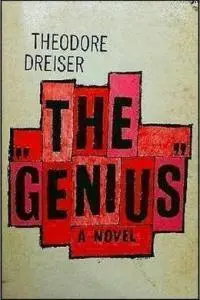
- Название:The Genius
- Автор:
- Издательство:epubBooks Classics
- Жанр:
- Год:2014
- ISBN:нет данных
- Рейтинг книги:4 / 5. Голосов: 1
-
Избранное:Добавить в избранное
- Отзывы:
-
Ваша оценка:
The Genius: краткое содержание, описание и аннотация
Предлагаем к чтению аннотацию, описание, краткое содержание или предисловие (зависит от того, что написал сам автор книги «The Genius»). Если вы не нашли необходимую информацию о книге — напишите в комментариях, мы постараемся отыскать её.
The Genius — читать онлайн бесплатно полную книгу (весь текст) целиком
Ниже представлен текст книги, разбитый по страницам. Система сохранения места последней прочитанной страницы, позволяет с удобством читать онлайн бесплатно книгу «The Genius», без необходимости каждый раз заново искать на чём Вы остановились. Поставьте закладку, и сможете в любой момент перейти на страницу, на которой закончили чтение.
Интервал:
Закладка:
Daniel Christopher, his eldest son, had been raised with scarcely any education, having been put in a cotton mill at the age of seven, but nevertheless he soon manifested himself as the brain of the family. For four years he worked in the cotton mill, and then, because of his unusual brightness, he had been given a place in the printing shop of the Wickham Union, where he was so attractive to the slow–going proprietor that he soon became foreman of the printing department and then manager. He knew nothing of printing or newspapers at the time, but the little contact he obtained here soon cleared his vision. He saw instantly what the newspaper business was, and decided to enter it. Later, as he grew older, he suspected that no one knew very much about advertising as yet, or very little, and that he was called by God to revise it. With this vision of a still wider field of usefulness in his mind, he began at once to prepare himself for it, reading all manner of advertising literature and practicing the art of display and effective statement. He had been through such bitter things as personal fights with those who worked under him, knocking one man down with a heavy iron form key; personal altercation with his own father and mother in which he frankly told them that they were failures, and that they had better let him show them something about regulating their hopeless lives. He had quarreled with his younger brothers, trying to dominate them, and had succeeded in controlling the youngest, principally for the very good reason that he had become foolishly fond of him; this younger brother he later introduced into his advertising business. He had religiously saved the little he had earned thus far, invested a part of it in the further development of the Wickham Union , bought his father an eight acre farm, which he showed him how to work, and finally decided to come to New York to see if he could not connect himself with some important advertising concern where he could learn something more about the one thing that interested him. He was already married, and he brought his young wife with him from the South.
He soon connected himself as a canvasser with one of the great agencies and advanced rapidly. He was so smiling, so bland, so insistent, so magnetic, that business came to him rapidly. He became the star man in this New York concern and Alfred Cookman, who was its owner and manager, was soon pondering what he could do to retain him. No individual or concern could long retain Daniel C. Summerfield, however, once he understood his personal capabilities. In two years he had learned all that Alfred Cookman had to teach him and more than he could teach him. He knew his customers and what their needs were, and where the lack was in the service which Mr. Cookman rendered them. He foresaw the drift toward artistic representation of saleable products, and decided to go into that side of it. He would start an agency which would render a service so complete and dramatic that anyone who could afford to use his service would make money.
When Eugene first heard of this agency, the Summerfield concern was six years old and rapidly growing. It was already very large and profitable and as hard and forceful as its owner. Daniel C. Summerfield, sitting in his private office, was absolutely ruthless in his calculations as to men. He had studied the life of Napoleon and had come to the conclusion that no individual life was important. Mercy was a joke to be eliminated from business. Sentiment was silly twaddle. The thing to do was to hire men as cheaply as possible, to drive them as vigorously as possible, and to dispose of them quickly when they showed signs of weakening under the strain. He had already had five art directors in as many years, had "hired and fired," as he termed it, innumerable canvassers, ad writers, book–keepers, stenographers, artists—getting rid of anyone and everyone who showed the least sign of incapacity or inefficiency. The great office floor which he maintained was a model of cleanliness, order—one might almost say beauty of a commercial sort, but it was the cleanliness, order and beauty of a hard, polished and well–oiled machine. Daniel C. Summerfield was not much more than that, but he had long ago decided that was what he must be in order not to be a failure, a fool, and as he called it, "a mark," and he admired himself for being so.
When Mr. Baker Bates at Hudson Dula's request went to Mr. Summerfield in regard to the rumored vacancy which really existed, the latter was in a most receptive frame of mind. He had just come into two very important advertising contracts which required a lot of imagination and artistic skill to execute, and he had lost his art director because of a row over a former contract. It was true that in very many cases—in most cases, in fact—his customers had very definite ideas as to what they wanted to say and how they wanted to say it, but not always. They were almost always open to suggestions as to modifications and improvements, and in a number of very important cases they were willing to leave the entire theory of procedure to the Summerfield Advertising Company. This called for rare good judgment not only in the preparation, but in the placing of these ads, and it was in the matter of their preparation—the many striking ideas which they should embody—that the judgment and assistance of a capable art director of real imagination was most valuable.
As has already been said, Mr. Summerfield had had five art directors in almost as many years. In each case he had used the Napoleonic method of throwing a fresh, unwearied mind into the breach of difficulty, and when it wearied or broke under the strain, tossing it briskly out. There was no compunction or pity connected with any detail of this method. "I hire good men and I pay them good wages," was his favorite comment. "Why shouldn't I expect good results?" If he was wearied or angered by failure he was prone to exclaim—"These Goddamned cattle of artists! What can you expect of them? They don't know anything outside their little theory of how things ought to look. They don't know anything about life. Why, God damn it, they're like a lot of children. Why should anybody pay any attention to what they think? Who cares what they think? They give me a pain in the neck." Mr. Daniel C. Summerfield was very much given to swearing, more as a matter of habit than of foul intention, and no picture of him would be complete without the interpolation of his favorite expressions.
When Eugene appeared on the horizon as a possible applicant for this delightful position, Mr. Daniel C. Summerfield was debating with himself just what he should do in connection with the two new contracts in question. The advertisers were awaiting his suggestions eagerly. One was for the nation–wide advertising of a new brand of sugar, the second for the international display of ideas in connection with a series of French perfumes, the sale of which depended largely upon the beauty with which they could be interpreted to the lay mind. The latter were not only to be advertised in the United States and Canada, but in Mexico also, and the fulfilment of the contracts in either case was dependent upon the approval given by the advertisers to the designs for newspaper, car and billboard advertising which he should submit. It was a ticklish business, worth two hundred thousand dollars in ultimate profits, and naturally he was anxious that the man who should sit in the seat of authority in his art department should be one of real force and talent—a genius if possible, who should, through his ideas, help him win his golden harvest.
The right man naturally was hard to find. The last man had been only fairly capable. He was dignified, meditative, thoughtful, with considerable taste and apprehension as to what the material situation required in driving home simple ideas, but he had no great imaginative grasp of life. In fact no man who had ever sat in the director's chair had ever really suited Mr. Summerfield. According to him they had all been weaklings. "Dubs; fakes; hot air artists," were some of his descriptions of them. Their problem, however, was a hard one, for they had to think very vigorously in connection with any product which he might be trying to market, and to offer him endless suggestions as to what would be the next best thing for a manufacturer to say or do to attract attention to what he had to sell. It might be a catch phrase such as "Have You Seen This New Soap?" or "Do You Know Soresda?—It's Red." It might be that a novelty in the way of hand or finger, eye or mouth was all that was required, carrying some appropriate explanation in type. Sometimes, as in the case of very practical products, their very practical display in some clear, interesting, attractive way was all that was needed. In most cases, though, something radically new was required, for it was the theory of Mr. Summerfield that his ads must not only arrest the eye, but fix themselves in the memory, and convey a fact which was or at least could be made to seem important to the reader. It was a struggling with one of the deepest and most interesting phases of human psychology.
Читать дальшеИнтервал:
Закладка:
Похожие книги на «The Genius»
Представляем Вашему вниманию похожие книги на «The Genius» списком для выбора. Мы отобрали схожую по названию и смыслу литературу в надежде предоставить читателям больше вариантов отыскать новые, интересные, ещё непрочитанные произведения.





Обсуждение, отзывы о книге «The Genius» и просто собственные мнения читателей. Оставьте ваши комментарии, напишите, что Вы думаете о произведении, его смысле или главных героях. Укажите что конкретно понравилось, а что нет, и почему Вы так считаете.