Arnold Bennett - The Old Wives' Tale
Здесь есть возможность читать онлайн «Arnold Bennett - The Old Wives' Tale» весь текст электронной книги совершенно бесплатно (целиком полную версию без сокращений). В некоторых случаях можно слушать аудио, скачать через торрент в формате fb2 и присутствует краткое содержание. Год выпуска: 2005, ISBN: 2005, Издательство: Kessinger Publishing, Жанр: Классическая проза, на английском языке. Описание произведения, (предисловие) а так же отзывы посетителей доступны на портале библиотеки ЛибКат.
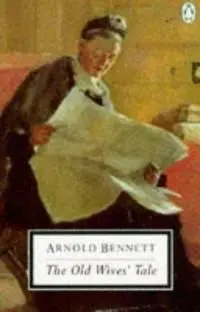
- Название:The Old Wives' Tale
- Автор:
- Издательство:Kessinger Publishing
- Жанр:
- Год:2005
- ISBN:9781417903672
- Рейтинг книги:5 / 5. Голосов: 1
-
Избранное:Добавить в избранное
- Отзывы:
-
Ваша оценка:
The Old Wives' Tale: краткое содержание, описание и аннотация
Предлагаем к чтению аннотацию, описание, краткое содержание или предисловие (зависит от того, что написал сам автор книги «The Old Wives' Tale»). Если вы не нашли необходимую информацию о книге — напишите в комментариях, мы постараемся отыскать её.
The Old Wives' Tale — читать онлайн бесплатно полную книгу (весь текст) целиком
Ниже представлен текст книги, разбитый по страницам. Система сохранения места последней прочитанной страницы, позволяет с удобством читать онлайн бесплатно книгу «The Old Wives' Tale», без необходимости каждый раз заново искать на чём Вы остановились. Поставьте закладку, и сможете в любой момент перейти на страницу, на которой закончили чтение.
Интервал:
Закладка:
"I have a fox-terrier bitch," said Mr. Scales, "that took a first at Knutsford; but she's getting old now."
The sexual epithet fell queerly on the room. Mr. Povey, being a man of the world, behaved as if nothing had happened; but Mrs. Baines's curls protested against this unnecessary coarseness. Constance pretended not to hear. Sophia did not understandingly hear. Mr. Scales had no suspicion that he was transgressing a convention by virtue of which dogs have no sex. Further, he had no suspicion of the local fame of Mrs. Baines's mince-tarts. He had already eaten more mince-tarts than he could enjoy, before beginning upon hers, and Mrs. Baines missed the enthusiasm to which she was habituated from consumers of her pastry.
Mr. Povey, fascinated, proceeded in the direction of dogs, and it grew more and more evident that Mr. Scales, who went out to parties in evening dress, instead of going in respectable broad- cloth to watch-night services, who knew the great ones of the land, and who kept dogs of an inconvenient sex, was neither an ordinary commercial traveller nor the kind of man to which the Square was accustomed. He came from a different world.
"Lawyer Lawton's party broke up early--at least I mean, considering--" Mrs. Baines hesitated.
After a pause Mr. Scales replied, "Yes, I left immediately the clock struck twelve. I've a heavy day to-morrow--I mean to-day."
It was not an hour for a prolonged visit, and in a few minutes Mr. Scales was ready again to depart. He admitted a certain feebleness ('wankiness,' he playfully called it, being proud of his skill in the dialect), and a burning in his elbow; but otherwise he was quite well--thanks to Mrs. Baines's most kind hospitality ... He really didn't know how he came to be sitting on her doorstep. Mrs. Baines urged him, if he met a policeman on his road to the Tiger, to furnish all particulars about the attempted highway robbery, and he said he decidedly would.
He took his leave with distinguished courtliness.
"If I have a moment I shall run in to-morrow morning just to let you know I'm all right," said he, in the white street.
"Oh, do!" said Constance. Constance's perfect innocence made her strangely forward at times.
"A happy New Year and many of them!"
"Thanks! Same to you! Don't get lost."
"Straight up the Square and first on the right," called the commonsense of Mr. Povey.
Nothing else remained to say, and the visitor disappeared silently in the whirling snow. "Brrr!" murmured Mr. Povey, shutting the door. Everybody felt: "What a funny ending of the old year!"
"Sophia, my pet," Mrs. Baines began.
But Sophia had vanished to bed.
"Tell her about her new night-dress," said Mrs. Baines to Constance.
"Yes, mother."
"I don't know that I'm so set up with that young man, after all," Mrs. Baines reflected aloud.
"Oh, mother!" Constance protested. "I think he's just lovely."
"He never looks you straight in the face," said Mrs. Baines.
"Don't tell ME!" laughed Constance, kissing her mother good night. "You're only on your high horse because he didn't praise your mince. I noticed it."
IV
"If anybody thinks I'm going to stand the cold in this showroom any longer, they're mistaken," said Sophia the next morning loudly, and in her mother's hearing. And she went down into the shop carrying bonnets.
She pretended to be angry, but she was not. She felt, on the contrary, extremely joyous, and charitable to all the world. Usually she would take pains to keep out of the shop; usually she was preoccupied and stern. Hence her presence on the ground-floor, and her demeanour, excited interest among the three young lady assistants who sat sewing round the stove in the middle of the shop, sheltered by the great pile of shirtings and linseys that fronted the entrance.
Sophia shared Constance's corner. They had hot bricks under their feet, and fine-knitted wraps on their shoulders. They would have been more comfortable near the stove, but greatness has its penalties. The weather was exceptionally severe. The windows were thickly frosted over, so that Mr. Povey's art in dressing them was quite wasted. And--rare phenomenon!--the doors of the shop were shut. In the ordinary way they were not merely open, but hidden by a display of 'cheap lines.' Mr. Povey, after consulting Mrs. Baines, had decided to close them, foregoing the customary display. Mr. Povey had also, in order to get a little warmth into his limbs, personally assisted two casual labourers to scrape the thick frozen snow off the pavement; and he wore his kid mittens. All these things together proved better than the evidence of barometers how the weather nipped.
Mr. Scales came about ten o'clock. Instead of going to Mr. Povey's counter, he walked boldly to Constance's corner, and looked over the boxes, smiling and saluting. Both the girls candidly delighted in his visit. Both blushed; both laughed--without knowing why they laughed. Mr. Scales said he was just departing and had slipped in for a moment to thank all of them for their kindness of last night--'or rather this morning.' The girls laughed again at this witticism. Nothing could have been more simple than his speech. Yet it appeared to them magically attractive. A customer entered, a lady; one of the assistants rose from the neighbourhood of the stove, but the daughters of the house ignored the customer; it was part of the etiquette of the shop that customers, at any rate chance customers, should not exist for the daughters of the house, until an assistant had formally drawn attention to them. Otherwise every one who wanted a pennyworth of tape would be expecting to be served by Miss Baines, or Miss Sophia, if Miss Sophia were there. Which would have been ridiculous.
Sophia, glancing sidelong, saw the assistant parleying with the customer; and then the assistant came softly behind the counter and approached the corner.
"Miss Constance, can you spare a minute?" the assistant whispered discreetly.
Constance extinguished her smile for Mr. Scales, and, turning away, lighted an entirely different and inferior smile for the customer.
"Good morning, Miss Baines. Very cold, isn't it?"
"Good morning, Mrs. Chatterley. Yes, it is. I suppose you're getting anxious about those--" Constance stopped.
Sophia was now alone with Mr. Scales, for in order to discuss the unnameable freely with Mrs. Chatterley her sister was edging up the counter. Sophia had dreamed of a private conversation as something delicious and impossible. But chance had favoured her. She was alone with him. And his neat fair hair and his blue eyes and his delicate mouth were as wonderful to her as ever. He was gentlemanly to a degree that impressed her more than anything had impressed her in her life. And all the proud and aristocratic instinct that was at the base of her character sprang up and seized on his gentlemanliness like a famished animal seizing on food.
"The last time I saw you," said Mr. Scales, in a new tone, "you said you were never in the shop."
"What? Yesterday? Did I?"
"No, I mean the last time I saw you alone," said he.
"Oh!" she exclaimed. "It's just an accident."
"That's exactly what you said last time."
"Is it?"
Was it his manner, or what he said, that flattered her, that intensified her beautiful vivacity?
"I suppose you don't often go out?" he went on.
"What? In this weather?"
"Any time."
"I go to chapel," said she, "and marketing with mother." There was a little pause. "And to the Free Library."
"Oh yes. You've got a Free Library here now, haven't you?"
"Yes. We've had it over a year."
"And you belong to it? What do you read?"
"Oh, stories, you know. I get a fresh book out once a week."
"Saturdays, I suppose?"
"No," she said. "Wednesdays." And she smiled. "Usually."
Читать дальшеИнтервал:
Закладка:
Похожие книги на «The Old Wives' Tale»
Представляем Вашему вниманию похожие книги на «The Old Wives' Tale» списком для выбора. Мы отобрали схожую по названию и смыслу литературу в надежде предоставить читателям больше вариантов отыскать новые, интересные, ещё непрочитанные произведения.








Обсуждение, отзывы о книге «The Old Wives' Tale» и просто собственные мнения читателей. Оставьте ваши комментарии, напишите, что Вы думаете о произведении, его смысле или главных героях. Укажите что конкретно понравилось, а что нет, и почему Вы так считаете.