Arnold Bennett - The Old Wives' Tale
Здесь есть возможность читать онлайн «Arnold Bennett - The Old Wives' Tale» весь текст электронной книги совершенно бесплатно (целиком полную версию без сокращений). В некоторых случаях можно слушать аудио, скачать через торрент в формате fb2 и присутствует краткое содержание. Год выпуска: 2005, ISBN: 2005, Издательство: Kessinger Publishing, Жанр: Классическая проза, на английском языке. Описание произведения, (предисловие) а так же отзывы посетителей доступны на портале библиотеки ЛибКат.
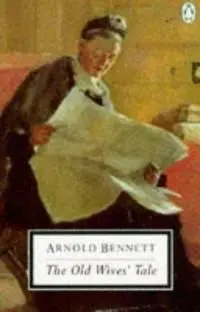
- Название:The Old Wives' Tale
- Автор:
- Издательство:Kessinger Publishing
- Жанр:
- Год:2005
- ISBN:9781417903672
- Рейтинг книги:5 / 5. Голосов: 1
-
Избранное:Добавить в избранное
- Отзывы:
-
Ваша оценка:
The Old Wives' Tale: краткое содержание, описание и аннотация
Предлагаем к чтению аннотацию, описание, краткое содержание или предисловие (зависит от того, что написал сам автор книги «The Old Wives' Tale»). Если вы не нашли необходимую информацию о книге — напишите в комментариях, мы постараемся отыскать её.
The Old Wives' Tale — читать онлайн бесплатно полную книгу (весь текст) целиком
Ниже представлен текст книги, разбитый по страницам. Система сохранения места последней прочитанной страницы, позволяет с удобством читать онлайн бесплатно книгу «The Old Wives' Tale», без необходимости каждый раз заново искать на чём Вы остановились. Поставьте закладку, и сможете в любой момент перейти на страницу, на которой закончили чтение.
Интервал:
Закладка:
"Mr. Scales!" cried Mrs. Baines.
And, "Mr. Scales!" murmured Sophia, terribly afraid.
Perhaps she was afraid of miracles. Mr. Scales sitting on her mother's doorstep in the middle of the snowy night had assuredly the air of a miracle, of something dreamed in a dream, of something pathetically and impossibly appropriate--'pat,' as they say in the Five Towns. But he was a tangible fact there. And years afterwards, in the light of further knowledge of Mr. Scales, Sophia came to regard his being on the doorstep as the most natural and characteristic thing in the world. Real miracles never seem to be miracles, and that which at the first blush resembles one usually proves to be an instance of the extremely prosaic.
III
"Is that you, Mrs. Baines?" asked Gerald Scales, in a half-witted voice, looking up, and then getting to his feet. "Is this your house? So it is! Well, I'd no idea I was sitting on your doorstep."
He smiled timidly, nay, sheepishly, while the women and Mr. Povey surrounded him with their astonished faces under the light of the gas-lamp. Certainly he was very pale.
"But whatever is the matter, Mr. Scales?" Mrs. Baines demanded in an anxious tone. "Are you ill? Have you been suddenly--"
"Oh no," said the young man lightly. "It's nothing. Only I was set on just now, down there,"--he pointed to the depths of King Street.
"Set on!" Mrs. Baines repeated, alarmed.
"That makes the fourth case in a week, that we KNOW of!" said Mr. Povey. "It really is becoming a scandal."
The fact was that, owing to depression of trade, lack of employment, and rigorous weather, public security in the Five Towns was at that period not as perfect as it ought to have been. In the stress of hunger the lower classes were forgetting their manners--and this in spite of the altruistic and noble efforts of their social superiors to relieve the destitution due, of course, to short-sighted improvidence. When (the social superiors were asking in despair) will the lower classes learn to put by for a rainy day? (They might have said a snowy and a frosty day.) It was 'really too bad' of the lower classes, when everything that could be done was being done for them, to kill, or even attempt to kill, the goose that lays the golden eggs! And especially in a respectable town! What, indeed, were things coming to? Well, here was Mr. Gerald Scales, gentleman from Manchester, a witness and victim to the deplorable moral condition of the Five Towns. What would he think of the Five Towns? The evil and the danger had been a topic of discussion in the shop for a week past, and now it was brought home to them.
"I hope you weren't--" said Mrs. Baines, apologetically and sympathetically.
"Oh no!" Mr. Scales interrupted her quite gaily. "I managed to beat them off. Only my elbow--"
Meanwhile it was continuing to snow.
"Do come in!" said Mrs. Baines.
"I couldn't think of troubling you," said Mr. Scales. "I'm all right now, and I can find my way to the Tiger."
"You must come in, if it's only for a minute," said Mrs. Baines, with decision. She had to think of the honour of the town.
"You're very kind," said Mr. Scales.
The door was suddenly opened from within, and Maggie surveyed them from the height of the two steps.
"A happy New Year, mum, to all of you."
"Thank you, Maggie," said Mrs. Baines, and primly added:
"The same to you!" And in her own mind she said that Maggie could best prove her desire for a happy new year by contriving in future not to 'scamp her corners,' and not to break so much crockery.
Sophia, scarce knowing what she did, mounted the steps.
"Mr. Scales ought to let our New Year in, my pet," Mrs. Baines stopped her.
"Oh, of course, mother!" Sophia concurred with, a gasp, springing back nervously.
Mr. Scales raised his hat, and duly let the new year, and much snow, into the Baines parlour. And there was a vast deal of stamping of feet, agitating of umbrellas, and shaking of cloaks and ulsters on the doormat in the corner by the harmonium. And Maggie took away an armful of everything snowy, including goloshes, and received instructions to boil milk and to bring 'mince.' Mr. Povey said "B-r-r-r!" and shut the door (which was bordered with felt to stop ventilation); Mrs. Baines turned up the gas till it sang, and told Sophia to poke the fire, and actually told Constance to light the second gas.
Excitement prevailed.
The placidity of existence had been agreeably disturbed (yes, agreeably, in spite of horror at the attack on Mr. Scales's elbow) by an adventure. Moreover, Mr. Scales proved to be in evening- dress. And nobody had ever worn evening-dress in that house before.
Sophia's blood was in her face, and it remained there, enhancing the vivid richness of her beauty. She was dizzy with a strange and disconcerting intoxication. She seemed to be in a world of unrealities and incredibilities. Her ears heard with indistinctness, and the edges of things and people had a prismatic colouring. She was in a state of ecstatic, unreasonable, inexplicable happiness. All her misery, doubts, despair, rancour, churlishness, had disappeared. She was as softly gentle as Constance. Her eyes were the eyes of a fawn, and her gestures delicious in their modest and sensitive grace. Constance was sitting on the sofa, and, after glancing about as if for shelter, she sat down on the sofa by Constance's side. She tried not to stare at Mr. Scales, but her gaze would not leave him. She was sure that he was the most perfect man in the world. A shortish man, perhaps, but a perfect. That such perfection could be was almost past her belief. He excelled all her dreams of the ideal man. His smile, his voice, his hand, his hair--never were such! Why, when he spoke--it was positively music! When he smiled--it was heaven! His smile, to Sophia, was one of those natural phenomena which are so lovely that they make you want to shed tears. There is no hyperbole in this description of Sophia's sensations, but rather an under-statement of them. She was utterly obsessed by the unique qualities of Mr. Scales. Nothing would have persuaded her that the peer of Mr. Scales existed among men, or could possibly exist. And it was her intense and profound conviction of his complete pre-eminence that gave him, as he sat there in the rocking-chair in her mother's parlour, that air of the unreal and the incredible.
"I stayed in the town on purpose to go to a New Year's party at Mr. Lawton's," Mr. Scales was saying.
"Ah! So you know Lawyer Lawton!" observed Mrs. Baines, impressed, for Lawyer Lawton did not consort with tradespeople. He was jolly with them, and he did their legal business for them, but he was not of them. His friends came from afar.
"My people are old acquaintances of his," said Mr. Scales, sipping the milk which Maggie had brought.
"Now, Mr. Scales, you must taste my mince. A happy month for every tart you eat, you know," Mrs. Baines reminded him.
He bowed. "And it was as I was coming away from there that I got into difficulties." He laughed.
Then he recounted the struggle, which had, however, been brief, as the assailants lacked pluck. He had slipped and fallen on his elbow on the kerb, and his elbow might have been broken, had not the snow been so thick. No, it did not hurt him now; doubtless a mere bruise. It was fortunate that the miscreants had not got the better of him, for he had in his pocket-book a considerable sum of money in notes--accounts paid! He had often thought what an excellent thing it would be if commercials could travel with dogs, particularly in winter. There was nothing like a dog.
"You are fond of dogs?" asked Mr. Povey, who had always had a secret but impracticable ambition to keep a dog.
"Yes," said Mr. Scales, turning now to Mr. Povey.
"Keep one?" asked Mr. Povey, in a sporting tone.
Читать дальшеИнтервал:
Закладка:
Похожие книги на «The Old Wives' Tale»
Представляем Вашему вниманию похожие книги на «The Old Wives' Tale» списком для выбора. Мы отобрали схожую по названию и смыслу литературу в надежде предоставить читателям больше вариантов отыскать новые, интересные, ещё непрочитанные произведения.







Обсуждение, отзывы о книге «The Old Wives' Tale» и просто собственные мнения читателей. Оставьте ваши комментарии, напишите, что Вы думаете о произведении, его смысле или главных героях. Укажите что конкретно понравилось, а что нет, и почему Вы так считаете.