Arnold Bennett - The Old Wives' Tale
Здесь есть возможность читать онлайн «Arnold Bennett - The Old Wives' Tale» весь текст электронной книги совершенно бесплатно (целиком полную версию без сокращений). В некоторых случаях можно слушать аудио, скачать через торрент в формате fb2 и присутствует краткое содержание. Год выпуска: 2005, ISBN: 2005, Издательство: Kessinger Publishing, Жанр: Классическая проза, на английском языке. Описание произведения, (предисловие) а так же отзывы посетителей доступны на портале библиотеки ЛибКат.
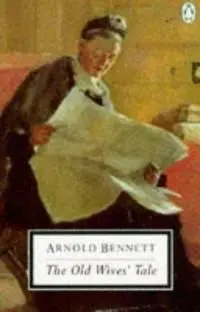
- Название:The Old Wives' Tale
- Автор:
- Издательство:Kessinger Publishing
- Жанр:
- Год:2005
- ISBN:9781417903672
- Рейтинг книги:5 / 5. Голосов: 1
-
Избранное:Добавить в избранное
- Отзывы:
-
Ваша оценка:
The Old Wives' Tale: краткое содержание, описание и аннотация
Предлагаем к чтению аннотацию, описание, краткое содержание или предисловие (зависит от того, что написал сам автор книги «The Old Wives' Tale»). Если вы не нашли необходимую информацию о книге — напишите в комментариях, мы постараемся отыскать её.
The Old Wives' Tale — читать онлайн бесплатно полную книгу (весь текст) целиком
Ниже представлен текст книги, разбитый по страницам. Система сохранения места последней прочитанной страницы, позволяет с удобством читать онлайн бесплатно книгу «The Old Wives' Tale», без необходимости каждый раз заново искать на чём Вы остановились. Поставьте закладку, и сможете в любой момент перейти на страницу, на которой закончили чтение.
Интервал:
Закладка:
Strange that immortal souls should be found with the temerity to reflect upon mundane affairs in that hour! Yet there were undoubtedly such in the congregation; there were perhaps many to whom the vision, if clear, was spasmodic and fleeting. And among them the inhabitants of the Baines family pew! Who would have supposed that Mr. Povey, a recent convert from Primitive Methodism in King Street to Wesleyan Methodism on Duck Bank, was dwelling upon window-tickets and the injustice of women, instead of upon his relations with Jehovah and the tailed one? Who would have supposed that the gentle-eyed Constance, pattern of daughters, was risking her eternal welfare by smiling at the tailed one, who, concealing his tail, had assumed the image of Mr. Povey? Who would have supposed that Mrs. Baines, instead of resolving that Jehovah and not the tailed one should have ultimate rule over her, was resolving that she and not Mr. Povey should have ultimate rule over her house and shop? It was a pew-ful that belied its highly satisfactory appearance. (And possibly there were other pew-fuls equally deceptive.)
Sophia alone, in the corner next to the wall, with her beautiful stern face pressed convulsively against her hands, was truly busy with immortal things. Turbulent heart, the violence of her spiritual life had made her older! Never was a passionate, proud girl in a harder case than Sophia! In the splendour of her remorse for a fatal forgetfulness, she had renounced that which she loved and thrown herself into that which she loathed. It was her nature so to do. She had done it haughtily, and not with kindness, but she had done it with the whole force of her will. Constance had been compelled to yield up to her the millinery department, for Sophia's fingers had a gift of manipulating ribbons and feathers that was beyond Constance. Sophia had accomplished miracles in the millinery. Yes, and she would be utterly polite to customers; but afterwards, when the customers were gone, let mothers, sisters, and Mr. Poveys beware of her fiery darts!
But why, when nearly three months had elapsed after her father's death, had she spent more and more time in the shop, secretly aflame with expectancy? Why, when one day a strange traveller entered the shop and announced himself the new representative of Birkinshaws--why had her very soul died away within her and an awful sickness seized her? She knew then that she had been her own deceiver. She recognized and admitted, abasing herself lower than the lowest, that her motive in leaving Miss Chetwynd's and joining the shop had been, at the best, very mixed, very impure. Engaged at Miss Chetwynd's, she might easily have never set eyes on Gerald Scales again. Employed in the shop, she could not fail to meet him. In this light was to be seen the true complexion of the splendour of her remorse. A terrible thought for her! And she could not dismiss it. It contaminated her existence, this thought! And she could confide in no one. She was incapable of showing a wound. Quarter had succeeded quarter, and Gerald Scales was no more heard of. She had sacrificed her life for worse than nothing. She had made her own tragedy. She had killed her father, cheated and shamed herself with a remorse horribly spurious, exchanged content for misery and pride for humiliation--and with it all, Gerald Scales had vanished! She was ruined.
She took to religion, and her conscientious Christian virtues, practised with stern inclemency, were the canker of the family. Thus a year and a half had passed.
And then, on this last day of the year, the second year of her shame and of her heart's widowhood, Mr. Scales had reappeared. She had gone casually into the shop and found him talking to her mother and Mr. Povey. He had come back to the provincial round and to her. She shook his hand and fled, because she could not have stayed. None had noticed her agitation, for she had held her body as in a vice. She knew the reason neither of his absence nor of his return. She knew nothing. And not a word had been said at meals. And the day had gone and the night come; and now she was in chapel, with Constance by her side and Gerald Scales in her soul! Happy beyond previous conception of happiness! Wretched beyond an unutterable woe! And none knew! What was she to pray for? To what purpose and end ought she to steel herself? Ought she to hope, or ought she to despair? "O God, help me!" she kept whispering to Jehovah whenever the heavenly vision shone through the wrack of her meditation. "O God, help me!" She had a conscience that, when it was in the mood for severity, could be unspeakably cruel to her.
And whenever she looked, with dry, hot eyes, through her gloved fingers, she saw in front of her on the wall a marble tablet inscribed in gilt letters, the cenotaph! She knew all the lines by heart, in their spacious grandiloquence; lines such as:
EVER READY WITH HIS TONGUE HIS PEN AND HIS PURSE TO HELP THE CHURCH OF HIS FATHERS IN HER HE LIVED AND IN HER HE DIED CHERISHING A DEEP AND ARDENT AFFECTION FOR HIS BELOVED FAITH AND CREED.
And again:
HIS SYMPATHIES EXTENDED BEYOND HIS OWN COMMUNITY HE WAS ALWAYS TO THE FORE IN GOOD WORKS AND HE SERVED THE CIRCUIT THE TOWN AND THE DISTRICT WITH GREAT ACCEPTANCE AND USEFULNESS.
Thus had Mr. Critchlow's vanity been duly appeased.
As the minutes sped in the breathing silence of the chapel the emotional tension grew tighter; worshippers sighed heavily, or called upon Jehovah for a sign, or merely coughed an invocation. And then at last the clock in the middle of the balcony gave forth the single stroke to which it was limited; the ministers rose, and the congregation after them; and everybody smiled as though it was the millennium, and not simply the new year, that had set in. Then, faintly, through walls and shut windows, came the sound of bells and of steam syrens and whistles. The superintendent minister opened his hymn-book, and the hymn was sung which had been sung in Wesleyan Chapels on New Year's morn since the era of John Wesley himself. The organ finished with a clanguor of all its pipes; the minister had a few last words with Jehovah, and nothing was left to do except to persevere in well-doing. The people leaned towards each other across the high backs of the pews.
"A happy New Year!"
"Eh, thank ye! The same to you!"
"Another Watch Night service over!"
"Eh, yes!" And a sigh.
Then the aisles were suddenly crowded, and there was a good- humoured, optimistic pushing towards the door. In the Corinthian porch occurred a great putting-on of cloaks, ulsters, goloshes, and even pattens, and a great putting-up of umbrellas. And the congregation went out into the whirling snow, dividing into several black, silent-footed processions, down Trafalgar Road, up towards the playground, along the market-place, and across Duck Square in the direction of St. Luke's Square.
Mr. Povey was between Mrs. Baines and Constance.
"You must take my arm, my pet," said Mrs. Baines to Sophia.
Then Mr. Povey and Constance waded on in front through the drifts. Sophia balanced that enormous swaying mass, her mother. Owing to their hoops, she had much difficulty in keeping close to her. Mrs. Baines laughed with the complacent ease of obesity, yet a fall would have been almost irremediable for her; and so Sophia had to laugh too. But, though she laughed, God had not helped her. She did not know where she was going, nor what might happen to her next.
"Why, bless us!" exclaimed Mrs. Baines, as they turned the corner into King Street. "There's some one sitting on our door-step!"
There was: a figure swathed in an ulster, a maud over the ulster, and a high hat on the top of all. It could not have been there very long, because it was only speckled with snow. Mr. Povey plunged forward.
"It's Mr. Scales, of all people!" said Mr. Povey.
Читать дальшеИнтервал:
Закладка:
Похожие книги на «The Old Wives' Tale»
Представляем Вашему вниманию похожие книги на «The Old Wives' Tale» списком для выбора. Мы отобрали схожую по названию и смыслу литературу в надежде предоставить читателям больше вариантов отыскать новые, интересные, ещё непрочитанные произведения.








Обсуждение, отзывы о книге «The Old Wives' Tale» и просто собственные мнения читателей. Оставьте ваши комментарии, напишите, что Вы думаете о произведении, его смысле или главных героях. Укажите что конкретно понравилось, а что нет, и почему Вы так считаете.