Джозеф Киплинг - Indian Tales
Здесь есть возможность читать онлайн «Джозеф Киплинг - Indian Tales» весь текст электронной книги совершенно бесплатно (целиком полную версию без сокращений). В некоторых случаях можно слушать аудио, скачать через торрент в формате fb2 и присутствует краткое содержание. Год выпуска: 2014, Издательство: epubBooks Classics, Жанр: Классическая проза, на английском языке. Описание произведения, (предисловие) а так же отзывы посетителей доступны на портале библиотеки ЛибКат.
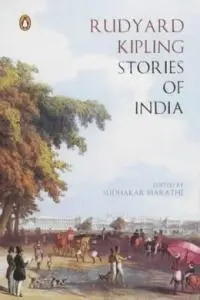
- Название:Indian Tales
- Автор:
- Издательство:epubBooks Classics
- Жанр:
- Год:2014
- ISBN:нет данных
- Рейтинг книги:5 / 5. Голосов: 1
-
Избранное:Добавить в избранное
- Отзывы:
-
Ваша оценка:
Indian Tales: краткое содержание, описание и аннотация
Предлагаем к чтению аннотацию, описание, краткое содержание или предисловие (зависит от того, что написал сам автор книги «Indian Tales»). Если вы не нашли необходимую информацию о книге — напишите в комментариях, мы постараемся отыскать её.
Indian Tales — читать онлайн бесплатно полную книгу (весь текст) целиком
Ниже представлен текст книги, разбитый по страницам. Система сохранения места последней прочитанной страницы, позволяет с удобством читать онлайн бесплатно книгу «Indian Tales», без необходимости каждый раз заново искать на чём Вы остановились. Поставьте закладку, и сможете в любой момент перейти на страницу, на которой закончили чтение.
Интервал:
Закладка:
And Mulvaney went; cursing his allies with Irish fluency and barrack–room point.
"Take note," said he, when he had won his holiday, and appeared dressed in his roughest clothes with the only other regimental fowling piece in his hand. "Take note, Jock, an' you Orth'ris, I am goin' in the face av my own will—all for to please you. I misdoubt anythin' will come av permiscuous huntin' afther peacockses in a desolit lan'; an' I know that I will lie down an' die wid thirrrst. Me catch peacockses for you, ye lazy scutts—an' be sacrificed by the peasanthry—Ugh!"
He waved a huge paw and went away.
At twilight, long before the appointed hour, he returned empty–handed, much begrimed with dirt.
"Peacockses?" queried Ortheris from the safe rest of a barrack–room table whereon he was smoking cross–legged, Learoyd fast asleep on a bench.
"Jock," said Mulvaney, without answering, as he stirred up the sleeper. "Jock, can ye fight? Will ye fight?"
Very slowly the meaning of the words communicated itself to the half–roused man. He understood—and again—what might these things mean? Mulvaney was shaking him savagely. Meantime the men in the room howled with delight. There was war in the confederacy at last—war and the breaking of bonds.
Barrack–room etiquette is stringent. On the direct challenge must follow the direct reply. This is more binding than the ties of tried friendship. Once again Mulvaney repeated the question. Learoyd answered by the only means in his power, and so swiftly that the Irishman had barely time to avoid the blow. The laughter around increased. Learoyd looked bewilderedly at his friend—himself as greatly bewildered. Ortheris dropped from the table because his world was falling.
"Come outside," said Mulvaney, and as the occupants of the barrack–room prepared joyously to follow, he turned and said furiously, "There will be no fight this night—onless any wan av you is wishful to assist. The man that does, follows on."
No man moved. The three passed out into the moonlight, Learoyd fumbling with the buttons of his coat. The parade–ground was deserted except for the scurrying jackals. Mulvaney's impetuous rush carried his companions far into the open ere Learoyd attempted to turn round and continue the discussion.
"Be still now. 'Twas my fault for beginnin' things in the middle av an end, Jock. I should ha' comminst wid an explanation; but Jock, dear, on your sowl are ye fit, think you, for the finest fight that iver was—betther than fightin' me? Considher before ye answer."
More than ever puzzled, Learoyd turned round two or three times, felt an arm, kicked tentatively, and answered, "Ah'm fit." He was accustomed to fight blindly at the bidding of the superior mind.
They sat them down, the men looking on from afar, and Mulvaney untangled himself in mighty words.
"Followin' your fools' scheme I wint out into the thrackless desert beyond the barricks. An' there I met a pious Hindu dhriving a bullock–kyart. I tuk ut for granted he wud be delighted for to convoy me a piece, an' I jumped in"—
"You long, lazy, black–haired swine," drawled Ortheris, who would have done the same thing under similar circumstances.
"'Twas the height av policy. That naygur–man dhruv miles an' miles—as far as the new railway line they're buildin' now back av the Tavi river. ''Tis a kyart for dhirt only,' says he now an' again timoreously, to get me out av ut. 'Dhirt I am,' sez I, 'an' the dhryest that you iver kyarted. Dhrive on, me son, an' glory be wid you.' At that I wint to slape, an' took no heed till he pulled up on the embankmmt av the line where the coolies were pilin' mud. There was a matther av two thousand coolies on that line—you remimber that. Prisintly a bell rang, an' they throops off to a big pay–shed. 'Where's the white man in charge?' sez I to my kyart–dhriver. 'In the shed,' sez he, 'engaged on a riffle,'—'A fwhat?' sez I. 'Riffle,' sez he, 'You take ticket. He take money. You get nothin'.—'Oho!' sez I, 'that's fwhat the shuperior an' cultivated man calls a raffle, me misbeguided child av darkness an' sin. Lead on to that raffle, though fwhat the mischief 'tis doin' so far away from uts home—which is the charity–bazaar at Christmas, an' the colonel's wife grinnin' behind the tea–table—is more than I know.' Wid that I wint to the shed an' found 'twas payday among the coolies. Their wages was on a table forninst a big, fine, red buck av a man—sivun fut high, four fut wide, an' three fut thick, wid a fist on him like a corn–sack. He was payin' the coolies fair an' easy, but he wud ask each man If he wud raffle that month, an' each man sez, 'Yes,' av course. Thin he wud deduct from their wages accordin'. Whin all was paid, he filled an ould cigar–box full av gun–wads an' scatthered ut among the coolies. They did not take much joy av that performince, an' small wondher. A man close to me picks up a black gun–wad an' sings out, 'I have ut,'—'Good may ut do you.' sez I. The coolie wint forward to this big, fine, red man, who threw a cloth off av the most sumpshus, jooled, enamelled an' variously bedivilled sedan–chair I iver saw."
"Sedan–chair! Put your 'ead in a bag. That was a palanquin. Don't yer know a palanquin when you see it?" said Ortheris with great scorn.
"I chuse to call ut sedan chair, an' chair ut shall be, little man," continued the Irishman. "Twas a most amazin' chair—all lined wid pink silk an' fitted wid red silk curtains. 'Here ut is,' sez the red man. 'Here ut is,' sez the coolie, an' he grinned weakly–ways. 'Is ut any use to you?' sez the red man. 'No,' sez the coolie; 'I'd like to make a presint av ut to you.'—'I am graciously pleased to accept that same,' sez the red man; an' at that all the coolies cried aloud in fwhat was mint for cheerful notes, an' wint back to their diggin', lavin' me alone in the shed. The red man saw me, an' his face grew blue on his big, fat neck. 'Fwhat d'you want here?' sez he. 'Standin'–room an' no more,' sez I, 'onless it may be fwhat ye niver had, an' that's manners, ye rafflin' ruffian,' for I was not goin' to have the Service throd upon. 'Out of this,' sez he. 'I'm in charge av this section av construction.'—'I'm in charge av mesilf,' sez I, 'an' it's like I will stay a while. D'ye raffle much in these parts?'—'Fwhat's that to you?' sez he. 'Nothin',' sez I, 'but a great dale to you, for begad I'm thinkin' you get the full half av your revenue from that sedan–chair. Is ut always raffled so?' I sez, an' wid that I wint to a coolie to ask questions. Bhoys, that man's name is Dearsley, an' he's been rafflin' that ould sedan–chair monthly this matther av nine months. Ivry coolie on the section takes a ticket—or he gives 'em the go—wanst a month on pay–day. Ivry coolie that wins ut gives ut back to him, for 'tis too big to carry away, an' he'd sack the man that thried to sell ut. That Dearsley has been makin' the rowlin' wealth av Roshus by nefarious rafflin'. Think av the burnin' shame to the sufferin' coolie–man that the army in Injia are bound to protect an' nourish in their bosoms! Two thousand coolies defrauded wanst a month!"
"Dom t' coolies. Has't gotten t' cheer, man?" said Learoyd.
"Hould on. Havin' onearthed this amazin' an' stupenjus fraud committed by the man Dearsley, I hild a council av war; he thryin' all the time to sejuce me into a fight wid opprobrious language. That sedan–chair niver belonged by right to any foreman av coolies. 'Tis a king's chair or a quane's. There's gold on ut an' silk an' all manner av trapesemints. Bhoys, 'tis not for me to countenance any sort av wrong–doin'—me bein' the ould man—but—anyway he has had ut nine months, an' he dare not make throuble av ut was taken from him. Five miles away, or ut may be six"—
There was a long pause, and the jackals howled merrily. Learoyd bared one arm, and contemplated it in the moonlight. Then he nodded partly to himself and partly to his friends. Ortheris wriggled with suppressed emotion.
Читать дальшеИнтервал:
Закладка:
Похожие книги на «Indian Tales»
Представляем Вашему вниманию похожие книги на «Indian Tales» списком для выбора. Мы отобрали схожую по названию и смыслу литературу в надежде предоставить читателям больше вариантов отыскать новые, интересные, ещё непрочитанные произведения.





Обсуждение, отзывы о книге «Indian Tales» и просто собственные мнения читателей. Оставьте ваши комментарии, напишите, что Вы думаете о произведении, его смысле или главных героях. Укажите что конкретно понравилось, а что нет, и почему Вы так считаете.