Джозеф Киплинг - Indian Tales
Здесь есть возможность читать онлайн «Джозеф Киплинг - Indian Tales» весь текст электронной книги совершенно бесплатно (целиком полную версию без сокращений). В некоторых случаях можно слушать аудио, скачать через торрент в формате fb2 и присутствует краткое содержание. Год выпуска: 2014, Издательство: epubBooks Classics, Жанр: Классическая проза, на английском языке. Описание произведения, (предисловие) а так же отзывы посетителей доступны на портале библиотеки ЛибКат.
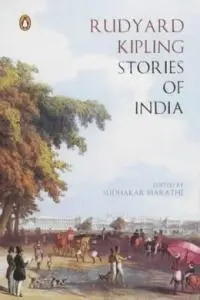
- Название:Indian Tales
- Автор:
- Издательство:epubBooks Classics
- Жанр:
- Год:2014
- ISBN:нет данных
- Рейтинг книги:5 / 5. Голосов: 1
-
Избранное:Добавить в избранное
- Отзывы:
-
Ваша оценка:
Indian Tales: краткое содержание, описание и аннотация
Предлагаем к чтению аннотацию, описание, краткое содержание или предисловие (зависит от того, что написал сам автор книги «Indian Tales»). Если вы не нашли необходимую информацию о книге — напишите в комментариях, мы постараемся отыскать её.
Indian Tales — читать онлайн бесплатно полную книгу (весь текст) целиком
Ниже представлен текст книги, разбитый по страницам. Система сохранения места последней прочитанной страницы, позволяет с удобством читать онлайн бесплатно книгу «Indian Tales», без необходимости каждый раз заново искать на чём Вы остановились. Поставьте закладку, и сможете в любой момент перейти на страницу, на которой закончили чтение.
Интервал:
Закладка:
"But do you know what they did to Peachey between two pine trees? They crucified him, Sir, as Peachey's hand will show. They used wooden pegs for his hands and his feet; and he didn't die. He hung there and screamed, and they took him down next day, and said it was a miracle that he wasn't dead. They took him down—poor old Peachey that hadn't done them any harm—that hadn't done them any…."
He rocked to and fro and wept bitterly, wiping his eyes with the back of his scarred hands and moaning like a child for some ten minutes.
"They was cruel enough to feed him up in the temple, because they said he was more of a God than old Daniel that was a man. Then they turned him out on the snow, and told him to go home, and Peachey came home in about a year, begging along the roads quite safe: for Daniel Dravot he walked before and said:—'Come along, Peachey. It's a big thing we're doing.' The mountains they danced at night, and the mountains they tried to fall on Peachey's head, but Dan he held up his hand, and Peachey came along bent double. He never let go of Dan's hand, and he never let go of Dan's head. They gave it to him as a present in the temple, to remind him not to come again, and though the crown was pure gold, and Peachey was starving, never would Peachey sell the same. You knew Dravot, Sir! You knew Right Worshipful Brother Dravot! Look at him now!"
He fumbled in the mass of rags round his bent waist; brought out a black horsehair bag embroidered with silver thread; and shook therefrom on to my table—the dried, withered head of Daniel Dravot! The morning sun that had long been paling the lamps struck the red beard and blind sunken eyes; struck, too, a heavy circlet of gold studded with raw turquoises, that Carnehan placed tenderly on the battered temples.
"You behold now," said Carnehan, "the Emperor in his habit as he lived—the King of Kafiristan with his crown upon his head. Poor old Daniel that was a monarch once!"
I shuddered, for, in spite of defacements manifold, I recognized the head of the man of Marwar Junction. Carnehan rose to go. I attempted to stop him. He was not fit to walk abroad. "Let me take away the whiskey, and give me a little money," he gasped, "I was a King once. I'll go to the Deputy Commissioner and ask to set in the Poorhouse till I get my health. No, thank you, I can't wait till you get a carriage for me, I've urgent private affairs—in the south—at Marwar."
He shambled out of the office and departed in the direction of the Deputy Commissioner's house. That day at noon I had occasion to go down the blinding hot Mall, and I saw a crooked man crawling along the white dust of the roadside, his hat in his hand, quavering dolorously after the fashion of street–singers at Home. There was not a soul in sight, and he was out of all possible earshot of the houses. And he sang through his nose, turning his head from right to left:
"The Son of Man goes forth to war,
A golden crown to gain;
His blood–red banner streams afar—
Who follows in his train?"
I waited to hear no more, but put the poor wretch into my carriage and drove him off to the nearest missionary for eventual transfer to the Asylum. He repeated the hymn twice while he was with me whom he did not in the least recognize, and I left him singing it to the missionary.
Two days later I inquired after his welfare of the Superintendent of the Asylum.
"He was admitted suffering from sunstroke. He died early yesterday morning," said the Superintendent. "Is it true that he was half an hour bareheaded in the sun at midday?"
"Yes," said I, "but do you happen to know if he had anything upon him by any chance when he died?"
"Not to my knowledge," said the Superintendent.
And there the matter rests.
The Gate of the Hundred Sorrows
If I can attain Heaven for a pice, why should you be envious?
—Opium Smoker's Proverb.This is no work of mine. My friend, Gabral Misquitta, the half–caste, spoke it all, between moonset and morning, six weeks before he died; and I took it down from his mouth as he answered my questions. So:
It lies between the Coppersmith's Gully and the pipe–stem sellers' quarter, within a hundred yards, too, as the crow flies, of the Mosque of Wazir Khan. I don't mind telling any one this much, but I defy him to find the Gate, however well he may think he knows the City. You might even go through the very gully it stands in a hundred times, and be none the wiser. We used to call the gully, "The Gully of the Black Smoke," but its native name is altogether different of course. A loaded donkey couldn't pass between the walls; and, at one point, just before you reach the Gate, a bulged house–front makes people go along all sideways.
It isn't really a gate though. It's a house. Old Fung–Tching had it first five years ago. He was a boot–maker in Calcutta. They say that he murdered his wife there when he was drunk. That was why he dropped bazar–rum and took to the Black Smoke instead. Later on, he came up north and opened the Gate as a house where you could get your smoke in peace and quiet. Mind you, it was a pukka , respectable opium–house, and not one of those stifling, sweltering chandoo–khanas , that you can find all over the City. No; the old man knew his business thoroughly, and he was most clean for a Chinaman. He was a one–eyed little chap, not much more than five feet high, and both his middle fingers were gone. All the same, he was the handiest man at rolling black pills I have ever seen. Never seemed to be touched by the Smoke, either; and what he took day and night, night and day, was a caution. I've been at it five years, and I can do my fair share of the Smoke with any one; but I was a child to Fung–Tching that way. All the same, the old man was keen on his money: very keen; and that's what I can't understand. I heard he saved a good deal before he died, but his nephew has got all that now; and the old man's gone back to China to be buried.
He kept the big upper room, where his best customers gathered, as neat as a new pin. In one corner used to stand Fung–Tching's Joss—almost as ugly as Fung–Tching—and there were always sticks burning under his nose; but you never smelled 'em when the pipes were going thick. Opposite the joss was Fung–Tching's coffin. He had spent a good deal of his savings on that, and whenever a new man came to the Gate he was always introduced to it. It was lacquered black, with red and gold writings on it, and I've heard that Fung–Tching brought it out all the way from China. I don't know whether that's true or not, but I know that, if I came first in the evening, I used to spread my mat just at the foot of it. It was a quiet corner, you see, and a sort of breeze from the gully came in at the window now and then. Besides the mats, there was no other furniture in the room—only the coffin, and the old joss all green and blue and purple with age and polish.
Fung–Tching never told us why he called the place "The Gate of the Hundred Sorrows." (He was the only Chinaman I know who used bad–sounding fancy names. Most of them are flowery. As you'll see in Calcutta.) We used to find that out for ourselves. Nothing grows on you so much, if you're white, as the Black Smoke. A yellow man is made different. Opium doesn't tell on him scarcely at all; but white and black suffer a good deal. Of course, there are some people that the Smoke doesn't touch any more than tobacco would at first. They just doze a bit, as one would fall asleep naturally, and next morning they are almost fit for work. Now, I was one of that sort when I began, but I've been at it for five years pretty steadily, and it's different now. There was an old aunt of mine, down Agra way, and she left me a little at her death. About sixty rupees a month secured. Sixty isn't much. I can recollect a time, 'seems hundreds and hundreds of years ago, that I was getting my three hundred a month, and pickings, when I was working on a big timber–contract in Calcutta.
Читать дальшеИнтервал:
Закладка:
Похожие книги на «Indian Tales»
Представляем Вашему вниманию похожие книги на «Indian Tales» списком для выбора. Мы отобрали схожую по названию и смыслу литературу в надежде предоставить читателям больше вариантов отыскать новые, интересные, ещё непрочитанные произведения.








Обсуждение, отзывы о книге «Indian Tales» и просто собственные мнения читателей. Оставьте ваши комментарии, напишите, что Вы думаете о произведении, его смысле или главных героях. Укажите что конкретно понравилось, а что нет, и почему Вы так считаете.