Джозеф Киплинг - Indian Tales
Здесь есть возможность читать онлайн «Джозеф Киплинг - Indian Tales» весь текст электронной книги совершенно бесплатно (целиком полную версию без сокращений). В некоторых случаях можно слушать аудио, скачать через торрент в формате fb2 и присутствует краткое содержание. Год выпуска: 2014, Издательство: epubBooks Classics, Жанр: Классическая проза, на английском языке. Описание произведения, (предисловие) а так же отзывы посетителей доступны на портале библиотеки ЛибКат.
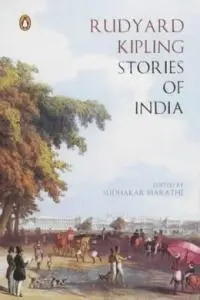
- Название:Indian Tales
- Автор:
- Издательство:epubBooks Classics
- Жанр:
- Год:2014
- ISBN:нет данных
- Рейтинг книги:5 / 5. Голосов: 1
-
Избранное:Добавить в избранное
- Отзывы:
-
Ваша оценка:
Indian Tales: краткое содержание, описание и аннотация
Предлагаем к чтению аннотацию, описание, краткое содержание или предисловие (зависит от того, что написал сам автор книги «Indian Tales»). Если вы не нашли необходимую информацию о книге — напишите в комментариях, мы постараемся отыскать её.
Indian Tales — читать онлайн бесплатно полную книгу (весь текст) целиком
Ниже представлен текст книги, разбитый по страницам. Система сохранения места последней прочитанной страницы, позволяет с удобством читать онлайн бесплатно книгу «Indian Tales», без необходимости каждый раз заново искать на чём Вы остановились. Поставьте закладку, и сможете в любой момент перейти на страницу, на которой закончили чтение.
Интервал:
Закладка:
"I thought ye wud see the reasonableness av ut," said Mulvaney. "I make bould to say as much to the man before. He was for a direct front attack—fut, horse, an' guns—an' all for nothin', seein' that I had no thransport to convey the machine away. 'I will not argue wid you,' sez I, 'this day, but subsequintly, Mister Dearsley, me rafflin' jool, we talk ut out lengthways. 'Tis no good policy to swindle the naygur av his hard–earned emolumints, an' by presint informa–shin'—'twas the kyart man that tould me—'ye've been perpethrating that same for nine months. But I'm a just man,' sez I, 'an' over–lookin' the presumpshin that yondher settee wid the gilt top was not come by honust'—at that he turned sky–green, so I knew things was more thrue than tellable—'not come by honust. I'm willin' to compound the felony for this month's winnin's.'"
"Ah! Ho!" from Learoyd and Ortheris.
"That man Dearsley's rushin' on his fate," continued Mulvaney, solemnly wagging his head. "All Hell had no name bad enough for me that tide. Faith, he called me a robber! Me! that was savin' him from continuin' in his evil ways widout a remonstrince—an' to a man av conscience a remonstrince may change the chune av his life. ''Tis not for me to argue,' sez I, 'fwhatever ye are, Mister Dearsley, but, by my hand, I'll take away the temptation for you that lies in that sedan–chair.'—'You will have to fight me for ut,' sez he, 'for well I know you will never dare make report to any one.'—'Fight I will,' sez I, 'but not this day, for I'm rejuced for want av nourishment.'—'Ye're an ould bould hand,' sez he, sizin' me up an' down; 'an' a jool av a fight we will have. Eat now an' dhrink, an' go your way.' Wid that he gave me some hump an' whisky—good whisky—an' we talked av this an' that the while. 'It goes hard on me now,' sez I, wipin' my mouth, 'to confiscate that piece av furniture, but justice is justice.'—'Ye've not got ut yet,' sez he; 'there's the fight between.'—'There is,' sez I, 'an' a good fight. Ye shall have the pick av the best quality in my rigimint for the dinner you have given this day.' Thin I came hot–foot to you two. Hould your tongue, the both. 'Tis this way. To–morrow we three will go there an' he shall have his pick betune me an' Jock. Jock's a deceivin' fighter, for he is all fat to the eye, an' he moves slow. Now I'm all beef to the look, an' I move quick. By my reckonin' the Dearsley man won't take me; so me an' Orth'ris 'll see fair play. Jock, I tell you, 'twill be big fightin'—whipped, wid the cream above the jam. Afther the business 'twill take a good three av us—Jock 'll be very hurt—to haul away that sedan–chair."
"Palanquin." This from Ortheris.
"Fwhatever ut is, we must have ut. Tis the only sellin' piece av property widin reach that we can get so cheap. An' fwhat's a fight afther all? He has robbed the naygur–man, dishonust. We rob him honust for the sake av the whisky he gave me."
"But wot'll we do with the bloomin' article when we've got it? Them palanquins are as big as 'ouses, an' uncommon 'ard to sell, as McCleary said when ye stole the sentry–box from the Curragh."
"Who's goin' to do t' fightin'?" said Learoyd, and Ortheris subsided. The three returned to barracks without a word. Mulvaney's last argument clinched the matter. This palanquin was property, vendible, and to be attained in the simplest and least embarrassing fashion. It would eventually become beer. Great was Mulvaney.
Next afternoon a procession of three formed itself and disappeared into the scrub in the direction of the new railway line. Learoyd alone was without care, for Mulvaney dived darkly into the future, and little Ortheris feared the unknown, What befell at that interview in the lonely pay–shed by the side of the half–built embankment, only a few hundred coolies know, and their tale is a confusing one, running thus—
"We were at work. Three men in red coats came. They saw the Sahib—Dearsley Sahib. They made oration; and noticeably the small man among the red–coats. Dearsley Sahib also made oration, and used many very strong words, Upon this talk they departed together to an open space, and there the fat man in the red coat fought with Dearsley Sahib after the custom of white men—with his hands, making no noise, and never at all pulling Dearsley Sahib's hair. Such of us as were not afraid beheld these things for just so long a time as a man needs to cook the midday meal. The small man in the red coat had possessed himself of Dearsley Sahib's watch. No, he did not steal that watch. He held it in his hand, and at certain seasons made outcry, and the twain ceased their combat, which was like the combat of young bulls in spring. Both men were soon all red, but Dearsley Sahib was much more red than the other. Seeing this, and fearing for his life—because we greatly loved him—some fifty of us made shift to rush upon the red–coats. But a certain man—very black as to the hair, and in no way to be confused with the small man, or the fat man who fought—that man, we affirm, ran upon us, and of us he embraced some ten or fifty in both arms, and beat our heads together, so that our livers turned to water, and we ran away. It is not good to interfere in the fightings of white men. After that Dearsley Sahib fell and did not rise, these men jumped upon his stomach and despoiled him of all his money, and attempted to fire the pay–shed, and departed. Is it true that Dearsley Sahib makes no complaint of these latter things having been done? We were senseless with fear, and do not at all remember. There was no palanquin near the pay–shed. What do we know about palanquins? Is it true that Dearsley Sahib does not return to this place, on account of his sickness, for ten days? This is the fault of those bad men in the red coats, who should be severely punished; for Dearsley Sahib is both our father and mother, and we love him much. Yet, if Dearsley Sahib does not return to this place at all, we will speak the truth. There was a palanquin, for the up–keep of which we were forced to pay nine–tenths of our monthly wage. On such mulctings Dearsley Sahib allowed us to make obeisance to him before the palanquin. What could we do? We were poor men. He took a full half of our wages. Will the Government repay us those moneys? Those three men in red coats bore the palanquin upon their shoulders and departed. All the money that Dearsley Sahib had taken from us was in the cushions of that palanquin. Therefore they stole it. Thousands of rupees were there—all our money. It was our bank–box, to fill which we cheerfully contributed to Dearsley Sahib three–sevenths of our monthly wage. Why does the white man look upon us with the eye of disfavor? Before God, there was a palanquin, and now there is no palanquin; and if they send the police here to make inquisition, we can only say that there never has been any palanquin. Why should a palanquin be near these works? We are poor men, and we know nothing."
Such is the simplest version of the simplest story connected with the descent upon Dearsley. From the lips of the coolies I received it. Dearsley himself was in no condition to say anything, and Mulvaney preserved a massive silence, broken only by the occasional licking of the lips. He had seen a fight so gorgeous that even his power of speech was taken from him. I respected that reserve until, three days after the affair, I discovered in a disused stable in my quarters a palanquin of unchastened splendor—evidently in past days the litter of a queen. The pole whereby it swung between the shoulders of the bearers was rich with the painted papier–maché of Cashmere. The shoulder–pads were of yellow silk. The panels of the litter itself were ablaze with the loves of all the gods and goddesses of the Hindu Pantheon—lacquer on cedar. The cedar sliding doors were fitted with hasps of translucent Jaipur enamel and ran in grooves shod with silver. The cushions were of brocaded Delhi silk, and the curtains which once hid any glimpse of the beauty of the king's palace were stiff with gold. Closer investigation showed that the entire fabric was everywhere rubbed and discolored by time and wear; but even thus it was sufficiently gorgeous to deserve housing on the threshold of a royal zenana. I found no fault with it, except that it was in my stable. Then, trying to lift it by the silver–shod shoulder–pole, I laughed. The road from Dearsley's pay–shed to the cantonment was a narrow and uneven one, and, traversed by three very inexperienced palanquin–bearers, one of whom was sorely battered about the head, must have been a path of torment. Still I did not quite recognize the right of the three musketeers to turn me into a "fence" for stolen property.
Читать дальшеИнтервал:
Закладка:
Похожие книги на «Indian Tales»
Представляем Вашему вниманию похожие книги на «Indian Tales» списком для выбора. Мы отобрали схожую по названию и смыслу литературу в надежде предоставить читателям больше вариантов отыскать новые, интересные, ещё непрочитанные произведения.







Обсуждение, отзывы о книге «Indian Tales» и просто собственные мнения читателей. Оставьте ваши комментарии, напишите, что Вы думаете о произведении, его смысле или главных героях. Укажите что конкретно понравилось, а что нет, и почему Вы так считаете.