William Maugham - Theatre
Здесь есть возможность читать онлайн «William Maugham - Theatre» весь текст электронной книги совершенно бесплатно (целиком полную версию без сокращений). В некоторых случаях можно слушать аудио, скачать через торрент в формате fb2 и присутствует краткое содержание. Жанр: Классическая проза, на английском языке. Описание произведения, (предисловие) а так же отзывы посетителей доступны на портале библиотеки ЛибКат.
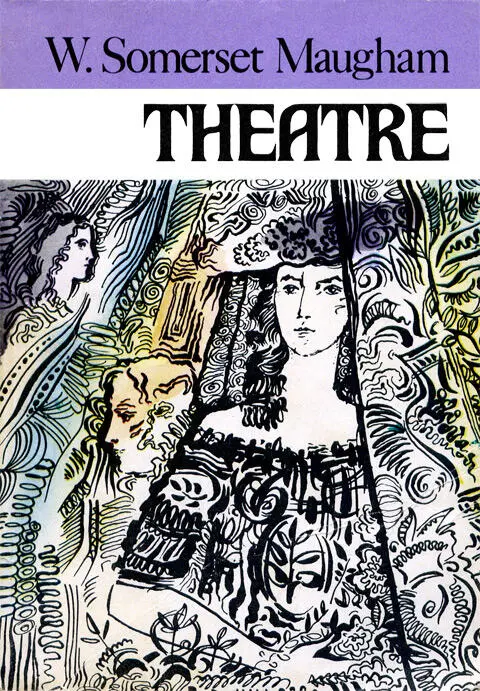
- Название:Theatre
- Автор:
- Жанр:
- Год:неизвестен
- ISBN:нет данных
- Рейтинг книги:3 / 5. Голосов: 2
-
Избранное:Добавить в избранное
- Отзывы:
-
Ваша оценка:
Theatre: краткое содержание, описание и аннотация
Предлагаем к чтению аннотацию, описание, краткое содержание или предисловие (зависит от того, что написал сам автор книги «Theatre»). Если вы не нашли необходимую информацию о книге — напишите в комментариях, мы постараемся отыскать её.
is both a tribute to a world from which he had retired and a persuasive testimony to his enthusiasm for drama and the stage.
Theatre — читать онлайн бесплатно полную книгу (весь текст) целиком
Ниже представлен текст книги, разбитый по страницам. Система сохранения места последней прочитанной страницы, позволяет с удобством читать онлайн бесплатно книгу «Theatre», без необходимости каждый раз заново искать на чём Вы остановились. Поставьте закладку, и сможете в любой момент перейти на страницу, на которой закончили чтение.
Интервал:
Закладка:
‘Will you really?’ his voice sounded eager. He had a pleasant voice. ‘When?’
She did not feel at all like going to bed that afternoon.
‘Today.’
‘O.K. I’ll get away from the office. Half-past four? 138, Tavistock Square.’
It was nice of him to have suggested that. He might so easily have mentioned some fashionable place where people would stare at her. It proved that he didn’t just want to be seen with her.
She took a taxi to Tavistock Square. She was pleased with herself. She was doing a good action. It would be wonderful for him in after years to be able to tell his wife and children that Julia Lambert had been to tea with him when he was just a little insignificant clerk in an accountant’s office. And she had been so simple and so natural. No one to hear her prattling away would have guessed that she was the greatest actress in England. And if they didn’t believe him he’d have her photograph to prove it, signed yours sincerely. He’d laugh and say that of course if he hadn’t been such a kid he’d never have had the cheek to ask her.
When she arrived at the house and had paid off the taxi she suddenly remembered that she did not know his name and when the maid answered the door would not know whom to ask for. But on looking for the bell she noticed that there were eight of them, four rows of two, and by the side of each was a card or a name written in ink on a piece of paper. It was an old house that had been divided up into flats. She began looking, rather hopelessly, at the names wondering whether one of them would recall something, when the door opened and he stood before her.
‘I saw you drive up and I ran down. I’m afraid I’m on the third floor. I hope you don’t mind.’
‘Of course not.’
She climbed the uncarpeted stairs. She was a trifle out of breath when she came to the third landing. He had skipped up eagerly, like a young goat, she thought, and she had not liked to suggest that she would prefer to go more leisurely. The room into which he led her was fairly large, but dingily furnished. On the table was a plate of cakes and two cups, a sugar basin and a milk-jug. The crockery was of the cheapest sort.
‘Take a pew,’ he said. ‘The water’s just on the boil. I’ll only be a minute. I’ve got a gas-ring in the bathroom.’
He left her and she looked about.
‘Poor lamb, he must be as poor as a church mouse.’
The room reminded her very much of some of the lodgings she had lived in when she was first on the stage. She noticed the pathetic attempts he had made to conceal the fact that it was a bedroom as well as a sitting-room. The divan against the wall was evidently his bed at night. The years slipped away from her in fancy and she felt strangely young again. What fun they had had in rooms very like that and how they had enjoyed the fantastic meals thay had had, things in paper bags and eggs and bacon fried on the gas-ring! He came in with the tea in a brown pot. She ate a square sponge-cake with pink icing on it. That was a thing she had not done for years. The Ceylon tea, very strong, with milk and sugar in it, took her back to days she thought she had forgotten. She saw herself as a young, obscure, struggling actress. It was rather delicious. It needed a gesture, but she could only think of one: she took off her hat and gave her head a shake.
They talked. He seemed shy, much shyer than he had seemed over the telephone; well, that was not to be wondered at, now she was there he must be rather overcome, and she set herself to put him at his ease. He told her that his parents lived at Highgate, his father was a solicitor, and he had lived there too, but he wanted to be his own master and now in the last year of his articles he had broken away and taken this tiny flat. He was working for his final examination. They talked of the theatre. He had seen her in every play she had acted in since he was twelve years old. He told her that once when he was fourteen he had stood outside the stage door after a matinée and when she came out had asked her to sign her name in his autograph-book. He was sweet with his blue eyes and pale brown hair. It was a pity he plastered it down like that. He had a white skin and rather a high colour; she wondered if he was consumptive. Although his clothes were cheap he wore them well, she liked that, and he looked incredibly clean.
She asked him why he had chosen Tavistock Square. It was central, he explained, and he liked the trees. It was quite nice when you looked out of the window. She got up to look, that would be a good way to make a move, then she would put on her hat and say good-bye to him.
‘Yes, it is rather charming, isn’t it. It’s so London; it gives one a sort of jolly feeling.’
She turned to him, standing by her side, as she said this. He put his arm round her waist and kissed her full on the lips. No woman was ever more surprised in her life. She was so taken aback that she never thought of doing anything. His lips were soft and there was a perfume of youth about him which was really rather delightful. But what he was doing was preposterous. He was forcing her lips apart with the tip of his tongue and now he had both arms round her. She did not feel angry, she did not feel inclined to laugh, she did not know what she felt. And now she had a notion that he was gently drawing her along, his lips still pressing hers, she felt quite distinctly the glow of his body, it was as though there was a furnace inside him, it was really remarkable; and then she found herself laid on the divan and he was beside her, kissing her mouth and her neck and her cheeks and her eyes. Julia felt a strange pang in her heart. She took his head in her hands and kissed his lips.
A few minutes later she was standing at the chimney-piece, in front of the looking-glass, making herself tidy.
‘Look at my hair.’
He handed her a comb and she ran it through. Then she put on her hat. He was standing just behind her, and over her shoulder she saw his face with those eager blue eyes and a faint smile in them.
‘And I thought you were such a shy young man,’ she said to his reflection. He chuckled.
‘When am I going to see you again?’
‘Do you want to see me again?’
‘Rather.’
She thought rapidly. It was too absurd, of course she had no intention of seeing him again, it was stupid of her to have let him behave like that, but it was just as well to temporize. He might be tiresome if she told him that the incident would have no sequel.
‘I’ll ring up one of these days.’
‘Swear.’
‘On my honour.’
‘Don’t be too long.’
He insisted on coming down stairs with her and putting her into a cab. She had wanted to go down alone, so that she could have a look at the cards attached to the bells on the lintel.
‘Damn it all, I ought at least to know his name.’
But he gave her no chance. When the taxi drove off she sank into one corner of it and gurgled with laughter.
‘Raped, my dear. Practically raped. At my time of life. And without so much as a by your leave. Treated me like a tart. Eighteenth-century comedy, that’s what it is. I might have been a waiting-maid. In a hoop, with those funny puffy things—what the devil are they called?—that they wore to emphasize their hips, an apron and a scarf round me neck.’ Then with vague memories of Farquhar and Goldsmith she invented the dialogue. ‘La, sir, ’tis shame to take advantage of a poor country girl. What would Mrs Abigail, her ladyship’s woman, say an she knew her ladyship’s brother had ravished me of the most precious treasure a young woman in my station of life can possess, videlicet her innocence. Fie, o fie, sir.’
When Julia got home the masseuse was already waiting for her. Miss Phillips and Evie were having a chat.
Читать дальшеИнтервал:
Закладка:
Похожие книги на «Theatre»
Представляем Вашему вниманию похожие книги на «Theatre» списком для выбора. Мы отобрали схожую по названию и смыслу литературу в надежде предоставить читателям больше вариантов отыскать новые, интересные, ещё непрочитанные произведения.








Обсуждение, отзывы о книге «Theatre» и просто собственные мнения читателей. Оставьте ваши комментарии, напишите, что Вы думаете о произведении, его смысле или главных героях. Укажите что конкретно понравилось, а что нет, и почему Вы так считаете.