William Maugham - Theatre
Здесь есть возможность читать онлайн «William Maugham - Theatre» весь текст электронной книги совершенно бесплатно (целиком полную версию без сокращений). В некоторых случаях можно слушать аудио, скачать через торрент в формате fb2 и присутствует краткое содержание. Жанр: Классическая проза, на английском языке. Описание произведения, (предисловие) а так же отзывы посетителей доступны на портале библиотеки ЛибКат.
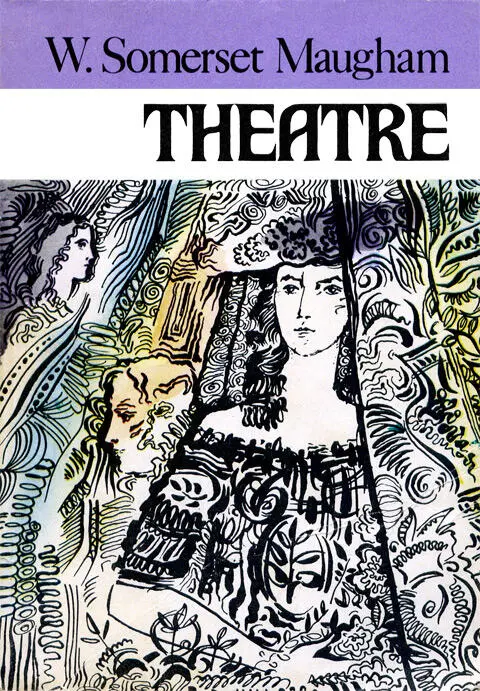
- Название:Theatre
- Автор:
- Жанр:
- Год:неизвестен
- ISBN:нет данных
- Рейтинг книги:3 / 5. Голосов: 2
-
Избранное:Добавить в избранное
- Отзывы:
-
Ваша оценка:
Theatre: краткое содержание, описание и аннотация
Предлагаем к чтению аннотацию, описание, краткое содержание или предисловие (зависит от того, что написал сам автор книги «Theatre»). Если вы не нашли необходимую информацию о книге — напишите в комментариях, мы постараемся отыскать её.
is both a tribute to a world from which he had retired and a persuasive testimony to his enthusiasm for drama and the stage.
Theatre — читать онлайн бесплатно полную книгу (весь текст) целиком
Ниже представлен текст книги, разбитый по страницам. Система сохранения места последней прочитанной страницы, позволяет с удобством читать онлайн бесплатно книгу «Theatre», без необходимости каждый раз заново искать на чём Вы остановились. Поставьте закладку, и сможете в любой момент перейти на страницу, на которой закончили чтение.
Интервал:
Закладка:
‘You’re in love with Michael, aren’t you?’
She gave a little nod. She tightened her lips as though she were trying to control herself, but the tears rolled down her cheeks.
‘There’s no chance for me at all?’ He waited for some answer from her, but she gave none, she raised her hand to her mouth and seemed to bite a nail, and still she stared at him with those streaming eyes. ‘Don’t you know what torture it is to go on seeing you? D’you want me to go on seeing you?’
Again she gave a little nod.
‘Clara’s making me scenes about you. She’s found out I’m in love with you. It’s only common sense that we shouldn’t see one another any more.’
This time Julia slightly shook her head. She gave a sob. She leant back in the chair and turned her head aside. Her whole body seemed to express the hopelessness of her grief. Flesh and blood couldn’t stand it. Charles stepped forward and sinking to his knees took that broken woebegone body in his arms.
‘For God’s sake don’t look so unhappy. I can’t bear it. Oh, Julia, Julia, I love you so much, I can’t make you so miserable. I’ll accept anything. I’ll make no demands on you.’
She turned her tear-stained face to him (‘God, what a sight I must look now’) and gave him her lips. He kissed her tenderly. It was the first time he had ever kissed her.
‘I don’t want to lose you,’ she muttered huskily.
‘Darling, darling!’
‘It’ll be just as it was before?’
‘Just.’
She gave a deep sigh of contentment and for a minute or two rested in his arms. When he went away she got up and looked in the glass.
‘You rotten bitch,’ she said to herself.
But she giggled as though she were not in the least ashamed and then went into the bathroom to wash her face and eyes. She felt wonderfully exhilarated. She heard Michael come in and called out to him.
‘Michael, look at that miniature Charles has just given me. It’s on the chimney-piece. Are those diamonds or paste?’
Julia was somewhat nervous when Lady Charles left her husband. She threatened to bring proceedings for divorce, and Julia did not at all like the idea of appearing as intervener. For two or three weeks she was very jittery. She decided to say nothing to Michael till it was necessary, and she was glad she had not, for in due course it appeared that the threats had been made only to extract more substantial alimony from the innocent husband. Julia managed Charles with wonderful skill. It was understood between them that her great love for Michael made any close relation between them out of the question, but so far as the rest was concerned he was everything to her, her friend, her adviser, her confidant, the man she could rely on in any emergency or go to for comfort in any disappointment. It was a little more difficult when Charles, with his fine sensitiveness, saw that she was no longer in love with Michael. Then Julia had to exercise a great deal of tact. It was not that she had any scruples about being his mistress; if he had been an actor who loved her so much and had loved her so long she would not have minded popping into bed with him out of sheer good nature; but she just did not fancy him. She was very fond of him, but he was so elegant, so well-bred, so cultured, she could not think of him as a lover. It would be like going to bed with an objet d’art. And his love of art filled her with a faint derision; after all she was a creator, when all was said and done he was only the public. He wished her to elope with him. They would buy a villa at Sorrento on the bay of Naples, with a large garden, and they would have a schooner so that they could spend long days on the beautiful wine-coloured sea. Love and beauty and art; the world well lost.
‘The damned fool,’ she thought. ‘As if I’d give up my career to bury myself in some hole in Italy!’
She persuaded him that she had a duty to Michael, and then there was the baby; she couldn’t let him grow up with the burden on his young life that his mother was a bad woman. Orange trees or no orange trees, she would never have a moment’s peace in that beautiful Italian villa if she was tortured by the thought of Michael’s unhappiness and her baby being looked after by strangers. One couldn’t only think of oneself, could one? One had to think of others too. She was very sweet and womanly. She sometimes asked Charles why he did not arrange a divorce with his wife and marry some nice woman. She could not bear the thought of his wasting his life over her. He told her that she was the only woman he had ever loved and that he must go on loving her till the end.
‘It seems so sad,’ said Julia.
All the same she kept her eyes open, and if she noticed that any woman had predatory intentions on Charles she took care to queer her pitch. She did not hesitate if the danger seemed to warrant it to show herself extremely jealous. It had been long agreed, with all the delicacy that might be expected from his good breeding and Julia’s good heart, in no definite words, but with guarded hints and remote allusiveness, that if anything happened to Michael, Lady Charles should somehow or other be disposed of and they would then marry. But Michael had perfect health.
On this occasion Julia had much enjoyed lunching at Hill Street. The party had been very grand. Julia had never encouraged Charles to entertain any of the actors or authors he sometimes came across, and she was the only person there who had ever had to earn a living. She had sat between an old, fat, bald and loquacious Cabinet Minister who took a great deal of trouble to entertain her, and a young Duke of Westreys who looked like a stable-boy and who flattered himself that he knew French slang better than a Frenchman. When he discovered that Julia spoke French he insisted on conversing with her in that language. After luncheon she was persuaded to recite a tirade from Phèdre as it was done at the Comédie Française and the same tirade as an English student at the Royal Academy of Dramatic Art would deliver it. She made the company laugh very much and came away from the party flushed with success. It was a fine bright day and she made up her mind to walk from Hill Street to Stanhope Place. A good many people recognized her as she threaded her way through the crowd in Oxford Street, and though she looked straight ahead of her she was conscious of their glances.
‘What a hell of a nuisance it is that one can’t go anywhere without people staring at one.’
She slackened her pace a little. It certainly was a beautiful day.
She let herself into her house with a latch-key and as she got in heard the telephone ringing. Without thinking she took up the receiver.
‘Yes?’
She generally disguised her voice when she answered, but for once forgot to.
‘Miss Lambert?’
‘I don’t know if Miss Lambert’s in. Who is it please?’ she asked, assuming quickly a cockney accent.
The monosyllable had betrayed her. A chuckle travelled over the wire.
‘I only wanted to thank you for writing to me. You know you needn’t have troubled. It was so nice of you to ask me to lunch, I thought I’d like to send you a few flowers.’
The sound of his voice and the words told her who it was. It was the blushing young man whose name she did not know. Even now, though she had looked at his card, she could not remember it. The only thing that had struck her was that he lived in Tavistock Square.
‘It was very sweet of you,’ she answered in her own voice.
‘I suppose you wouldn’t come to tea with me one day, would you?’
The nerve of it! She wouldn’t go to tea with a duchess; he was treating her like a chorus girl. It was rather funny when you came to think of it.
‘I don’t know why not.’
Читать дальшеИнтервал:
Закладка:
Похожие книги на «Theatre»
Представляем Вашему вниманию похожие книги на «Theatre» списком для выбора. Мы отобрали схожую по названию и смыслу литературу в надежде предоставить читателям больше вариантов отыскать новые, интересные, ещё непрочитанные произведения.









Обсуждение, отзывы о книге «Theatre» и просто собственные мнения читателей. Оставьте ваши комментарии, напишите, что Вы думаете о произведении, его смысле или главных героях. Укажите что конкретно понравилось, а что нет, и почему Вы так считаете.