Jerome Jerome - Paul Kelver
Здесь есть возможность читать онлайн «Jerome Jerome - Paul Kelver» весь текст электронной книги совершенно бесплатно (целиком полную версию без сокращений). В некоторых случаях можно слушать аудио, скачать через торрент в формате fb2 и присутствует краткое содержание. Город: New York, Год выпуска: 1902, Издательство: Dodd, Mead & Company, Жанр: Классическая проза, на английском языке. Описание произведения, (предисловие) а так же отзывы посетителей доступны на портале библиотеки ЛибКат.
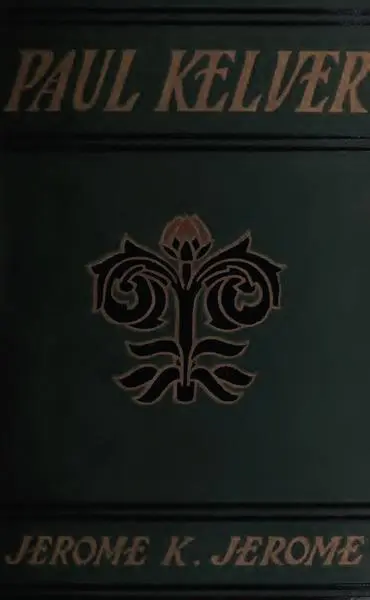
- Название:Paul Kelver
- Автор:
- Издательство:Dodd, Mead & Company
- Жанр:
- Год:1902
- Город:New York
- ISBN:нет данных
- Рейтинг книги:3 / 5. Голосов: 1
-
Избранное:Добавить в избранное
- Отзывы:
-
Ваша оценка:
Paul Kelver: краткое содержание, описание и аннотация
Предлагаем к чтению аннотацию, описание, краткое содержание или предисловие (зависит от того, что написал сам автор книги «Paul Kelver»). Если вы не нашли необходимую информацию о книге — напишите в комментариях, мы постараемся отыскать её.
Paul Kelver — читать онлайн бесплатно полную книгу (весь текст) целиком
Ниже представлен текст книги, разбитый по страницам. Система сохранения места последней прочитанной страницы, позволяет с удобством читать онлайн бесплатно книгу «Paul Kelver», без необходимости каждый раз заново искать на чём Вы остановились. Поставьте закладку, и сможете в любой момент перейти на страницу, на которой закончили чтение.
Интервал:
Закладка:
“But the innocent people, lured by your fine promises,” I ventured once to suggest to him, “the widows and the orphans?”
“My dear lad,” he said, with a laugh, laying his fat hand upon my shoulder, “I remember one of your widows writing me a pathetic letter about some shares she had taken in a Silver Company of mine. Lord knows where the mine is now—somewhere in Spain, I think. It looked as though all her savings were gone. She had an only son, and it was nearly all they possessed in the world, etc., etc.—you know the sort of thing. Well, I did what I've often been numskull enough to do in similar cases, wrote and offered to buy her out at par. A week later she answered, thanking me, but saying it did not matter. There had occurred a momentary rise, and she had sold out at a profit—to her own brother-in-law, as I discovered, happening to come across the transfers. You can find widows and orphans round the Monte Carlo card tables, if you like to look for them; they are no more deserving of consideration than the rest of the crowd. Besides, if it comes to that, I'm an orphan myself;” and he laughed again, one of his deep, hearty, honest laughs. No one ever possessed a laugh more suggestive in its every cadence of simple, transparent honesty. He used to say himself it was worth thousands to him.
Better from the Moralists' point of view had such a man been an out-and-out rogue. Then might one have pointed, crying: “Behold: Dishonesty, as you will observe in the person of our awful example, to be hated, needs but to be seen.” But the duty of the Chronicler is to bear witness to what he knows, leaving Truth with the whole case before her to sum up and direct the verdict. In the City, old Hasluck had a bad reputation and deserved it; in Stoke-Newington—then a green suburb, containing many fine old houses, standing in great wooded gardens—he was loved and respected. In his business, he was a man void of all moral sense, without bowels of compassion for any living thing; in retirement, a man with a strong sense of duty and a fine regard for the rights and feelings of others, never happier than when planning to help or give pleasure. In his office, he would have robbed his own mother. At home, he would have spent his last penny to add to her happiness or comfort. I make no attempt to explain. I only know that such men do exist, and that Hasluck was one of them. One avoids difficulties by dismissing them as a product of our curiously complex civilisation—a convenient phrase; let us hope the recording angel may be equally impressed by it.
Casting about for some reason of excuse to myself for my liking of him, I hit upon the expedient of regarding him as a modern Robin Hood, whom we are taught to admire without shame, a Robin Hood up to date, adapted to the changed conditions of modern environment; making his living relieving the rich; taking pleasure relieving the poor.
“What will you do?” asked my mother.
“I shall have to give up the office,” answered my father. “Without him there's not enough to keep it going. He was quite good-tempered about the matter—offered to divide the work, letting me retain the straightforward portion for whatever that might be worth. But I declined. Now I know, I feel I would rather have nothing more to do with him.”
“I think you were quite right,” agreed my mother.
“What I blame myself for,” said my father, “is that I didn't see through him before. Of course he has been making a mere tool of me from the beginning. I ought to have seen through him. Why didn't I?”
They discussed the future, or, rather, my father discussed, my mother listening in silence, stealing a puzzled look at him from time to time, as though there were something she could not understand.
He would take a situation in the City. One had been offered him. It might sound poor, but it would be a steady income on which we must contrive to live. The little money he had saved must be kept for investments—nothing speculative—judicious “dealings,” by means of which a cool, clear-headed man could soon accumulate capital. Here the training acquired by working for old Hasluck would serve him well. One man my father knew—quite a dull, commonplace man—starting a few years ago with only a few hundreds, was now worth tens of thousands. Foresight was the necessary qualification. You watched the “tendency” of things. So often had my father said to himself: “This is going to be a big thing. That other, it is no good,” and in every instance his prognostications had been verified. He had “felt it;” some men had that gift. Now was the time to use it for practical purposes.
“Here,” said my father, breaking off, and casting an approving eye upon the surrounding scenery, “would be a pleasant place to end one's days. The house you had was very pretty and you liked it. We might enlarge it, the drawing-room might be thrown out—perhaps another wing.” I felt that our good fortune as from this day was at last established.
But my mother had been listening with growing impatience, her puzzled glances giving place gradually to flashes of anger; and now she turned her face full upon him, her question written plainly thereon, demanding answer.
Some idea of it I had even then, watching her; and since I have come to read it word for word: “But that woman—that woman that loves you, that you love. Ah, I know—why do you play with me? She is rich. With her your life will be smooth. And the boy—it will be better far for him. Cannot you three wait a little longer? What more can I do? Cannot you see that I am surely dying—dying as quickly as I can—dying as that poor creature your friend once told us of; knowing it was the only thing she could do for those she loved. Be honest with me: I am no longer jealous. All that is past: a man is ever younger than a woman, and a man changes. I do not blame you. It is for the best. She and I have talked; it is far better so. Only be honest with me, or at least silent. Will you not honour me enough for even that?”
My father did not answer, having that to speak of that put my mother's question out of her mind for all time; so that until the end no word concerning that other woman passed again between them. Twenty years later, nearly, I myself happened to meet her, and then long physical suffering had chased the wantonness away for ever from the pain-worn mouth; but in that hour of waning voices, as some trouble of the fretful day when evening falls, so she faded from their life; and if even the remembrance of her returned at times to either of them, I think it must have been in those moments when, for no seeming reason, shyly their hands sought one another.
So the truth of the sad ado—how far my mother's suspicions wronged my father; for the eye of jealousy (and what loving woman ever lived that was not jealous?) has its optic nerve terminating not in the brain but in the heart, which was not constructed for the reception of true vision—I never knew. Later, long after the curtain of green earth had been rolled down upon the players, I spoke once on the matter with Doctor Hal, who must have seen something of the play and with more understanding eyes than mine, and who thereupon delivered to me a short lecture on life in general, a performance at which he excelled.
“Flee from temptation and pray that you may be delivered from evil,” shouted the Doctor—(his was not the Socratic method)—“but remember this: that as sure as the sparks fly upward there will come a time when, however fast you run, you will be overtaken—cornered—no one to deliver you but yourself—the gods sitting round interested. It is a grim fight, for the Thing, you may be sure, has chosen its right moment. And every woman in the world will sympathise with you and be just to you, not even despising you should you be overcome; for however they may talk, every woman in the world knows that male and female cannot be judged by the same standard. To woman, Nature and the Law speak with one voice: 'Sin not, lest you be cursed of your sex!' It is no law of man: it is the law of creation. When the woman sins, she sins not only against her conscience, but against her every instinct. But to the man Nature whispers: 'Yield.' It is the Law alone that holds him back. Therefore every woman in the world, knowing this, will be just to you—every woman in the world but one—the woman that loves you. From her, hope for no sympathy, hope for no justice.”
Читать дальшеИнтервал:
Закладка:
Похожие книги на «Paul Kelver»
Представляем Вашему вниманию похожие книги на «Paul Kelver» списком для выбора. Мы отобрали схожую по названию и смыслу литературу в надежде предоставить читателям больше вариантов отыскать новые, интересные, ещё непрочитанные произведения.





Обсуждение, отзывы о книге «Paul Kelver» и просто собственные мнения читателей. Оставьте ваши комментарии, напишите, что Вы думаете о произведении, его смысле или главных героях. Укажите что конкретно понравилось, а что нет, и почему Вы так считаете.