Jerome Jerome - Paul Kelver
Здесь есть возможность читать онлайн «Jerome Jerome - Paul Kelver» весь текст электронной книги совершенно бесплатно (целиком полную версию без сокращений). В некоторых случаях можно слушать аудио, скачать через торрент в формате fb2 и присутствует краткое содержание. Город: New York, Год выпуска: 1902, Издательство: Dodd, Mead & Company, Жанр: Классическая проза, на английском языке. Описание произведения, (предисловие) а так же отзывы посетителей доступны на портале библиотеки ЛибКат.
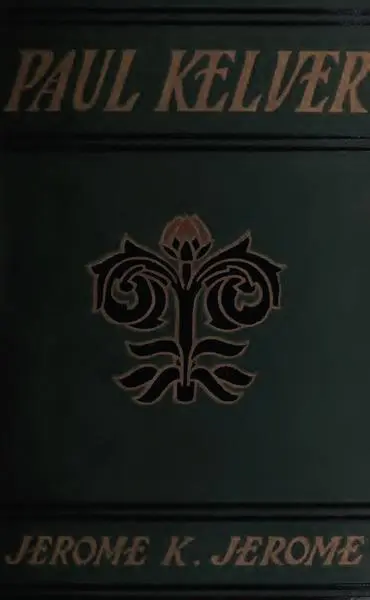
- Название:Paul Kelver
- Автор:
- Издательство:Dodd, Mead & Company
- Жанр:
- Год:1902
- Город:New York
- ISBN:нет данных
- Рейтинг книги:3 / 5. Голосов: 1
-
Избранное:Добавить в избранное
- Отзывы:
-
Ваша оценка:
Paul Kelver: краткое содержание, описание и аннотация
Предлагаем к чтению аннотацию, описание, краткое содержание или предисловие (зависит от того, что написал сам автор книги «Paul Kelver»). Если вы не нашли необходимую информацию о книге — напишите в комментариях, мы постараемся отыскать её.
Paul Kelver — читать онлайн бесплатно полную книгу (весь текст) целиком
Ниже представлен текст книги, разбитый по страницам. Система сохранения места последней прочитанной страницы, позволяет с удобством читать онлайн бесплатно книгу «Paul Kelver», без необходимости каждый раз заново искать на чём Вы остановились. Поставьте закладку, и сможете в любой момент перейти на страницу, на которой закончили чтение.
Интервал:
Закладка:
My mother did not allude again to the subject; but the very next afternoon she took me herself to a hall in the neighbourhood, where we saw a magic-lantern, followed by a conjurer. She had dressed herself in a prettier frock than she had worn for many a long day, and was brighter and gayer in herself than had lately been her wont, laughing and talking merrily. But I, nursing my wrongs, remained moody and sulky. At any other time such rare amusement would have overjoyed me; but the wonders of the great theatre that from other boys I had heard so much of, that from gaudy-coloured posters I had built up for myself, were floating vague and undefined before me in the air; and neither the open-mouthed sleeper, swallowing his endless chain of rats; nor even the live rabbit found in the stout old gentleman's hat—the last sort of person in whose hat one would have expected to find such a thing—could draw away my mind from the joy I had caught a glimpse of only to lose.
So we walked home through the muddy, darkening streets, speaking but little; and that night, waking—or rather half waking, as children do—I thought I saw a figure in white crouching at the foot of my bed. I must have gone to sleep again; and later, though I cannot say whether the intervening time was short or long, I opened my eyes to see it still there; and frightened, I cried out; and my mother rose from her knees.
She laughed, a curious broken laugh, in answer to my questions. “It was a silly dream I had,” she explained “I must have been thinking of the conjurer we saw. I dreamt that a wicked Magician had spirited you away from me. I could not find you and was all alone in the world.”
She put her arms around me, so tight as almost to hurt me. And thus we remained until again I must have fallen asleep.
It was towards the close of these same holidays that my mother and I called upon Mrs. Teidelmann in her great stone-built house at Clapton. She had sent a note round that morning, saying she was suffering from terrible headaches that quite took her senses away, so that she was unable to come out. She would be leaving England in a few days to travel. Would my mother come and see her, she would like to say good-bye to her before she went. My mother handed the letter across the table to my father.
“Of course you will go,” said my father. “Poor girl, I wonder what the cause can be. She used to be so free from everything of the kind.”
“Do you think it well for me to go?” said my mother. “What can she have to say to me?”
“Oh, just to say good-bye,” answered my father. “It would look so pointed not to go.”
It was a dull, sombre house without, but one entered through its commonplace door as through the weed-grown rock into Aladdin's cave. Old Teidelmann had been a great collector all his life, and his treasures, now scattered through a dozen galleries, were then heaped there in curious confusion. Pictures filled every inch of wall, stood propped against the wonderful old furniture, were even stretched unframed across the ceilings. Statues gleamed from every corner (a few of the statues were, I remember, the only things out of the entire collection that Mrs. Teidelmann kept for herself), carvings, embroideries, priceless china, miniatures framed in gems, illuminated missals and gorgeously bound books crowded the room. The ugly little thick-lipped man had surrounded himself with the beauty of every age, brought from every land. He himself must have been the only thing cheap and uninteresting to be found within his own walls; and now he lay shrivelled up in his coffin, under a monument by means of which an unknown cemetery became quite famous.
Instructions had been given that my mother was to be shown up into Mrs. Teidelmann's boudoir. She was lying on a sofa near the fire when we entered, asleep, dressed in a loose lace robe that fell away, showing her thin but snow-white arms, her rich dark hair falling loose about her. In sleep she looked less beautiful: harder and with a suggestion of coarseness about the face, of which at other times it showed no trace. My mother said she would wait, perhaps Mrs. Teidelmann would awake; and the servant, closing the door softly, left us alone with her.
An old French clock standing on the mantelpiece, a heart supported by Cupids, ticked with a muffled, soothing sound. My mother, choosing a chair by the window, sat with her eyes fixed on the sleeping woman's face, and it seemed to me—though this may have been but my fancy born of after-thought—that a faint smile relaxed for a moment the sleeping woman's pained, pressed lips. Neither I nor my mother spoke, the only sound in the room being the hushed ticking of the great gilt clock. Until the other woman after a few slight movements of unrest began to talk in her sleep.
Only confused murmurs escaped her at first, and then I heard her whisper my father's name. Very low—hardly more than breathed—were the words, but upon the silence each syllable struck clear and distinct: “Ah no, we must not. Luke, my darling.”
My mother rose swiftly from her chair, but she spoke in quite matter-of-fact tones.
“Go, Paul,” she said, “wait for me downstairs;” and noiselessly opening the door, she pushed me gently out, and closed it again behind me.
It was half an hour or more before she came down, and at once we left the house, letting ourselves out. All the way home my mother never once spoke, but walked as one in a dream with eyes that saw not. With her hand upon the lock of our gate she came back to life.
“You must say nothing, Paul, do you understand?” she said. “When people are delirious they use strange words that have no meaning. Do you understand, Paul; you must never breathe a word—never.”
I promised, and we entered the house; and from that day my mother's whole manner changed. Not another angry word ever again escaped her lips, never an angry flash lighted up again her eyes. Mrs. Teidelmann remained away three months. My father, of course, wrote to her often, for he was managing all her affairs. But my mother wrote to her also—though this my father, I do not think, knew—long letters that she would go away by herself to pen, writing them always in the twilight, close to the window.
“Why do you choose this time, just when it's getting dark, to write your letters,” my father would expostulate, when by chance he happened to look into the room. “Let me ring for the lamp, you will strain your eyes.” But my mother would always excuse herself, saying she had only a few lines to finish.
“I can think better in this light,” she would explain.
And when Mrs. Teidelmann returned, it was my mother who was the first to call upon her; before even my father knew that she was back. And from thence onward one might have thought them the closest of friends, my mother visiting her often, speaking of her to all in terms of praise and liking.
In this way peace returned unto the house, and my father was tender again in all his words and actions towards my mother, and my mother thoughtful as before of all his wants and whims, her voice soft and low, the sweet smile ever lurking around her lips as in the old days before this evil thing had come to dwell among us; and I might have forgotten it had ever cast its blight upon our life but that every day my mother grew feebler, the little ways that had seemed a part of her gone from her.
The summer came and went—that time in towns of panting days and stifling nights, when through the open window crawls to one's face the hot foul air, heavy with reeking odours drawn from a thousand streets; when lying awake one seems to hear the fitful breathing of the myriad mass around, as of some over-laboured beast too tired to even rest; and my mother moved about the house ever more listlessly.
“There's nothing really the matter with her,” said Dr. Hal, “only weakness. It is the place. Cannot you get her away from it?”
Читать дальшеИнтервал:
Закладка:
Похожие книги на «Paul Kelver»
Представляем Вашему вниманию похожие книги на «Paul Kelver» списком для выбора. Мы отобрали схожую по названию и смыслу литературу в надежде предоставить читателям больше вариантов отыскать новые, интересные, ещё непрочитанные произведения.










Обсуждение, отзывы о книге «Paul Kelver» и просто собственные мнения читателей. Оставьте ваши комментарии, напишите, что Вы думаете о произведении, его смысле или главных героях. Укажите что конкретно понравилось, а что нет, и почему Вы так считаете.