Jerome Jerome - Paul Kelver
Здесь есть возможность читать онлайн «Jerome Jerome - Paul Kelver» весь текст электронной книги совершенно бесплатно (целиком полную версию без сокращений). В некоторых случаях можно слушать аудио, скачать через торрент в формате fb2 и присутствует краткое содержание. Город: New York, Год выпуска: 1902, Издательство: Dodd, Mead & Company, Жанр: Классическая проза, на английском языке. Описание произведения, (предисловие) а так же отзывы посетителей доступны на портале библиотеки ЛибКат.
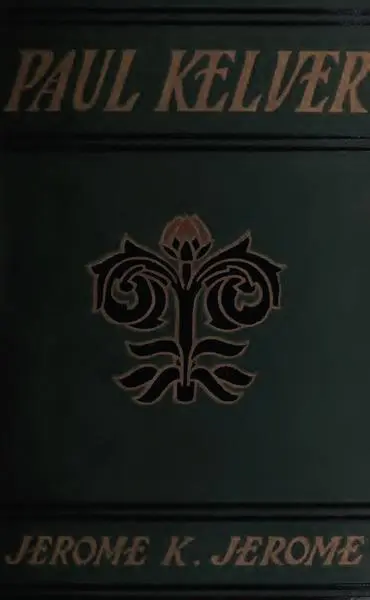
- Название:Paul Kelver
- Автор:
- Издательство:Dodd, Mead & Company
- Жанр:
- Год:1902
- Город:New York
- ISBN:нет данных
- Рейтинг книги:3 / 5. Голосов: 1
-
Избранное:Добавить в избранное
- Отзывы:
-
Ваша оценка:
Paul Kelver: краткое содержание, описание и аннотация
Предлагаем к чтению аннотацию, описание, краткое содержание или предисловие (зависит от того, что написал сам автор книги «Paul Kelver»). Если вы не нашли необходимую информацию о книге — напишите в комментариях, мы постараемся отыскать её.
Paul Kelver — читать онлайн бесплатно полную книгу (весь текст) целиком
Ниже представлен текст книги, разбитый по страницам. Система сохранения места последней прочитанной страницы, позволяет с удобством читать онлайн бесплатно книгу «Paul Kelver», без необходимости каждый раз заново искать на чём Вы остановились. Поставьте закладку, и сможете в любой момент перейти на страницу, на которой закончили чтение.
Интервал:
Закладка:
“I cannot leave myself,” said my father, “just yet; but there is no reason why you and the boy should not take a holiday. This year I can afford it, and later I might possibly join you.”
My mother consented, as she did to all things now, and so it came about that again of afternoons we climbed—though more slowly and with many pauses—the steep path to the ruined tower old Jacob in his happy foolishness had built upon the headland, rested once again upon its topmost platform, sheltered from the wind that ever blew about its crumbling walls, saw once more the distant mountains, faint like spectres, and the silent ships that came and vanished, and about our feet the pleasant farm lands, and the grave, sweet river.
We had taken lodgings in the village: smaller now it seemed than previously; but wonderful its sunny calm, after the turmoil of the fierce dark streets. Mrs. Fursey was there still, but quite another than the Mrs. Fursey of my remembrance, a still angular but cheery dame, bent no longer on suppressing me, but rather on drawing me out before admiring neighbours, as one saying: “The material was unpromising, as you know. There were times when I almost despaired. But with patience, and—may I say, a natural gift that way—you see what can be accomplished!” And Anna, now a buxom wife and mother, with an uncontrollable desire to fall upon and kiss me at most unexpected moments, necessitating a never sleeping watchfulness on my part, and a choosing of positions affording means of ready retreat. And old Chumbley, still cobbling shoes in his tiny cave. On the bench before him in a row they sat and watched him while he tapped and tapped and hammered: pert little shoes piping “Be quick, be quick, we want to be toddling. You seem to have no idea, my good man, how much toddling there is to be done.” Dapper boots, sighing: “Oh, please make haste, we are waiting to dance and to strut. Jack walks in the lane, Jill waits by the gate. Oh, deary, how slowly he taps.” Stout sober boots, saying: “As soon as you can, old friend. Remember we've work to do.” Flat-footed old boots, rusty and limp, mumbling: “We haven't much time, Mr. Chumbley. Just a patch, that is all, we haven't much further to go.” And old Joe, still peddling his pack, with the help of the same old jokes. And Tom Pinfold, still puzzled and scratching his head, the rejected fish still hanging by its tail from his expostulating hand; one might almost have imagined it the same fish. Grown-up folks had changed but little. Only the foolish children had been playing tricks; parties I had left mere sucking babes now swaggering in pinafore or knickerbocker; children I had known now mincing it as men and women; such affectation annoyed me.
One afternoon—it was towards the close of the last week of our stay—my mother and I had climbed, as was so often our wont, to the upper platform of old Jacob's tower. My mother leant upon the parapet, her eyes fixed dreamingly upon the distant mountains, and a smile crept to her lips.
“What are you thinking of?” I asked.
“Oh, only of things that happened over there”—she nodded her head towards the distant hills as to some old crony with whom she shares secrets—“when I was a girl.”
“You lived there, long ago, didn't you, when you were young?” I asked. Boys do not always stop to consider whether their questions might or might not be better expressed.
“You're very rude,” said my mother—it was long since a tone of her old self had rung from her in answer to any touch; “it was a very little while ago.”
Suddenly she raised her head and listened. Perhaps some twenty seconds she remained so with her lips parted, and then from the woods came a faint, long-drawn “Coo-ee.” We ran to the side of the tower commanding the pathway from the village, and waited until from among the dark pines my father emerged into the sunlight.
Seeing us, he shouted again and waved his stick, and from the light of his eyes and his gallant bearing, and the spring of his step across the heathery turf, we knew instinctively that trouble had come upon him. He always rose to meet it with that look and air. It was the old Norse blood in his veins, I suppose. So, one imagines, must those godless old Pirates have sprung to their feet when the North wind, loosed as a hawk from the leash, struck at the beaked prow.
We heard his quick step on the rickety stair, and the next moment he was between us, breathing a little hard, but laughing.
He stood for awhile beside my mother without speaking, both of them gazing at the distant hills among which, as my mother had explained, things had happened long ago. And maybe, “over there,” their memories met and looked upon each other with kind eyes.
“Do you remember,” said my father, “we climbed up here—it was the first walk we took together after coming here. We discussed our plans for the future, how we would retrieve our fortunes.”
“And the future,” answered my mother, “has a way of making plans for us instead.”
“It would seem so,” replied my father, with a laugh. “I am an unlucky beggar, Maggie. I dropped all your money as well as my own down that wretched mine.”
“It was the will—it was Fate, or whatever you call it,” said my mother. “You could not help that, Luke.”
“If only that damned pump hadn't jambed,” said my father.
“Do you remember that Mrs. Tharand?” asked my mother.
“Yes, what of her?”
“A worldly woman, I always thought her. She called on me the morning we were leaving; I don't think you saw her. 'I've been through more worries than you would think, to look at me,' she said to me, laughing. I've always remembered her words: 'and of all the troubles that come to us in this world, believe me, Mrs. Kelver, money troubles are the easiest to bear.'”
“I wish I could think so,” said my father.
“She rather irritated me at the time,” continued my mother. “I thought it one of those commonplaces with which we console ourselves for other people's misfortunes. But now I know she spoke the truth.”
There was silence between them for awhile. Then said my father in a cheery tone:
“I've broken with old Hasluck.”
“I thought you would be compelled to sooner or later,” answered my mother.
“Hasluck,” exclaimed my father, with sudden vehemence, “is little better than a thief; I told him so.”
“What did he say?” asked my mother.
“Laughed, and said that was better than some people.”
My father laughed himself.
I wish to do the memory of Noel Hasluck no injustice. Ever was he a kind friend to me; not only then, but in later years, when, having come to learn that kindness is rarer in the world than I had dreamt, I was glad of it. Added to which, if only for Barbara's sake, I would prefer to write of him throughout in terms of praise. Yet even were his good-tempered, thick-skinned ghost (and unless it were good-tempered and thick-skinned it would be no true ghost of old Noel Hasluck) to be reading over my shoulder the words as I write them down, I think it would agree with me—I do not think it would be offended with me (for ever in his life he was an admirer and a lover of the Truth, being one of those good fighters capable of respecting even his foe, his enemy, against whom from ten to four, occasionally a little later, he fought right valiantly) for saying that of all the men who go down into the City each day in a cab or 'bus or train, he was perhaps one of the most unprincipled: and whether that be saying much or little I leave to those with more knowledge to decide.
To do others, as it was his conviction, right or wrong, that they would do him if ever he gave them half a chance, was his notion of “business;” and in most of his transactions he was successful. “I play a game,” he would argue, “where cheating is the rule. Nine out of every ten men round the table are sharpers like myself, and the tenth man is a fool who has no business to be there. We prey upon each other, and the cutest of us is the winner.”
Читать дальшеИнтервал:
Закладка:
Похожие книги на «Paul Kelver»
Представляем Вашему вниманию похожие книги на «Paul Kelver» списком для выбора. Мы отобрали схожую по названию и смыслу литературу в надежде предоставить читателям больше вариантов отыскать новые, интересные, ещё непрочитанные произведения.






Обсуждение, отзывы о книге «Paul Kelver» и просто собственные мнения читателей. Оставьте ваши комментарии, напишите, что Вы думаете о произведении, его смысле или главных героях. Укажите что конкретно понравилось, а что нет, и почему Вы так считаете.