Jerome Jerome - Paul Kelver
Здесь есть возможность читать онлайн «Jerome Jerome - Paul Kelver» весь текст электронной книги совершенно бесплатно (целиком полную версию без сокращений). В некоторых случаях можно слушать аудио, скачать через торрент в формате fb2 и присутствует краткое содержание. Город: New York, Год выпуска: 1902, Издательство: Dodd, Mead & Company, Жанр: Классическая проза, на английском языке. Описание произведения, (предисловие) а так же отзывы посетителей доступны на портале библиотеки ЛибКат.
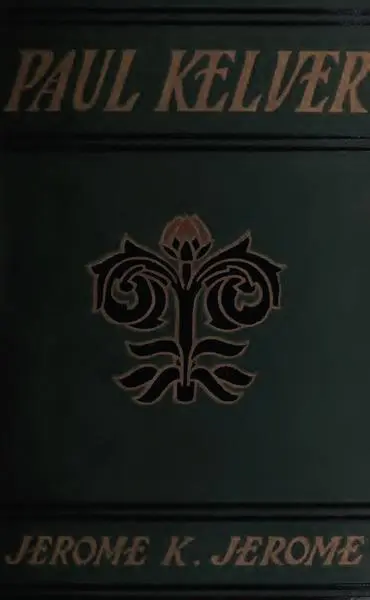
- Название:Paul Kelver
- Автор:
- Издательство:Dodd, Mead & Company
- Жанр:
- Год:1902
- Город:New York
- ISBN:нет данных
- Рейтинг книги:3 / 5. Голосов: 1
-
Избранное:Добавить в избранное
- Отзывы:
-
Ваша оценка:
Paul Kelver: краткое содержание, описание и аннотация
Предлагаем к чтению аннотацию, описание, краткое содержание или предисловие (зависит от того, что написал сам автор книги «Paul Kelver»). Если вы не нашли необходимую информацию о книге — напишите в комментариях, мы постараемся отыскать её.
Paul Kelver — читать онлайн бесплатно полную книгу (весь текст) целиком
Ниже представлен текст книги, разбитый по страницам. Система сохранения места последней прочитанной страницы, позволяет с удобством читать онлайн бесплатно книгу «Paul Kelver», без необходимости каждый раз заново искать на чём Вы остановились. Поставьте закладку, и сможете в любой момент перейти на страницу, на которой закончили чтение.
Интервал:
Закладка:
Old Waterhouse thought that here at last was reformation. “Come, Brian,” he cried, rubbing his long thin hands together with delight, “after all, you're not such a fool as you pretend.”
“Never said I was,” muttered Dan to himself, with a backward glance of regret towards his lost seclusion; and before the day was out he had worked his way back to it again.
As we were going out together, old Waterhouse passed us on the stairs: “Haven't you any sense of shame, my boy?” he asked sorrowfully, laying his hand kindly on Dan's shoulder.
“Yes, sir,” answered Dan, with his frank smile; “plenty. It isn't yours, that's all.”
He was an excellent fighter. In the whole school of over two hundred boys, not half a dozen, and those only Upper Sixth boys—fellows who came in top hats with umbrellas, and who wouldn't out of regard to their own dignity—could have challenged him with any chance of success. Yet he fought very seldom, and then always in a bored, lazy fashion, as though he were doing it purely to oblige the other fellow.
One afternoon, just as we were about to enter Regent's Park by the wicket opposite Hanover Gate, a biggish boy, an errand boy carrying an empty basket, and supported by two smaller boys, barred our way.
“Can't come in here,” said the boy with the basket.
“Why not?” inquired Dan.
“'Cos if you do I shall kick you,” was the simple explanation.
Without a word Dan turned away, prepared to walk on to the next opening. The boy with the basket, evidently encouraged, followed us: “Now, I'm going to give you your coward's blow,” he said, stepping in front of us; “will you take it quietly?” It is a lonely way, the Outer Circle, on a winter's afternoon.
“I'll tell you afterwards,” said Dan, stopping short.
The boy gave him a slight slap on the cheek. It could not have hurt, but the indignity, of course, was great. No boy of honour, according to our code, could have accepted it without retaliating.
“Is that all?” asked Dan.
“That's all—for the present,” replied the boy with the basket.
“Good-bye,” said Dan, and walked on.
“Glad he didn't insist on fighting,” remarked Dan, cheerfully, as we proceeded; “I'm going to a party tonight.”
Yet on another occasion, in a street off Lisson Grove, he insisted on fighting a young rough half again his own weight, who, brushing up against him, had knocked his hat off into the mud.
“I wouldn't have said anything about his knocking it off,” explained Dan afterwards, tenderly brushing the poor bruised thing with his coat sleeve, “if he hadn't kicked it.”
On another occasion I remember, three or four of us, Dan among the number, were on our way one broiling summer's afternoon to Hadley Woods. As we turned off from the highroad just beyond Barnet and struck into the fields, Dan drew from his pocket an enormous juicy-looking pear.
“Where did you get that from?” inquired one, Dudley.
“From that big greengrocer's opposite Barnet Church,” answered Dan. “Have a bit?”
“You told me you hadn't any more money,” retorted Dudley, in reproachful tones.
“No more I had,” replied Dan, holding out a tempting slice at the end of his pocket-knife.
“You must have had some, or you couldn't have bought that pear,” argued Dudley, accepting.
“Didn't buy it.”
“Do you mean to say you stole it?”
“Yes.”
“You're a thief,” denounced Dudley, wiping his mouth and throwing away a pip.
“I know it. So are you.”
“No, I'm not.”
“What's the good of talking nonsense. You robbed an orchard only last Wednesday at Mill Hill, and gave yourself the stomach-ache.”
“That isn't stealing.”
“What is it?”
“It isn't the same thing.”
“What's the difference?”
And nothing could make Dan comprehend the difference. “Stealing is stealing,” he would have it, “whether you take it off a tree or out of a basket. You're a thief, Dudley; so am I. Anybody else say a piece?”
The thermometer was at that point where morals become slack. We all had a piece; but we were all of us shocked at Dan, and told him so. It did not agitate him in the least.
To Dan I could speak my inmost thoughts, knowing he would understand me, and sometimes from him I received assistance and sometimes confusion. The yearly examination was approaching. My father and mother said nothing, but I knew how anxiously each of them awaited the result; my father, to see how much I had accomplished; my mother, how much I had endeavoured. I had worked hard, but was doubtful, knowing that prizes depend less upon what you know than upon what you can make others believe you know; which applies to prizes beyond those of school.
“Are you going in for anything, Dan?” I asked him. We were discussing the subject, crossing Primrose Hill, one bright June morning.
I knew the question absurd. I asked it of him because I wanted him to ask it of me.
“They're not giving away anything I particularly want,” murmured Dan, in his lazy drawl: looked at from that point of view, school prizes are, it must be confessed, not worth their cost.
“You're sweating yourself, young 'un, of course?” he asked next, as I expected.
“I mean to have a shot at the History,” I admitted. “Wish I was better at dates.”
“It's always two-thirds dates,” Dan assured me, to my discouragement. “Old Florret thinks you can't eat a potato until you know the date that chap Raleigh was born.”
“I've prayed so hard that I may win the History prize,” I explained to him. I never felt shy with Dan. He never laughed at me.
“You oughtn't to have done that,” he said. I stared. “It isn't fair to the other fellows. That won't be your winning the prize; that will be your getting it through favouritism.”
“But they can pray, too,” I reminded him.
“If you all pray for it,” answered Dan, “then it will go, not to the fellow that knows most history, but to the fellow that's prayed the hardest. That isn't old Florret's idea, I'm sure.”
“But we are told to pray for things we want,” I insisted.
“Beastly mean way of getting 'em,” retorted Dan. And no argument that came to me, neither then nor at any future time, brought him to right thinking on this point.
He would judge all matters for himself. In his opinion Achilles was a coward, not a hero.
“He ought to have told the Trojans that they couldn't hurt any part of him except his heel, and let them have a shot at that,” he argued; “King Arthur and all the rest of them with their magic swords, it wasn't playing the game. There's no pluck in fighting if you know you're bound to win. Beastly cads, I call them all.”
I won no prize that year. Oddly enough, Dan did, for arithmetic; the only subject studied in the Lower Fourth that interested him. He liked to see things coming right, he explained.
My father shut himself up with me for half an hour and examined me himself.
“It's very curious, Paul,” he said, “you seem to know a good deal.”
“They asked me all the things I didn't know. They seemed to do it on purpose,” I blurted out, and laid my head upon my arm. My father crossed the room and sat down beside me.
“Spud!” he said—it was a long time since he had called me by that childish nickname—“perhaps you are going to be with me, one of the unlucky ones.”
“Are you unlucky?” I asked.
“Invariably,” answered my father, rumpling his hair. “I don't know why. I try hard—I do the right thing, but it turns out wrong. It always does.”
“But I thought Mr. Hasluck was bringing us such good fortune,” I said, looking up in surprise. “We're getting on, aren't we?”
Читать дальшеИнтервал:
Закладка:
Похожие книги на «Paul Kelver»
Представляем Вашему вниманию похожие книги на «Paul Kelver» списком для выбора. Мы отобрали схожую по названию и смыслу литературу в надежде предоставить читателям больше вариантов отыскать новые, интересные, ещё непрочитанные произведения.








Обсуждение, отзывы о книге «Paul Kelver» и просто собственные мнения читателей. Оставьте ваши комментарии, напишите, что Вы думаете о произведении, его смысле или главных героях. Укажите что конкретно понравилось, а что нет, и почему Вы так считаете.