Jerome Jerome - Paul Kelver
Здесь есть возможность читать онлайн «Jerome Jerome - Paul Kelver» весь текст электронной книги совершенно бесплатно (целиком полную версию без сокращений). В некоторых случаях можно слушать аудио, скачать через торрент в формате fb2 и присутствует краткое содержание. Город: New York, Год выпуска: 1902, Издательство: Dodd, Mead & Company, Жанр: Классическая проза, на английском языке. Описание произведения, (предисловие) а так же отзывы посетителей доступны на портале библиотеки ЛибКат.
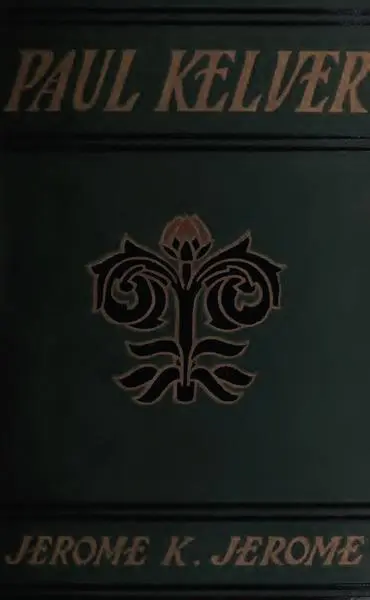
- Название:Paul Kelver
- Автор:
- Издательство:Dodd, Mead & Company
- Жанр:
- Год:1902
- Город:New York
- ISBN:нет данных
- Рейтинг книги:3 / 5. Голосов: 1
-
Избранное:Добавить в избранное
- Отзывы:
-
Ваша оценка:
Paul Kelver: краткое содержание, описание и аннотация
Предлагаем к чтению аннотацию, описание, краткое содержание или предисловие (зависит от того, что написал сам автор книги «Paul Kelver»). Если вы не нашли необходимую информацию о книге — напишите в комментариях, мы постараемся отыскать её.
Paul Kelver — читать онлайн бесплатно полную книгу (весь текст) целиком
Ниже представлен текст книги, разбитый по страницам. Система сохранения места последней прочитанной страницы, позволяет с удобством читать онлайн бесплатно книгу «Paul Kelver», без необходимости каждый раз заново искать на чём Вы остановились. Поставьте закладку, и сможете в любой момент перейти на страницу, на которой закончили чтение.
Интервал:
Закладка:
One night in a state of intoxication he walked over a gangway and was drowned. Our mutual friend, the confectioner, seeing me pass the window, came out to tell me so; and having heard, I walked on, heavy of heart, and pondering.
About his eternal destination there could be no question. The known facts precluded the least ray of hope. How could I be happy in heaven, supposing I eventually did succeed in slipping in, knowing that he, the lovable old scamp, was burning for ever in hell?
How could Janet, taking it that she reformed and thus escaped damnation, be contented, knowing the father she loved doomed to torment? The heavenly hosts, so I argued, could be composed only of the callous and indifferent.
I wondered how people could go about their business, eat, drink and be merry, with tremendous fate hanging thus ever suspended over their heads. When for a little space I myself forgot it, always it fell back upon me with increased weight.
Nor was the contemplation of heaven itself particularly attractive to me, for it was a foolish paradise these foolish voices had fashioned out of their folly. You stood about and sang hymns—for ever! I was assured that my fear of finding the programme monotonous was due only to my state of original sin, that when I got there I should discover I liked it. But I would have given much for the hope of avoiding both their heaven and their hell.
Fortunately for my sanity I was not left long to brood unoccupied upon such themes. Our worldly affairs, under the sunshine of old Hasluck's round red face, prospered—for awhile; and one afternoon my father, who had been away from home since breakfast time, calling me into his office where also sat my mother, informed me that the long-talked-of school was become at last a concrete thing.
“The term commences next week,” explained my father. “It is not exactly what I had intended, but it will do—for the present. Later, of course, you will go to one of the big public schools; your mother and I have not yet quite decided which.”
“You will meet other boys there, good and bad,” said my mother, who sat clasping and unclasping her hands. “Be very careful, dear, how you choose your companions.”
“You will learn to take your own part,” said my father. “School is an epitome of the world. One must assert oneself, or one is sat upon.”
I knew not what to reply, the vista thus opened out to me was so unexpected. My blood rejoiced, but my heart sank.
“Take one of your long walks,” said my father, smiling, “and think it over.”
“And if you are in any doubt, you know where to go for guidance, don't you?” whispered my mother, who was very grave.
Yet I went to bed, dreaming of quite other things that night: of Queens of Beauty bending down to crown my brows with laurel: of wronged Princesses for whose cause I rode to death or victory. For on my return home, being called into the drawing-room by my father, I stood transfixed, my cap in hand, staring with all my eyes at the vision that I saw.
No such wonder had I ever seen before, at all events, not to my remembrance. The maidens that one meets in Poplar streets may be fair enough in their way, but their millinery displays them not to advantage; and the few lady visitors that came to us were of a staid and matronly appearance. Only out of pictures hitherto had such witchery looked upon me; and from these the spell faded as one gazed.
I heard old Hasluck's smoky voice saying, “My little gell, Barbara,” and I went nearer to her, moving unconsciously.
“You can kiss 'er,” said the smoky voice again; “she won't bite.” But I did not kiss her. Nor ever felt I wanted to, upon the mouth.
I suppose she must have been about fourteen, and I a little over ten, though tall for my age. Later I came to know she had that rare gold hair that holds the light, so that upon her face, which seemed of dainty porcelain, there ever fell a softened radiance as from some shining aureole; those blue eyes where dwell mysteries, shadow veiled. At the time I knew nothing, but that it seemed to me as though the fairy-tales had all come true.
She smiled, understanding and well pleased with my confusion. Child though I was—little more than child though she was, it flattered her vanity.
Fair and sweet, you had but that one fault. Would it had been another, less cruel to you yourself.
Chapter V.
In which there Comes by One bent upon Pursuing his own Way.
“Correct” is, I think, the adjective by which I can best describe Doctor Florret and all his attributes. He was a large man, but not too large—just the size one would select for the head-master of an important middle-class school; stout, not fat, suggesting comfort, not grossness. His hands were white and well shaped. On the left he wore a fine diamond ring, but it shone rather than sparkled. He spoke of commonplace things in a voice that lent dignity even to the weather. His face, which was clean-shaven, radiated benignity tempered by discretion.
So likewise all about him: his wife, the feminine counterpart of himself. Seeing them side by side one felt tempted to believe that for his special benefit original methods had been reverted to, and she fashioned, as his particular helpmeet, out of one of his own ribs. His furniture was solid, meant for use, not decoration. His pictures, following the rule laid down for dress, graced without drawing attention to his walls. He ever said the correct thing at the correct time in the correct manner. Doubtful of the correct thing to do, one could always learn it by waiting till he did it; when one at once felt that nothing else could possibly have been correct. He held on all matters the correct views. To differ from him was to discover oneself a revolutionary.
In practice, as I learned at the cost of four more or less wasted years, he of course followed the methods considered correct by English schoolmen from the days of Edward VI. onwards.
Heaven knows I worked hard. I wanted to learn. Ambition—the all containing ambition of a boy that “has its centre everywhere nor cares to fix itself to form” stirred within me. Did I pass a speaker at some corner, hatless, perspiring, pointing Utopias in the air to restless hungry eyes, at once I saw myself, a Demosthenes swaying multitudes, a statesman holding the House of Commons spellbound, the Prime Minister of England, worshipped by the entire country. Even the Opposition papers, had I known of them, I should have imagined forced to reluctant admiration. Did the echo of a distant drum fall upon my ear, then before me rose picturesque fields of carnage, one figure ever conspicuous: Myself, well to the front, isolated. Promotion in the British army of my dream being a matter purely of merit, I returned Commander-in-Chief. Vast crowds thronged every flag-decked street. I saw white waving hands from every roof and window. I heard the dull, deep roar of welcome, as with superb seat upon my snow-white charger—or should it be coal-black? The point cost me much consideration, so anxious was I that the day should be without a flaw—I slowly paced at the head of my victorious troops, between wild waves of upturned faces: walked into a lamp-post or on to the toes of some irascible old gentleman, and awoke. A drunken sailor stormed from between swing doors and tacked tumultuously down the street: the factory chimney belching smoke became a swaying mast. The costers round about me shouted “Ay, ay, sir. 'Ready, ay, ready.” I was Christopher Columbus, Drake, Nelson, rolled into one. Spurning the presumption of modern geographers, I discovered new continents. I defeated the French—those useful French! I died in the moment of victory. A nation mourned me and I was buried in Westminster Abbey. Also I lived and was created a Duke. Either alternative had its charm: personally I was indifferent. Boys who on November the ninth, as explained by letters from their mothers, read by Doctor Florret with a snort, were suffering from a severe toothache, told me on November the tenth of the glories of Lord Mayor's Shows. I heard their chatter fainter and fainter as from an ever-increasing distance. The bells of Bow were ringing in my ears. I saw myself a merchant prince, though still young. Nobles crowded my counting house. I lent them millions and married their daughters. I listened, unobserved in a corner, to discussion on some new book. Immediately I was a famous author. All men praised me: for of reviewers and their density I, in those days, knew nothing. Poetry, fiction, history, I wrote them all; and all men read, and wondered. Only here was a crumpled rose leaf in the pillow on which I laid my swelling head: penmanship was vexation to me, and spelling puzzled me, so that I wrote with sorrow and many blots and scratchings out. Almost I put aside the idea of becoming an author.
Читать дальшеИнтервал:
Закладка:
Похожие книги на «Paul Kelver»
Представляем Вашему вниманию похожие книги на «Paul Kelver» списком для выбора. Мы отобрали схожую по названию и смыслу литературу в надежде предоставить читателям больше вариантов отыскать новые, интересные, ещё непрочитанные произведения.






Обсуждение, отзывы о книге «Paul Kelver» и просто собственные мнения читателей. Оставьте ваши комментарии, напишите, что Вы думаете о произведении, его смысле или главных героях. Укажите что конкретно понравилось, а что нет, и почему Вы так считаете.